
Lieferung heute & morgen

Qualitätsgarantie

Willkommens-Angebote freischalten: KOSTENLOSE Lieferung | Bis zu 80 % RABATT | Kostenlose 30-Tage-JoyPlus-Testphase
App herunterladen
An induction cooking pot needs to offer more than just magnetic compatibility. Households in Germany often use several types of hob, cook for different numbers of people and expect easy cleaning. At the same time, manufacturers promote terms such as “hybrid”, “non-stick” or “suitable for all hob types”, without making the crucial details immediately clear.
As a Joybuy Product Recommendation Officer, I provide an objective overview of the most important information and explain which product features really matter when buying an induction cooking pot.
A cooking pot for all hob types should be explicitly suitable for induction, gas, electric and ceramic or glass-ceramic hobs. Induction requires a magnetic or suitably constructed base. A purely aluminium construction is generally not sufficient.
You should therefore look for specific information about hob compatibility and the base construction. A multi-layer bonded base or magnetic stainless-steel base can make suitability clearer than a general marketing statement.
An uncoated stainless-steel cooking pot is more resistant to scratches from suitable kitchen utensils and usually tolerates different handling from a coated cooking pot. However, food can stick to stainless steel when the pot is too cold, too hot or not used with enough fat when searing.
Coated models often make it easier to release delicate foods. However, they generally require gentler cleaning and should not be used with metal turners or abrasive scouring pads. The important factor is therefore not the blanket claim “non-stick”, but the combination of coating type, permitted temperatures and care instructions.
A 24 cm cooking pot can hold very different quantities depending on its height. For soups, pasta or family-sized portions, usable capacity is more important than diameter alone. A shallow 24 cm pot is suited to different tasks from a deep stockpot with a capacity of several litres.
You should therefore always check:
A thick or multi-layer base can distribute heat more evenly than a very thin base. So-called tri-ply models often feature a heat-conducting aluminium core between layers of stainless steel. This can speed up heat absorption and reduce temperature differences across the cooking surface.
The following details are particularly useful for everyday use:
These material specifications are not an automatic guarantee of a particular service life. Construction quality, base thickness, handling and cleaning also affect how the product performs.
A cooking pot with lid is suitable for boiling, braising and steaming. A glass lid lets you keep an eye on the food without lifting the lid. A stainless-steel lid is less prone to scratches, but does not allow you to see the cooking process.
Additional features may be useful for specific applications:
“Dishwasher-safe” does not always mean that every surface will remain unchanged over the long term. Stainless steel can develop white spots or discolouration from water, starch or mineral salts. According to the product information, such residues can, for example, be treated with a little vinegar or lemon juice. Abrasive cleaners and steel wool can damage surfaces.
With coated pots, low to medium heat and kitchen utensils made from wood, silicone or nylon are advisable. Allow the cookware to cool before cleaning and avoid severe thermal shock caused by running cold water over a hot pot.
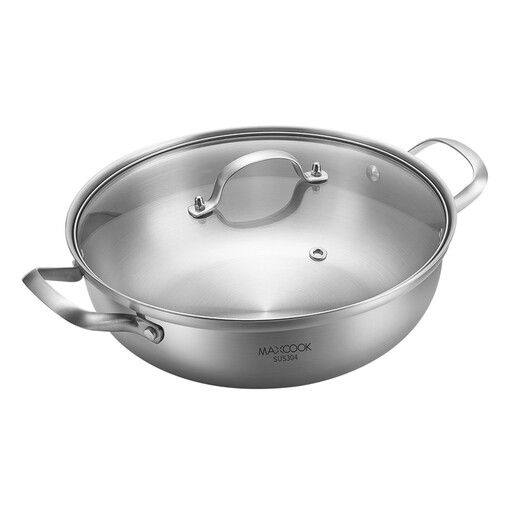
Why this product suits the profile: This uncoated pot is specified as suitable for induction, gas, electric and ceramic hobs, making it compatible with several hob types. It is suitable for boiling and simmering larger portions.
The product description explicitly states the material, base construction and several compatible hob types, rather than relying solely on a general non-stick claim.
304 stainless steel without a stated non-stick coating; dishwasher-safe according to the product information.
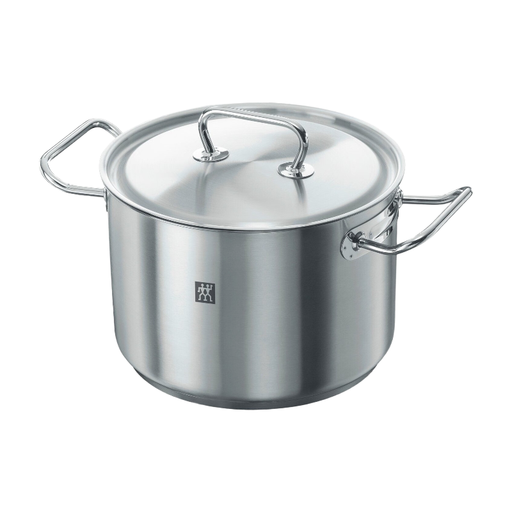
Why this product suits the profile: According to the product details, the 24 cm pot offers a capacity of 6 litres, an 18/10 stainless-steel body, a lid and an integrated measuring scale.
The specific size and capacity information makes it easier to assess whether the pot is suitable for family-sized portions or larger quantities of soup.
SIGMA-Classic sandwich base, measuring scale, lid and suitability for induction, gas, electric and ceramic hobs.
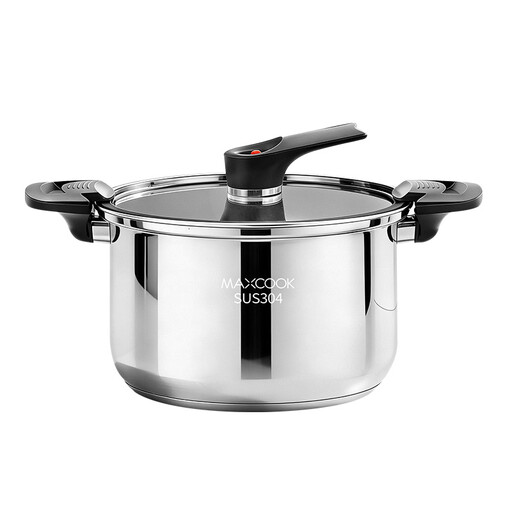
Why this product suits the profile: Three specified cooking modes, a micro-pressure system and a lid with pressure release are designed for households that often braise food or prepare larger dishes.
The description explicitly states that this is not a conventional high-pressure cooker. This makes it easier to understand how the feature works.
304 stainless steel without a stated coating, 6-litre capacity and suitability for gas, induction, electric, ceramic and halogen hobs.
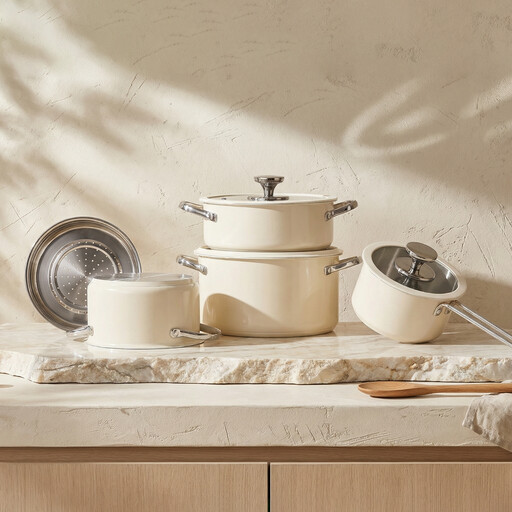
Why this product suits the profile: The set includes a milk pan, a stockpot with steamer insert, a 22 cm pot and a 24 cm pot with several lids.
The different sizes mean you do not have to use one large pot for every task. This helps prevent unsuitable purchases for small and large portions.
Four pot sizes or inserts, 304 stainless steel and stated compatibility with gas, electric, ceramic and induction hobs.
We have put together a complete, regularly updated list of products that fully meet these strict selection criteria and the safety regulations applicable in the EU.
For a two- to three-person household, a smaller pot with a capacity of around 2 to 3 litres is often sufficient. Families will often benefit from 4 to 6 litres. A 24 cm cooking pot is versatile, but if it is particularly tall, it can already become noticeably heavy.
We recommend this quick check before buying:
Models with a magnetic or induction-compatible base are suitable. The product description should explicitly state that the pot is “suitable for induction”. If you are unsure, testing the base of the pot with a magnet can provide an initial indication; the manufacturer’s specifications remain decisive.
That depends on your cooking style. Stainless steel is suitable for soups, pasta, sauces and braised dishes, and is resistant to scratches from suitable kitchen utensils. A coating can make it easier to release delicate foods, but requires gentler use. For frequent high-heat searing, follow the relevant temperature and care instructions.
It is not possible to give a reliable fixed service life based on the material alone. With suitable care, an uncoated stainless-steel cooking pot can be used for a long time. With coated products, service life depends, among other things, on heat, kitchen utensils, cleaning and avoiding heating the pot empty. If the coating shows visible wear or starts to come away, the product should no longer be used.