
Lieferung heute & morgen

Qualitätsgarantie

Willkommens-Angebote freischalten: KOSTENLOSE Lieferung | Bis zu 80 % RABATT | Kostenlose 30-Tage-JoyPlus-Testphase
App herunterladen
An induction cooking pot needs to do more than simply work on an induction hob. A sufficiently magnetic base, suitable dimensions, a practical capacity and easy everyday cleaning are all essential. If you focus only on diameter or coating claims, you can quickly end up with a pot that is too small for soups, too heavy for daily use or easily damaged by incorrect cleaning.
A pot may be described as suitable for several types of hob, but its base should ideally be flat and sufficiently large. Uneven or very small contact surfaces can affect heat transfer on an induction hob. When choosing a new model, it is also worth checking the technical specifications. They should list induction, gas, electric or ceramic hobs – not just a general term such as “all hob types”.
A 3.2-litre soup pot does not automatically hold 3.2 litres of food during everyday cooking. Liquids need room for stirring and boiling. In practice, it is sensible to fill the pot to no more than around two thirds of its capacity. A cooking pot for small portions with a capacity of 1 to 1.5 litres may be more suitable for singles and couples than a large pot that is often only partly used.
A coated cooking pot can make it easier to remove sauces, porridge or milk. However, ceramic coatings should not be heated strongly while empty or handled with metal utensils. Stainless steel is often more resistant to kitchen tools when uncoated, but starch, salt or hard water can cause marks. “Dishwasher-safe” also does not mean that every component – such as wooden handles – is designed to go in the dishwasher.
For everyday needs, sizes can be broadly categorised as follows:
The diameter should match the hob zone. A pot that is too small will not use the heating area efficiently; a significantly larger base can also affect heat distribution.
A stainless steel cooking pot is usually uncoated and suitable for boiling, braising and cooking liquids. A encapsulated or multi-layer base can transfer heat from the induction hob into the pot. Aluminium itself is not magnetic, so induction-compatible cookware made from it is usually combined with a stainless steel base.
A cast iron pot retains heat for longer and is well suited to slow braising or stews. However, it is heavier and remains hot for a long time after the hob is switched off. Enamel on cast iron can make cleaning easier, but it should be protected from sudden changes in temperature.
A pot with a glass lid lets you keep an eye on the cooking process without having to remove the lid regularly. With metal or glass lids, check the information on oven suitability and maximum temperature. Handles made from Bakelite or silicone may stay cooler during normal cooking, but they are not automatically suitable for use in the oven or for direct contact with flames.
Before buying, make sure it is clear whether the pot is dishwasher-safe or whether hand washing is recommended. Coated surfaces generally last longer when used at low to medium heat and with wooden, plastic or silicone utensils.
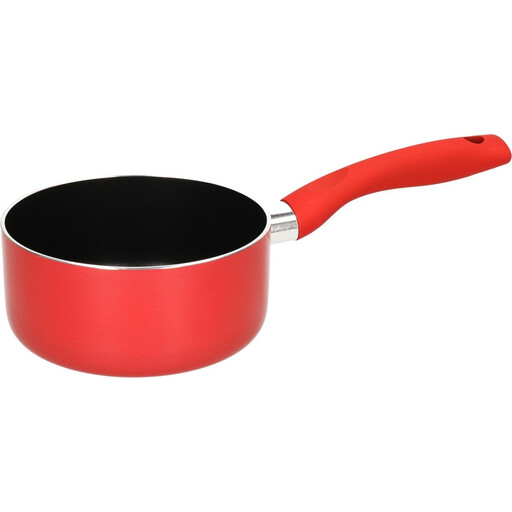
Why this product suits the profile: With a capacity of 1.5 litres and a diameter of 16 cm, this saucepan is designed for small households, side dishes and individual portions.
The product specifications state the diameter, capacity and a stainless steel induction disc, making its hob compatibility easy to verify.
Aluminium body, 16 cm diameter, 1.5-litre capacity and suitability for several types of hob.
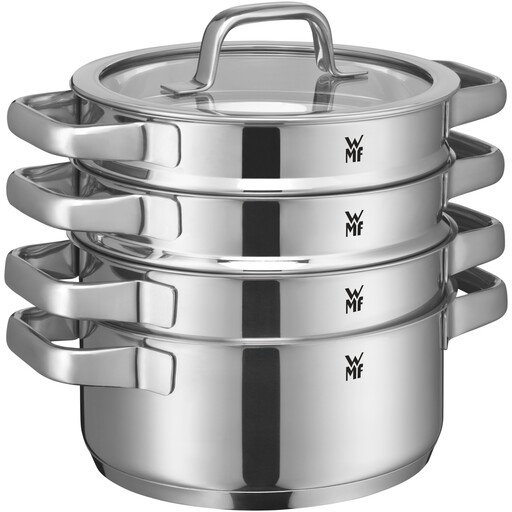
Why this product suits the profile: This set covers several cooking sizes and is suitable for households looking for stackable, uncoated pots with glass lids.
The specifications list the individual sizes and capacities from 2.0 to 5.6 litres, as well as suitability for induction, gas, electric and ceramic hobs.
18/10 Cromargan stainless steel, stackable design, TransTherm base and, according to the product specifications, dishwasher-safe pots and lids.
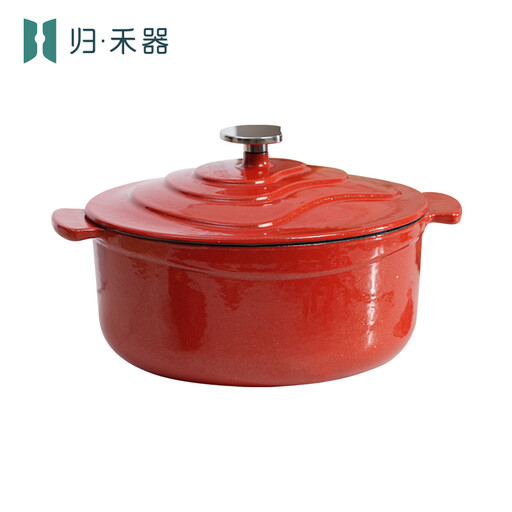
Why this product suits the profile: This enamelled cast iron pot is designed for users who want to prepare soups, braised dishes and larger portions with even heat distribution.
The 22 cm size and 3.3-litre capacity are clearly stated. This helps prevent a small cooking pot from being chosen accidentally for family-sized portions.
Enamelled cast iron, flat base, 22 cm diameter, 3.3-litre capacity and induction suitability according to the product specifications.
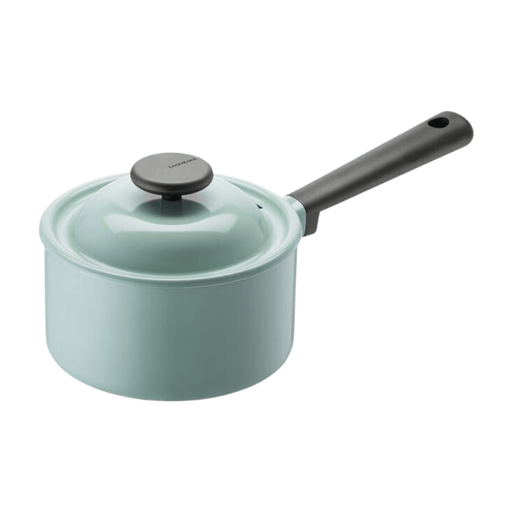
Why this product suits the profile: This 18 cm saucepan is suitable for sauces, soups, porridge and everyday portions in single-person or two-person households.
The care instructions recommend low to medium heat and wooden, silicone or plastic utensils, helping to prevent the typical damage associated with ceramic coatings.
Aluminium body with ceramic coating, Bakelite handle and suitability for induction, gas, electric and ceramic hobs.
We have put together a complete, regularly updated list of products that fully meet these strict selection criteria and the safety regulations applicable in the EU.
The product specifications should explicitly state “suitable for induction” or “suitable for all types of hob, including induction”. You can also use a magnet on the base of the pot as an initial indication: if it sticks to the base, magnetic material is present. However, the manufacturer’s information and the technical construction of the base are definitive.
For milk, sauces, porridge or small side dishes, 0.9 to 1.5 litres is often sufficient. A 16 to 18 cm pot is usually easier to handle for these tasks than a large soup pot. If you regularly cook pasta, soup or stew for several meals, you should choose a model with a capacity of around 2 to 3 litres.
There is no fixed lifespan that applies in every case. It depends on heat, utensils, cleaning and storage. Heating the pot while empty, exposing it to sudden temperature changes and using metal utensils can damage the surface more quickly. If you are looking for an easy-care, long-lasting uncoated option, consider a stainless steel cooking pot; for coated models, always follow the relevant care instructions.