
Lieferung heute & morgen

Qualitätsgarantie

Willkommens-Angebote freischalten: KOSTENLOSE Lieferung | Bis zu 80 % RABATT | Kostenlose 30-Tage-JoyPlus-Testphase
App herunterladen
Purchasing new cookware for an induction hob can quickly become overwhelming. The market is flooded with promises of rapid heating times and perfect searing results. Yet, it's not uncommon to find that after just a few months, the expensive new purchase fails to live up to expectations. Food sticks, the base warps, or the heat is distributed unevenly.
As your Joybuy Product Recommendation Officer, I'm here to help you recognise the common pitfalls and make an informed decision. We'll focus on the facts that truly matter, so you can find cookware that is both durable and functional.
The 2 Most Common Traps When Buying Induction Cookware:
To avoid these problems, you should check three core aspects before buying. These determine whether an induction pot set or a single induction frying pan is a worthwhile investment.
The base is the most critical component for performance on an induction hob. A simple, thin steel base, while magnetic, often conducts and retains heat poorly.
Look for a multi-layered sandwich base. A typical and proven construction consists of an outer layer of ferromagnetic stainless steel, an aluminium core for fast and even heat conduction, and an inner layer of food-grade stainless steel. This structure ensures a stable, warp-resistant foundation and excellent heat distribution. Such cookware is generally suitable for all hob types, but it truly shows its strengths on an induction hob.
The choice of material depends on your cooking habits.
Don't underestimate the importance of the features. A cooking pot with a glass lid allows you to monitor the cooking process without letting heat and moisture escape. The handles should be ergonomic and stay cool during normal use on the hob. Check the heat resistance specifications if the cookware needs to be oven-safe—often, the temperature limits for lids and handles are lower than for the pot itself. Being dishwasher-safe is a convenience feature, although hand washing often extends the life of coated pans.
Based on these objective criteria, we have selected a few products from our range that suit different requirements.
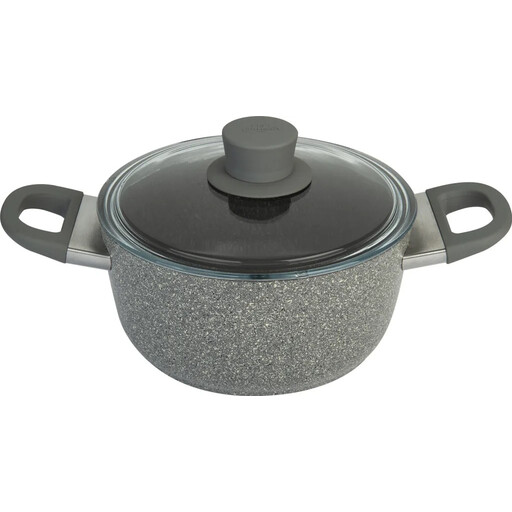
Why This Fits Their Persona: Ideal for families who need a robust and low-maintenance all-rounder for stews, pasta, or goulash. The 24 cm size and 4.5-litre capacity are designed for larger portions.
The Radiant induction technology ensures very even heat distribution and prevents hot spots. According to the manufacturer, the 5-layer GRANITIUM coating is resistant and more durable than simple standard coatings.
Made from forged aluminium for robustness and good heat conduction. The pot is dishwasher-safe, which simplifies daily cleaning.
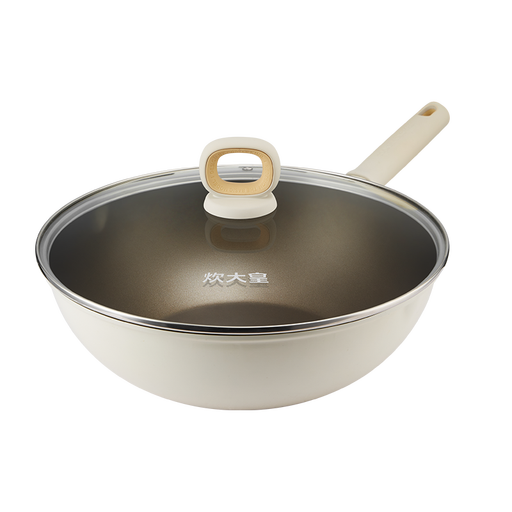
Why This Fits Their Persona: Perfect for anyone who frequently enjoys preparing Asian dishes. The large 32 cm diameter and high sides are ideal for classic stir-frying.
The titanium-infused non-stick coating is explicitly declared PFOA-free and designed for the high temperatures of wok cooking. The flat bottom ensures good contact with the induction hob.
Generous volume for preparing meals for several people. The included glass lid expands its use to steaming and braising.
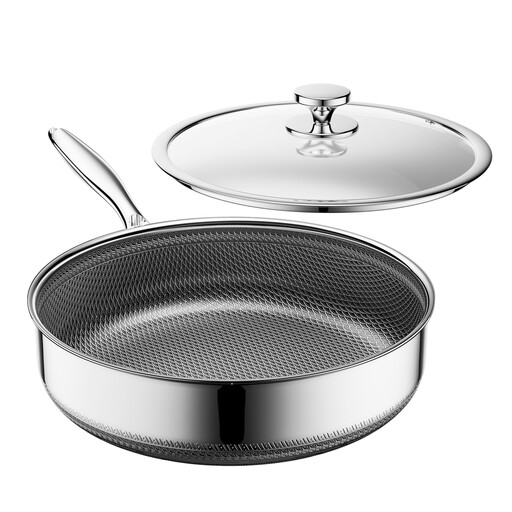
Why This Fits Their Persona: For cooks who value the durability of stainless steel but don't want to sacrifice the convenience of a non-stick surface. The pan is free of PFAS, PTFE, and PFOA.
The hybrid technology combines a stainless steel structure with a ceramic coating. This offers higher scratch resistance than pure coatings and bypasses the problem of short-lived non-stick pans.
The pan is oven-safe up to 260°C, making it highly versatile. The three-layer construction with an aluminium core ensures fast and even heating.
We have compiled a complete, up-to-date list of products that fully meet these strict selection criteria and comply with German safety standards.
H3: How can I identify good induction cookware? You can identify good induction cookware primarily by its base. It should be perfectly flat and consist of multiple layers (a sandwich base) to distribute heat optimally. A solid, thick base is often a sign of quality. Additionally, high-quality materials like 304 stainless steel and robust, PFOA-free coatings are crucial.
H3: Can I use my old cookware on an induction hob? You can easily test this: hold a magnet to the bottom of the pot or pan. If the magnet sticks firmly, the base is ferromagnetic and therefore suitable for induction in principle. Whether the heating performance is good then depends on the base construction described above. Pots made of pure aluminium, copper, or glass will not work.
H3: How do I properly care for coated and uncoated pans? For coated pans: Avoid metal utensils and abrasive scouring pads. Even if many are listed as dishwasher-safe, gentle hand washing will significantly extend the life of the coating. Never heat the pan empty on the highest setting. A stainless steel pot is more robust. Burnt-on food can be removed by soaking with water and a little washing-up liquid or by briefly boiling water in it. Discoloration, which can be caused by minerals in the water, can often be removed with a splash of vinegar or lemon juice.