
Lieferung heute & morgen

Qualitätsgarantie

Willkommens-Angebote freischalten: KOSTENLOSE Lieferung | Bis zu 80 % RABATT | Kostenlose 30-Tage-JoyPlus-Testphase
App herunterladen
Switching to an induction hob promises fast, energy-efficient cooking. However, that joy can quickly fade when your newly purchased cookware doesn't deliver the performance you expect. Many buyers invest in pots and pans that prove to be unsuitable or short-lived. Before you make a decision, it's crucial to understand the common pitfalls that lead to disappointment and unnecessary expense.
To avoid these problems, focus on the right technical features, not marketing promises.
Choosing the right cookware doesn't have to be complicated. Concentrate on three core parameters to make an informed decision that suits your cooking style and needs.
The base of the cookware is the most critical factor for performance on an induction hob. It must be ferromagnetic for the hob's magnetic field to generate heat at all. Look for the following features:
The choice of material affects both the cooking properties and the lifespan of your cookware.
A good cookware set is distinguished by thoughtful details that make everyday cooking easier.
Based on these objective criteria, we have selected a few products for different user profiles.
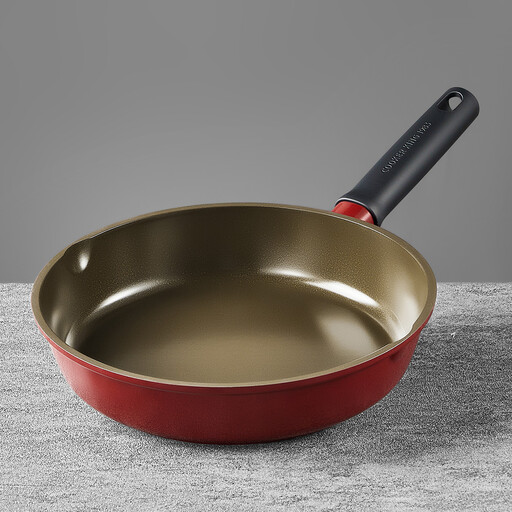
Why This Fits Their Persona: At 28 cm, this pan offers a versatile size for daily use, from fried potatoes to one-pan meals. It's a pragmatic choice for anyone seeking a functional and health-conscious solution without a high initial investment.
The titanium-ceramic coating is a modern alternative to basic PTFE layers and is explicitly declared PTFE and PFOA-free. This bypasses the pitfall of short-lived and potentially hazardous coatings.
Good non-stick properties for low-fat frying and easy cleaning. Its universal suitability for all hob types, including induction, makes it highly flexible.
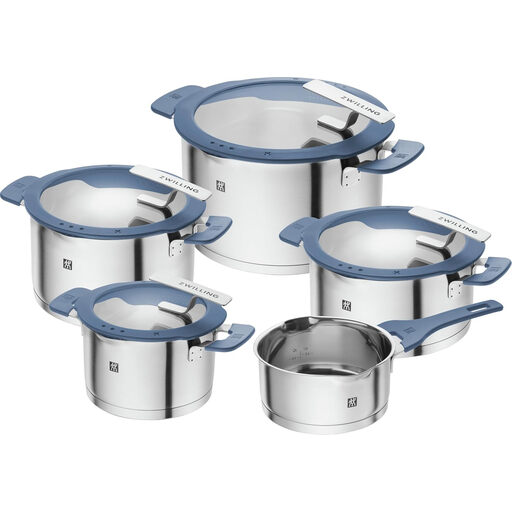
Why This Fits Their Persona: This induction cookware set covers all the needs of a family. It combines the durability of stainless steel with thoughtful features that simplify the daily cooking process and is designed for long-term use.
The SIGMA Classic+ sandwich base with an aluminium core avoids the trap of uneven heat distribution. It ensures efficient, stable performance on induction and prevents the base from warping.
Made from hygienic 18/10 stainless steel. Practical details like the strainer integrated into the lid and the stay-cool handles with silicone coating offer real added value in daily use.
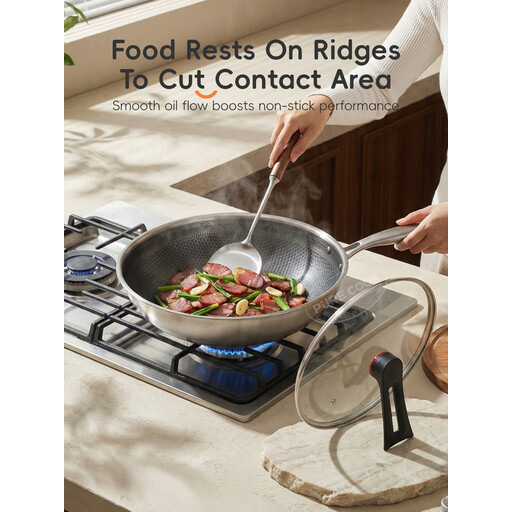
Why This Fits Their Persona: For home cooks who want to prepare authentic wok dishes, a dedicated wok for induction is essential. This model provides the necessary size and heat distribution for quick, high-heat searing (stir-frying).
Instead of a delicate coating, this wok uses a physical non-stick texture (honeycomb pattern). This is more resistant to scratches and bypasses the problem of coatings that wear out quickly.
The three-layer construction of 304 stainless steel ensures very fast and even heat distribution, which is crucial for wok cooking. The glass lid also allows for steaming and braising.
We have compiled a complete, up-to-date list of products that fully meet these strict selection criteria and UK safety regulations.
The easiest way is the magnet test. Hold a standard magnet to the bottom of the pot or pan. If the magnet sticks firmly, the cookware is ferromagnetic and therefore suitable for induction hobs. If it doesn't stick, or only very weakly, it will not work on an induction hob.
Slight humming or buzzing noises, especially at high power settings, are normal. They are caused by the vibrations that the high-frequency magnetic field creates in the base of the cookware. The intensity of the noise depends on the construction and material of the cookware. With multi-layered material, the different layers can vibrate slightly differently, which causes the sounds.
To maximise the lifespan of a non-stick coating, you should follow a few basic rules. Avoid using metal utensils; use wood or silicone instead. Never heat the pan empty on the highest setting. Although many pans are labelled as dishwasher-safe, gentle hand washing with a soft sponge and mild detergent will preserve the coating for much longer.