
Lieferung heute & morgen

Qualitätsgarantie

Willkommens-Angebote freischalten: KOSTENLOSE Lieferung | Bis zu 80 % RABATT | Kostenlose 30-Tage-JoyPlus-Testphase
App herunterladen
Getting a new induction hob often means you also need to upgrade your cookware. But the market is overwhelming and full of marketing promises. As a Joybuy Product Recommendation Officer, I see the daily pitfalls that lead to consumer dissatisfaction. Many pots and pans advertised as "induction-compatible" disappoint in practice with slow heat-up times, uneven heat distribution, or a coating that quickly deteriorates. Before you make a decision, you should know the most common sources of error.
The 3 Most Common Pitfalls When Buying Induction Cookware:
To avoid these pitfalls, it's important to focus on objective product features. Three criteria are central to performance and longevity.
A ferromagnetic base is essential for induction, as the hob generates heat directly in the bottom of the pot through a magnetic field. The quality of this base determines its efficiency. An optimal solution is a so-called multi-ply sandwich base. Here, a core of a highly conductive material like aluminium or copper is enclosed between two layers of stainless steel (inside and out). This construction ensures fast and, above all, very even heat distribution from the base to the rim and prevents the formation of hot spots.
The choice of material depends on your cooking habits.
Ensure the cookware fits your needs. An induction wok should have a flat bottom to ensure optimal contact with the hob. A saucepan with a lid is a must for cooking vegetables or making soups. If you are completely re-equipping your kitchen, a coordinated induction cookware set can be a sensible and often more cost-effective purchase than buying individual pieces.
Based on these objective criteria, we have identified some products that are well-suited for different user profiles.
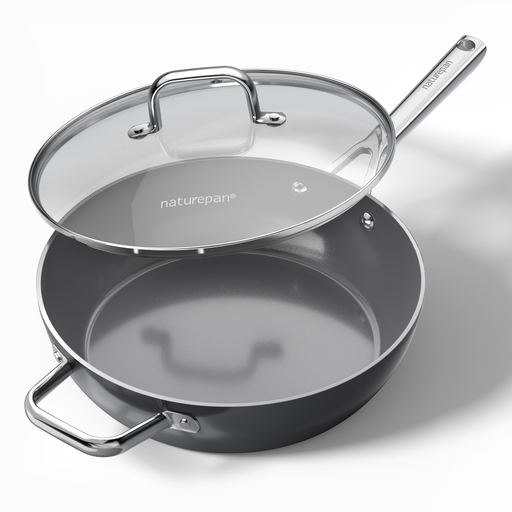
Why This Fits Their Persona: Ideal for anyone looking for a versatile pan for daily use who values a coating free of PTFE/PFOA/PFAS. The high rim and included lid make it flexible for sauce-based dishes, braising, and frying.
The ceramic coating, reinforced with diamond and titanium particles, addresses the short lifespan of many standard coatings and offers a robust, chemical-free non-stick solution.
Oven-safe up to 260°C, expanding its range of uses. The optimised base ensures fast and even heat distribution on all types of hobs.
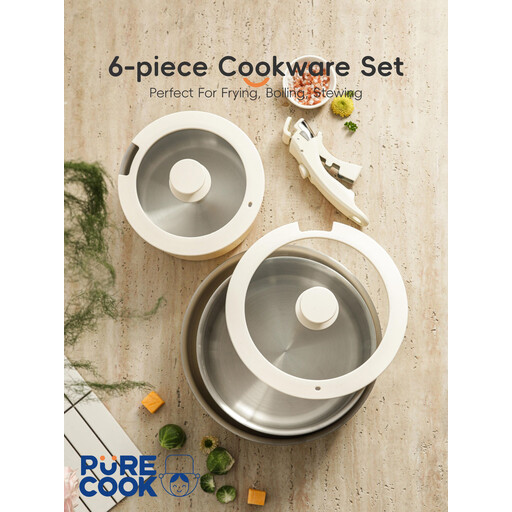
Why This Fits Their Persona: A starter set for ambitious cooks looking for a durable and flexible solution. The set, consisting of a milk pan, stockpot, and frying pan, covers most cooking needs and is very space-saving thanks to the detachable handle.
This set solves the problem of material mismatch. The triple-ply construction of 304 stainless steel is designed for high temperatures and a long lifespan, and it comes without a delicate interior coating.
The detachable handle not only allows for space-saving stacking in the cupboard but also enables the use of the pots and pan in the oven.
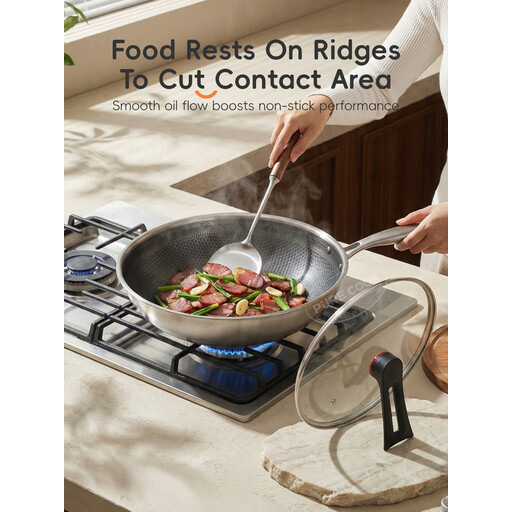
Why This Fits Their Persona: A specialised induction wok designed for quick stir-frying at high heat. The 32 cm size is well-suited for preparing meals for the whole family.
This wok bypasses the problem of short-lived chemical coatings by using a physical non-stick honeycomb structure. This is scratch-resistant and even allows the use of metal utensils.
The triple-ply 304 stainless steel construction ensures very fast and even heat distribution, which is crucial for the success of wok dishes.
We have compiled a complete, up-to-date list of products that fully meet these strict selection criteria and German safety regulations.
The easiest way is the magnet test: hold a magnet to the bottom of the pot or pan. If the magnet sticks firmly, the cookware is ferromagnetic and therefore suitable for induction hobs. Many manufacturers also print a symbol resembling a coil on the base of the cookware.
To maximise the lifespan of a non-stick coating, you should follow a few basic rules:
Not necessarily. Uncoated stainless steel cookware is extremely robust, durable, and ideal for high temperatures, such as for searing meat. For delicate foods like eggs, pancakes, or tender fish that stick easily, a high-quality coated pan (e.g., a ceramic pan) can be the more practical solution. A good kitchen setup often combines both: sturdy stainless steel pots for general cooking tasks and one or two good non-stick pans for special purposes.