
Lieferung heute & morgen

Qualitätsgarantie

Willkommens-Angebote freischalten: KOSTENLOSE Lieferung | Bis zu 80 % RABATT | Kostenlose 30-Tage-JoyPlus-Testphase
App herunterladen
Investing in new cookware for an induction hob can quickly become a source of frustration. Products advertised as "induction-compatible" heat up slowly, and expensive non-stick pans lose their effectiveness after just a few months. As your Joybuy Product Recommendation Officer, I'll help you identify the typical pitfalls and make an informed decision that suits your cooking habits and your kitchen.
Before we dive into the important features, let's look at the three most common problems that lead to poor purchasing decisions.
To avoid these traps, you should focus on three core parameters. These determine the performance, durability, and practical usability of your new cookware.
A ferromagnetic base is essential for efficient heat transfer on an induction hob. The hob generates a magnetic field that induces eddy currents in the pot's base, heating it directly.
The choice of material and coating depends directly on your cooking style.
Good cookware makes everyday life easier with thoughtful details.
Here are some recommendations tailored to different needs and households.
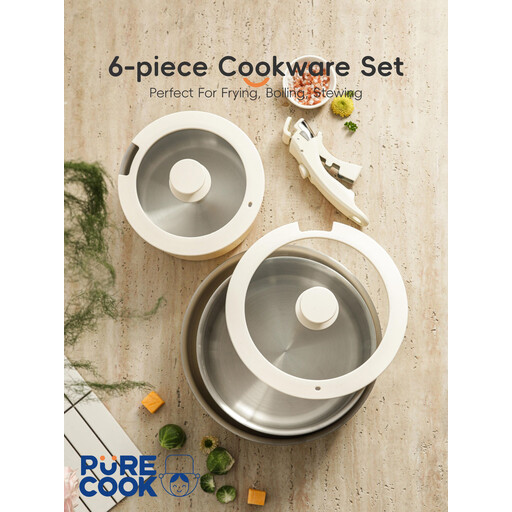
Why This Fits Their Persona: This set is ideal for singles, couples, or as a starter kit. With a milk pot, stockpot, and frying pan, it covers the most essential cooking tasks and is extremely space-saving thanks to its detachable handle.
It solves the problem of a cluttered kitchen cabinet (Trap 3) with its stackable design and universal, detachable handle.
Stackability: All pieces nest inside one another. Versatility: The set is oven-safe, dishwasher-safe, and compatible with all hob types.
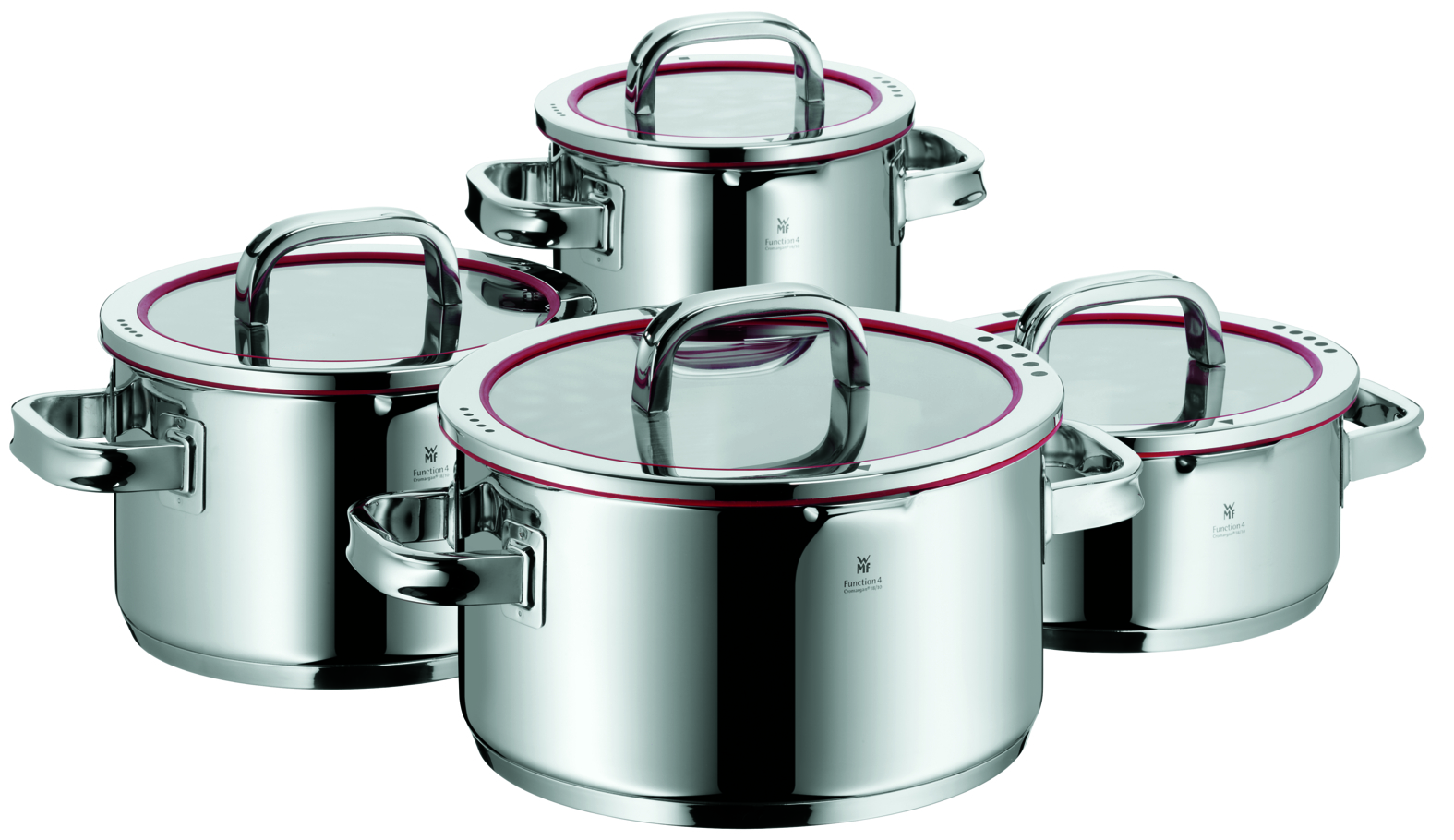
Why This Fits Their Persona: For families who cook daily and value durability and thoughtful features. This set, made of robust Cromargan stainless steel, offers various pot sizes for every meal.
The TransTherm universal base ensures efficient heat performance (Trap 1), while the high-quality materials and clever lid function prevent common design flaws (Trap 3).
Lid with 4 Functions: The silicone ring in the glass lid allows for controlled pouring without a separate strainer. Heat-Reducing Hollow Handles: Offer greater safety during handling.
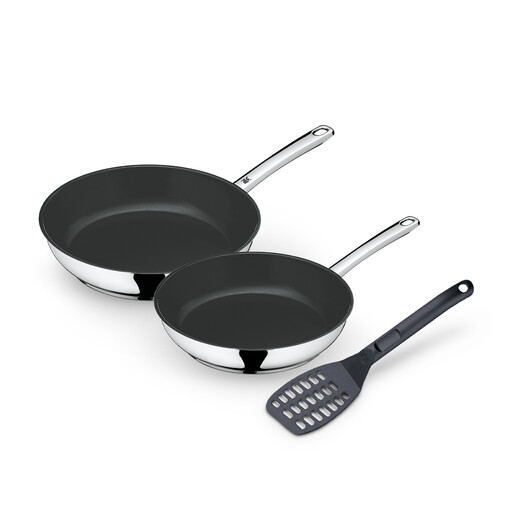
Why This Fits Their Persona: This pan set is aimed at home cooks who value excellent searing results. The ceramic coating is ideal for searing meat or vegetables at high temperatures.
The robust ceramic non-stick coating is more heat-resistant than many conventional coatings, thus resisting rapid wear and tear (Trap 2).
Heat-Resistant Ceramic Coating: Heat-resistant up to 400°C, according to the manufacturer. TransTherm Base: Ensures even heat distribution for uniform browning.
We have compiled a complete, up-to-date list of products that fully meet these strict selection criteria and German safety regulations.
The most reliable sign is the coil symbol (a stylized spiral) on the packaging or the bottom of the pot. Alternatively, you can perform the magnet test: hold a standard magnet to the underside of the pot. If it sticks firmly, the cookware is suitable for induction.
Avoid overheating the empty pan. Use cooking utensils made of wood, silicone, or plastic to prevent scratches. Although many pans are declared dishwasher-safe, cleaning by hand with a soft sponge and mild detergent is gentler on the coating and significantly extends its life.
No, not necessarily. Oven safety depends on the materials of all components. Pots and pans made of pure stainless steel can usually withstand high heat. For handles or lid knobs made of plastic (e.g., Bakelite) or lids with silicone elements, the manufacturer's temperature limits must be observed. These are often around 180°C, while the pot itself might withstand up to 250°C. Therefore, always check the product description.