
Lieferung heute & morgen

Qualitätsgarantie

Willkommens-Angebote freischalten: KOSTENLOSE Lieferung | Bis zu 80 % RABATT | Kostenlose 30-Tage-JoyPlus-Testphase
App herunterladen
Buying a new cookware set for an induction hob seems straightforward at first. But the reality is often different: pots that heat unevenly, waste energy, or have coatings that peel off after just a few months. As your Joybuy Product Recommendation Officer, I'll help you see through the typical marketing promises and make an informed decision that suits your cooking habits and budget.
Many buyers experience disappointment shortly after their purchase—issues that could have been avoided with a little foresight. Pay close attention to these three points to prevent a bad buy.
A ferromagnetic base technically makes a pot induction-compatible. However, this says nothing about its efficiency. Models with a base that is too thin or only partially magnetic will heat slowly and unevenly. The result is not only frustrating while cooking but also leads to higher energy consumption. The quality and full-surface construction of the base are crucial for performance.
A good non-stick coating is essential for many dishes. However, cheap coatings tend to scratch easily or peel when overheated. This not only impairs functionality but can also be a health concern if materials like PFOA are released. A high-quality, durable coating declared as PFOA-free is a vital investment in the longevity and safety of your cookware.
A complete pots and pans set made from a single material isn't always the right solution. Pure aluminium heats up quickly but is less durable and retains heat for a shorter time. Stainless steel cookware is extremely durable and ideal for searing at high temperatures, but it requires some practice to use correctly. Choosing the wrong material means your cookware won't meet the demands of your favourite dishes.
To avoid the pitfalls mentioned above, you should carefully examine three core parameters. These determine the performance, durability, and user-friendliness of your new set.
The pot's base is the most important factor for performance on an induction hob. A high-quality base should lie completely flat and be made of a highly ferromagnetic material. Multi-layered bases, often called "sandwich bases," combine the advantages of different materials. A typical construction includes an aluminium core for fast, even heat conduction, encased in durable stainless steel. Pay attention to the thickness of the base—a more solid base retains heat better and is more resistant to warping.
The choice of material depends on your cooking style.
Modern cookware sets offer features that make daily life easier.
Based on the criteria above, we have identified several products that are particularly well-suited for specific user profiles.
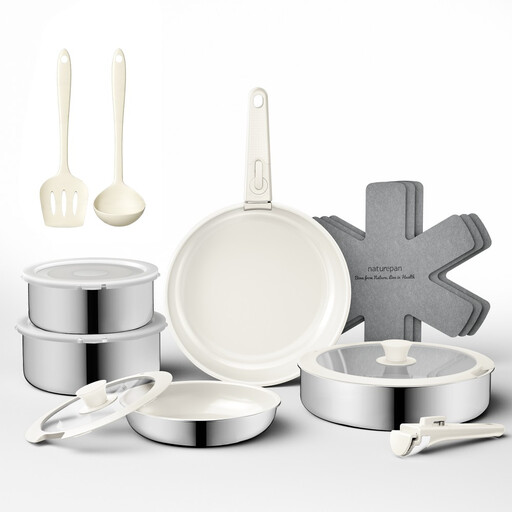
Why This Fits Their Persona: Ideal for those with limited kitchen space, in RVs, or for anyone who values an organised setup. The detachable handle allows the pots and pans to be stacked, significantly reducing storage needs.
Avoids the problem of bulky sets that block valuable cabinet space. Its versatility (hob, oven, fridge, table) is maximised by the detachable handle.
Saves up to 70% of storage space, according to the manufacturer. The combination of stainless steel and a ceramic coating offers durability and excellent non-stick properties.
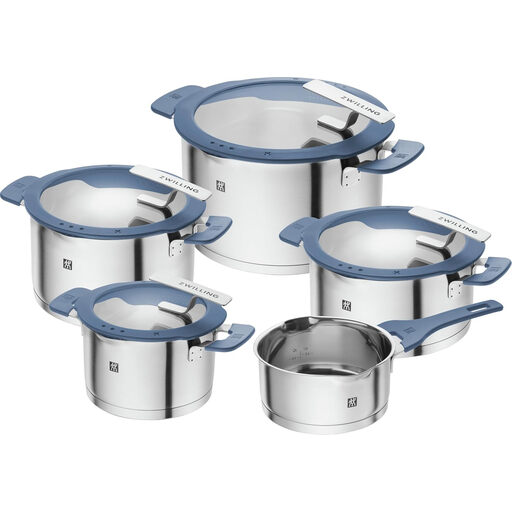
Why This Fits Their Persona: For home cooks and families looking for a durable, high-quality, and functional starter set. The focus is on material quality and thoughtful details for everyday use.
Relies on high-grade 18/10 stainless steel and a solid SIGMA Classic+ sandwich base. This prevents the issues of warping and inefficient heat distribution common in cheaper sets.
Integrated features like the strainer in the lid and the lid holder reduce the need for extra kitchen tools. The stay-cool handles provide added safety.
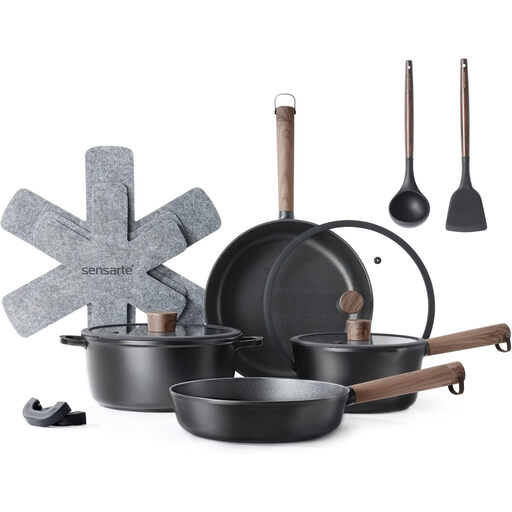
Why This Fits Their Persona: A comprehensive starter kit for those who enjoy preparing a wide variety of dishes and need a broad selection of pots and pans without having to buy each piece individually.
Offers a complete pots and pans set that covers the most common cooking scenarios. This prevents the typical mistake of buying a set that's too small and later having to add mismatched individual pieces.
A comprehensive set with two frying pans, a saucepan, and a casserole, plus matching lids and accessories. According to the manufacturer, the non-stick coating is made without intentionally added PFOA/PFOS.
We have compiled a complete, up-to-date list of products that fully meet these strict selection criteria and safety standards.
The easiest way is the magnet test. Hold a standard magnet to the bottom of the pot or pan. If the magnet sticks firmly, the cookware is ferromagnetic and therefore suitable for induction hobs. If it doesn't stick, or only very weakly, it won't work on an induction cooktop.
To maximise the lifespan of a non-stick coating, you should follow a few basic rules. Avoid using metal utensils; opt for wood, silicone, or plastic instead. Clean pots and pans by hand with a soft sponge and mild washing-up liquid, even if they are declared dishwasher-safe. Also, avoid heating an empty pan on the highest setting.
Stainless steel cookware without a coating is extremely durable and versatile, but it does have a slight learning curve. The key is proper temperature control. The pot must be sufficiently preheated before adding oil and food. A simple water drop test helps: if a drop of water beads up and glides across the hot pan's surface, it has reached the right temperature. For beginners, a set that includes both coated and uncoated pieces can be a great solution.