
Lieferung heute & morgen

Qualitätsgarantie

Willkommens-Angebote freischalten: KOSTENLOSE Lieferung | Bis zu 80 % RABATT | Kostenlose 30-Tage-JoyPlus-Testphase
App herunterladen
An induction cookware set should cover a range of everyday tasks: heating water, cooking soups, preparing sauces, steaming vegetables, or braising dishes. Yet product descriptions do not always lead directly to the right buying decision. As a Joybuy Product Recommendation Officer, I have therefore organised the relevant information according to clear criteria and highlighted which solutions suit different households.
A pot may work in principle on an induction hob but still be poorly suited to your cooking zone. The key factors are a magnetic, flat-contact base and a suitable base diameter. On small cooking zones, a very large pot may heat unevenly. Before buying, compare the diameter of the pot base with that of the cooking zone.
A ceramic non-stick cookware set or another coated cookware set is often promoted as easy to clean. However, the coating generally requires gentle handling. For many models, low to medium temperatures and cooking utensils made of wood, silicone, or nylon are the recommended choice. Prolonged heating while empty, sudden temperature changes, and metal utensils can place unnecessary strain on the surface.
With sets featuring removable handles, glass lids, or silicone components, this specification often refers only to the cookware bodies. Handles, lids, and accessories may require hand washing. If you want to put a pots and pans set in the dishwasher after every use, check the care instructions for each individual component.
A stainless steel cooking pot is uncoated and suitable for soups, pasta, vegetables, and braised dishes. Stainless steel is resistant to scratches and can be used in the oven when permitted by the manufacturer. Multi-layer bases with an aluminium core help distribute heat more evenly.
A stainless steel cookware set with a ceramic interior coating combines a robust metal body with a smoother cooking surface. These models are particularly appealing for low-fat cooking and delicate foods. However, the coating is a wear component and should be handled with soft utensils.
A 20 cm cooking pot is a practical standard size for many private households. Depending on its design, it offers approximately 1.7 to 3.5 litres of usable capacity. A smaller pot may be sufficient for one or two people; for soups, pasta, or several portions, a capacity of around 3 litres provides greater flexibility.
It is important to distinguish between the product diameter, base area, and actual capacity. A tall, narrow pot has a different volume from a shallow braising pot with the same diameter.
Look for a clear list of compatible heat sources: induction, gas, electric, and ceramic should be explicitly stated for a versatile cookware set. For oven-safe pots, the permitted temperature must also be taken into account. Removable handles, lids, and plastic or silicone components must be removed before oven use if specified in the product information.
A cooking pot with a glass lid allows you to monitor the food while it cooks. However, the lid can become very hot and often has a lower temperature limit than the pot body.
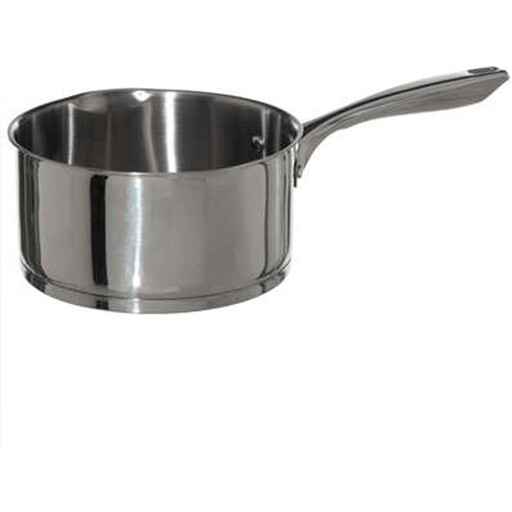
Why it is a good fit: A single 20 cm pot is a straightforward solution for households that do not initially need a complete cookware collection.
The specifications state a usable capacity of 2.3 L and compatibility with induction, gas, ceramic, and electric hobs. This makes its everyday suitability easy to assess before purchase.
Stainless steel body, aluminium induction disc, ergonomic handle, and dishwasher-safe design according to the product specifications.
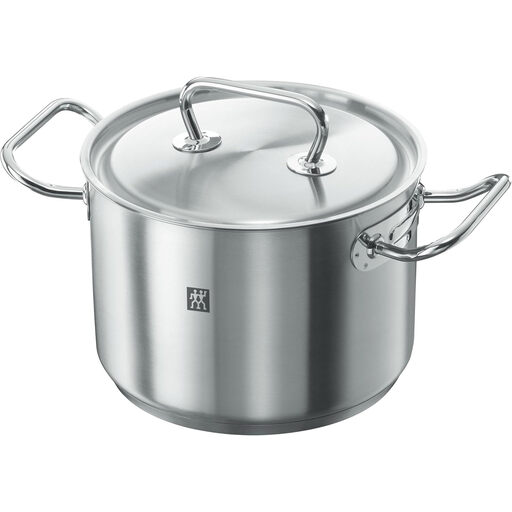
Why it is a good fit: This 18/10 stainless steel pot is designed for users looking for a versatile single pot for everyday cooking.
The technical specifications identify a Sigma Classic sandwich base and compatibility with induction and oven use. This provides a clearer description of the construction than broad, generic marketing claims.
3.5 L capacity, satin finish, 18/10 stainless steel, and dishwasher-safe design according to the product description.
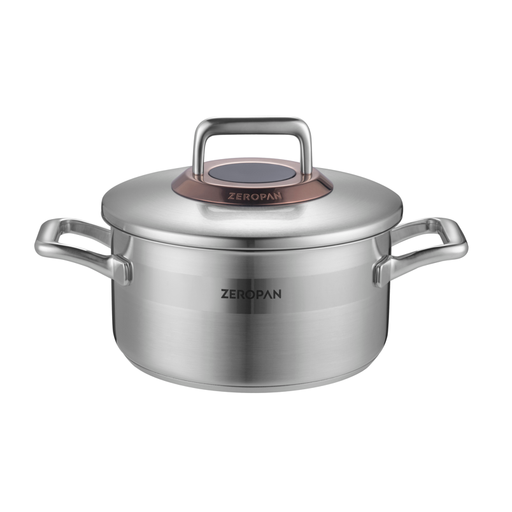
Why it is a good fit: This model combines a 1.7 L capacity with a ceramic interior coating and is designed for sauces, soups, and smaller braised dishes.
The manufacturer specifies precise temperature limits: up to 260 °C for the pot and up to 148 °C for the glass lid. This allows oven use to be planned with confidence.
Three-layer construction with an aluminium core, compatibility with multiple hob types, and dishwasher-safe materials according to the product specifications.
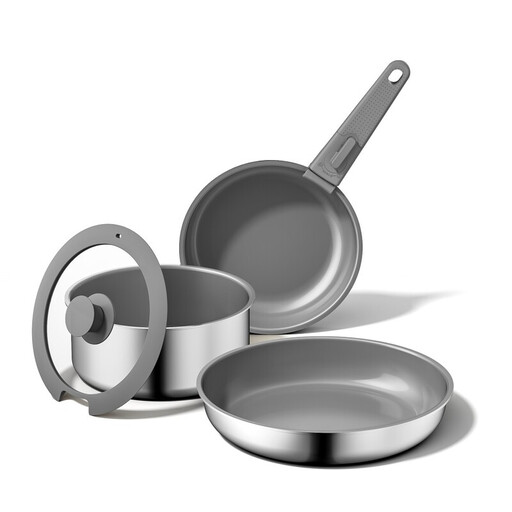
Why it is a good fit: Removable handles allow the cookware bodies to be nested inside one another. This is particularly useful in compact kitchens with limited cupboard space.
The product information clearly distinguishes between dishwasher-safe cookware bodies and handles, lids, and accessories that must be washed by hand. These components must not be used in the oven.
Two pots, two pans, one sauté pan, multiple lids, and removable handles; oven-safe up to 230 °C without the removable components.
We have put together a current selection of products that can be compared based on material, induction compatibility, size, and care requirements.
The product description should explicitly list induction as a compatible heat source. The base must also be magnetic and sit flat on the cooking surface. A magnet test can provide an initial indication, but it does not replace the manufacturer’s compatibility information.
Service life depends on the material, construction quality, temperature, and care. Uncoated stainless steel pots are less susceptible to the typical damage associated with coatings. With a ceramic non-stick cookware set, the surface should not be heated intensely while empty for extended periods and should not be treated with abrasive cleaners.
A set can offer good value when all included sizes are used regularly. For smaller households, a single 20 cm cooking pot or a compact induction cookware set is often more practical than numerous unused pieces. The deciding factors are your actual needs, available storage, and the care requirements of the accessories.