
Lieferung heute & morgen

Qualitätsgarantie

Willkommens-Angebote freischalten: KOSTENLOSE Lieferung | Bis zu 80 % RABATT | Kostenlose 30-Tage-JoyPlus-Testphase
App herunterladen
Purchasing a new cookware set for an induction hob should be a joy. Yet, all too often, the initial excitement gives way to frustration: the advertised non-stick performance fades after a few weeks, the pots heat unevenly, or they wobble on the hob. These issues often stem from subtle defects or exaggerated marketing claims.
As your Joybuy Product Recommendation Officer, I'm here to help you identify these pitfalls. We'll focus on the objective criteria that truly matter, ensuring your next kitchen investment is both durable and functional.
Before we turn to the solutions, it's important to understand the most common problems that can lead to a purchase you'll regret.
To avoid these traps, you should focus on three core technical aspects. These define the quality, longevity, and safety of your new cookware.
The choice of material and coating has a direct impact on the cooking experience and lifespan.
The efficiency on an induction hob depends entirely on the construction of the pot's base.
Beyond the basic functions, thoughtful details make everyday kitchen life easier.
Here are some recommendations tailored to specific user profiles and the quality criteria mentioned above.
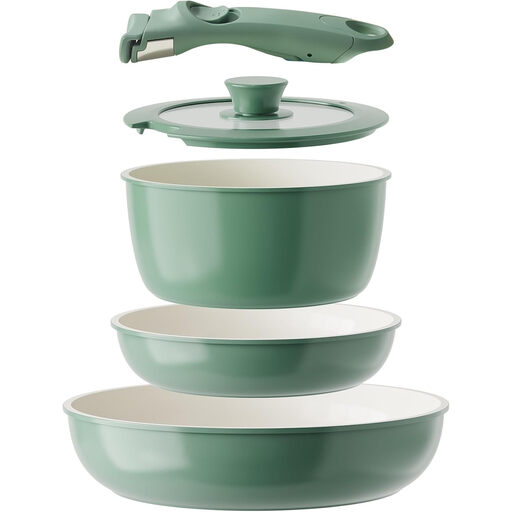
Why This Fits Their Persona: Ideal for kitchens with limited storage, campervans, or anyone who wants maximum flexibility. The set can go from the hob directly to the oven, the fridge, or the dining table.
The stackable design with the detachable handle solves the problem of cluttered cupboards. The ceramic coating is a modern, PFOA-free alternative to traditional non-stick pans.
Extreme space-saving (up to 75% according to the manufacturer) and high versatility thanks to being oven-safe (without the handle) and compatible with all hob types.
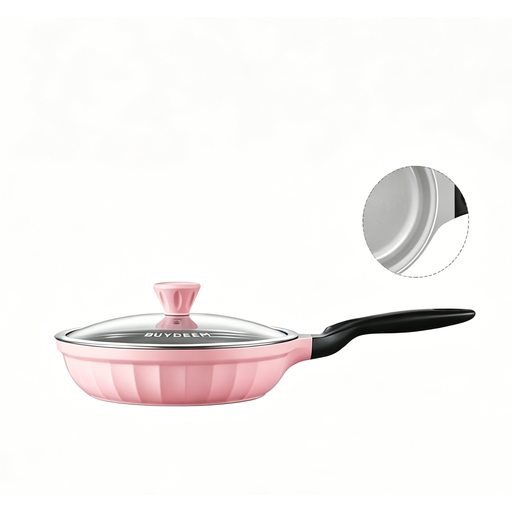
Why This Fits Their Persona: This pan is explicitly certified as free from PFAS, PFOS, and PFOA. The cast aluminium body ensures even heat distribution, ideal for preparing healthy meals for the whole family.
Directly addresses concerns about harmful substances with a Swiss ceramic coating that is made without these chemicals. The solid base ensures good performance on induction hobs.
Verified contaminant-free coating (PFAS/PFOA-free) and fast, even heat distribution from the cast aluminium body. Includes a matching glass lid.
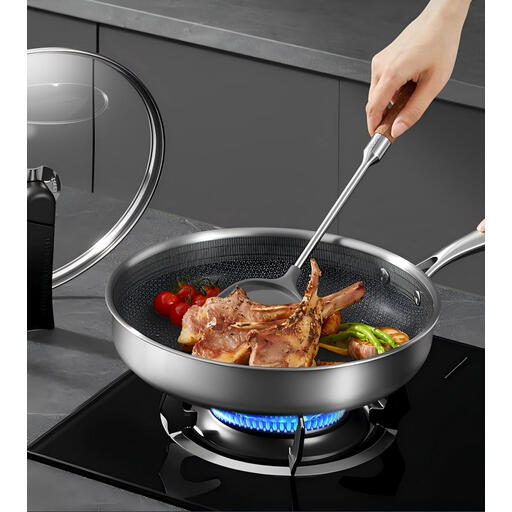
Why This Fits Their Persona: This 28cm frying pan combines the durability of 304 stainless steel with a physical non-stick texture. It's ideal for high-heat searing and using metal utensils without damaging a delicate coating.
Bypasses the short-lived coating trap by using a durable, physical honeycomb structure. This ensures lasting performance that won't degrade.
Combines the longevity of stainless steel with reduced sticking. The pan is scratch-resistant and optimised for all hob types, including induction.
We've compiled a complete, up-to-date list of products that fully meet these strict selection criteria and safety regulations.
1. How do I know if my old cookware is induction-compatible? The easiest way is the magnet test: hold a magnet to the bottom of the pot or pan. If the magnet sticks firmly, the cookware is ferromagnetic and suitable for induction. A flat, thick base is also necessary for good performance.
2. What is the lifespan of a non-stick coating on induction pots? The lifespan heavily depends on the material and care. A high-quality PTFE coating can last 2-5 years with careful handling (no metal utensils, no overheating). Ceramic coatings are often more robust but can also lose their non-stick properties over time. Uncoated stainless steel has a virtually unlimited lifespan.
3. Is a ceramic pan better than one with a PTFE coating? Both have their pros and cons. A ceramic pan is generally more heat-resistant and is made without PFOA/PFAS. A high-quality PTFE coating often provides slightly better non-stick performance initially. For health-conscious cooks who often cook at medium to high heat, ceramic can be the more advantageous choice.