
Lieferung heute & morgen

Qualitätsgarantie

Willkommens-Angebote freischalten: KOSTENLOSE Lieferung | Bis zu 80 % RABATT | Kostenlose 30-Tage-JoyPlus-Testphase
App herunterladen
A quality Dutch oven is the cornerstone of many kitchens. It's ideal for dishes that need to cook slowly, allowing their flavours to develop fully. But with the shift to modern induction hobs, a common question arises: which pot is the right one? The selection can be overwhelming, from materials and coatings to different sizes.
As a Joybuy Product Recommendation Officer, my job is to filter market information and provide you with clear, objective guidance. This article will help you understand the key features of a suitable induction Dutch oven and make an informed decision that fits your culinary style.
Before you make a decision, there are several technical and practical aspects to consider. The following points will help you objectively evaluate the features of different pots.
The choice of material affects the cooking results, durability, and maintenance required.
The size of the pot should match your household and cooking habits. A 28 cm pot with a lid has proven to be particularly versatile. It offers enough space for family-sized portions of stews, curries, or goulash.
Thanks to its wide, relatively flat shape, such a pot can also be used as a serving pan to bring dishes directly from the hob to the table. The two side handles make it easy to carry. This makes it a true all-purpose induction pot that can replace a frying pan and a classic cooking pot in many situations.
Not every pot works on an induction hob. An induction-compatible pot must have a ferromagnetic base. Look for the coil symbol (a stylised spiral) on the packaging or the bottom of the pot. A high-quality base construction is crucial for efficient and even heat distribution, which prevents food from sticking and saves energy.
Based on the criteria mentioned, we have compiled a selection of products that cater to different needs and preferences.
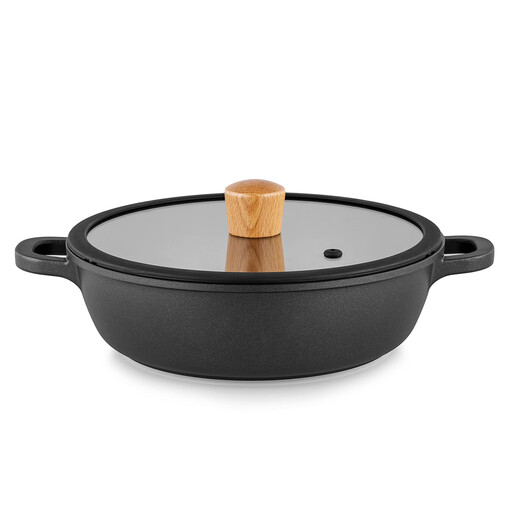
Why it stands out: This pot combines the benefits of a lightweight die-cast aluminium body with a durable non-stick coating from Switzerland. Its versatility makes it a practical everyday companion.
Advantages:
Who it's for: Ideal for home cooks and families looking for a single, multifunctional all-purpose induction pot that handles everything from searing and braising to serving, all while being easy to maintain.
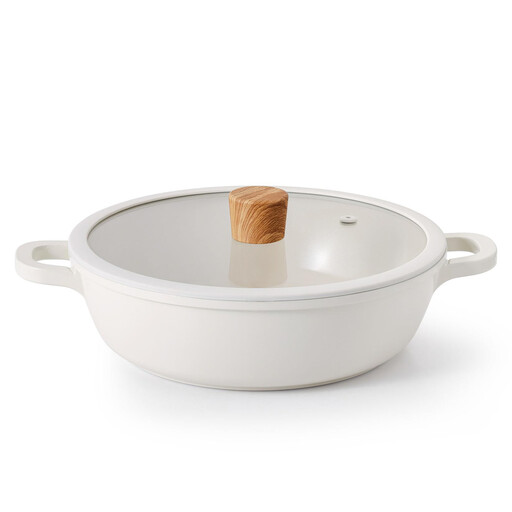
Why it stands out: This model offers an alternative to the classic PTFE coating. The light-coloured ceramic surface is not only visually appealing but also functional and free from potentially harmful substances.
Advantages:
Who it's for: A great choice for users who consciously want to avoid traditional non-stick coatings and prefer cookware with a bright, modern aesthetic.
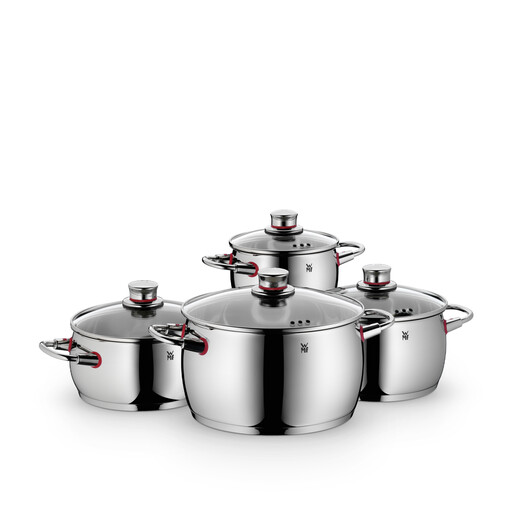
Why it stands out: This set represents durability and brand quality. It provides a complete starter kit made of uncoated stainless steel, designed for demanding cooking tasks and long-term use.
Advantages:
Who it's for: Perfect for quality-conscious cooks and families who want to invest in a durable stainless steel cookware set. It's the right choice for anyone who appreciates the robustness and searing properties of uncoated material.
Do you have very specific requirements for a pot, or are you looking for a different material? Sometimes a specialised pot is the perfect addition to the kitchen.
For example, if you are interested in the unique properties of glass cookware, you can find more models and information in our Glass Pot category.
1. How can I tell if a pot is suitable for induction? A pot is induction-compatible if its base is made of a ferromagnetic material. You can easily test this by holding a magnet to the bottom of the pot. If it sticks, the pot is suitable for induction. Additionally, most induction-ready pots have a symbol resembling a coil or spiral on the base or packaging.
2. What does "PFOA-free" mean for a non-stick pot? PFOA (perfluorooctanoic acid) is a chemical that was historically used in the manufacturing of some non-stick coatings (e.g., Teflon). Due to environmental and health concerns, many modern coatings are now made without it. A pot labelled as PFOA-free was manufactured without the use of this specific substance.
3. Can I also use a Dutch oven as a serving pan? Yes, especially models with a diameter of around 28 cm and two side handles are very well-suited as a serving pan. They are practical for bringing dishes like paella, risotto, or stews directly from the hob to the dining table, where they retain heat well and look appealing.