Joybuy Insights

Induction Frying Pans: How to Avoid Costly Mistakes

The search for a new induction frying pan can quickly become overwhelming. The market is flooded with promises of superior non-stick properties, rapid heat distribution, and long-lasting durability. Yet, it's not uncommon to find that after just a few months, your expensive purchase fails to live up to expectations. As a Joybuy Product Recommendation Officer, I'm here to help you identify the common marketing traps and make an informed decision.

The 3 Most Common Traps When Buying an Induction Pan

Before you invest, you should know the pitfalls that often lead to disappointment.

  1. The "Induction-Ready" Trap: Nearly every modern pan carries this label today. However, it simply means the base is magnetic and can be detected by an induction hob. It says nothing about the efficiency or evenness of heat distribution. Pans with thin or partially ferromagnetic bases often heat up slowly, unevenly (creating hot spots), and produce a buzzing noise, leading to unsatisfactory cooking results and wasted energy.
  2. The Short-Lifespan Coating Trap: A non-stick pan promises cooking without food sticking. However, many inexpensive coatings, especially with improper use (excessive heat, metal utensils), often lose their non-stick properties after a short time. The pan becomes useless, and the money is wasted.
  3. The "Health" Trap (PFAS/PFOA): Many manufacturers advertise their products as "PFOA-free". This is now a legal standard in the EU and no longer a special mark of quality. The crucial question is whether the pan is completely free of all per- and polyfluoroalkyl substances (PFAS). A PFAS-free pan, such as a pure ceramic pan, is often the more transparent choice for health-conscious users.

What Really Matters: The Decisive Parameters

To avoid a bad purchase, focus on three technical features that determine your pan's performance and longevity.

1. The Pan's Base: The Foundation for Induction

The base is the most critical component of an induction frying pan. Look for the following characteristics:

  • Material and Construction: A thick, multi-layered sandwich base with an aluminium core (for heat conduction) and an outer layer of ferromagnetic stainless steel is a proven design. A pure stainless steel pan or a heavy cast iron pan also works very well on induction.
  • Dimensional Stability: The base must lie perfectly flat on the cooktop to transfer energy efficiently and not warp when heated. High-quality pans feature a thermally optimised base (e.g., WMF TransTherm or Silit SiliTherm) designed for even expansion and heat distribution.
  • Diameter: The diameter of the pan's base should match the size of your induction cooking zone to ensure optimal energy use.

2. The Coating: Not All Non-Stick Is Created Equal

The choice of coating depends on your cooking habits and priorities.

  • PTFE Coatings (e.g., Teflon): These classic non-stick coatings offer excellent release properties but are sensitive to temperature (do not heat above 260°C) and prone to scratches. Reputable manufacturers like WMF or Silit use multi-layered, reinforced PTFE systems (e.g., PermaDur or Silitan) designed for greater durability.
  • Ceramic Coatings: A ceramic pan is inherently free of PTFE and PFAS. It is highly heat-resistant, which allows for high-heat searing. However, the non-stick effect on some models can diminish faster than on high-quality PTFE pans. Newer generations are often reinforced with particles like diamond or titanium to increase mechanical resistance.
  • Uncoated Pans: A cast iron pan or stainless steel pan without a coating is extremely durable and ideal for searing at high temperatures. However, it requires more fat for frying and, in the case of cast iron, careful maintenance (seasoning) to build up a natural non-stick layer (patina).

3. Material, Handle, and Oven Safety

The whole package must be right to impress in daily use.

  • Pan Body: Aluminium is lightweight and conducts heat quickly, while stainless steel is more robust and easier to maintain. Cast iron has excellent heat retention but is very heavy.
  • Handle: A plastic handle stays cool on the stovetop but limits its use in the oven. An oven-safe pan requires a handle made of stainless steel or cast iron. Hollow stainless steel handles heat up more slowly on the hob.
  • Size: A 28 cm frying pan is a versatile all-rounder for most households. Smaller pans (20-24 cm) are suitable for single portions or eggs, while larger models are useful for families or frying whole fish.

Recommended Products by User Profile

Here are some models that represent a considered choice for specific user groups based on objective features.
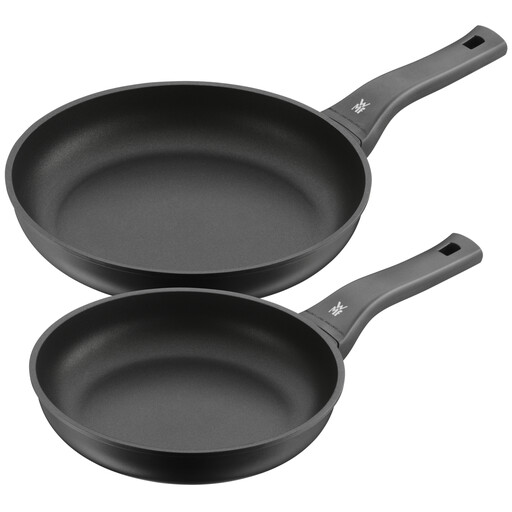
MATCH FOR: Budget-Conscious Everyday Users
WMF PermaDur Excellent Induction 2-Piece Pan Set, 28 cm + 24 cm frying pans, aluminum-coated, plastic handles with heat protection

WMF PermaDur Excellent Induction 2-Piece Pan Set

Why This Fits Their Persona: This induction pan set from WMF covers the most common sizes for daily use at 24 cm and 28 cm. It offers the build quality of an established brand at an attractive price-performance ratio, ideal as a starter set or to replace worn-out pans.

How It Avoids the Trap

The TransTherm universal base is optimised for even heat distribution on induction, bypassing the trap of uneven heating. The PermaDur non-stick coating, which WMF claims is long-lasting, addresses the short-lifespan trap.

Key Advantage & Pros

Advantage: A complete set for everyday needs. Pros: Optimised heat distribution via the TransTherm base, ergonomic handle with flame protection.
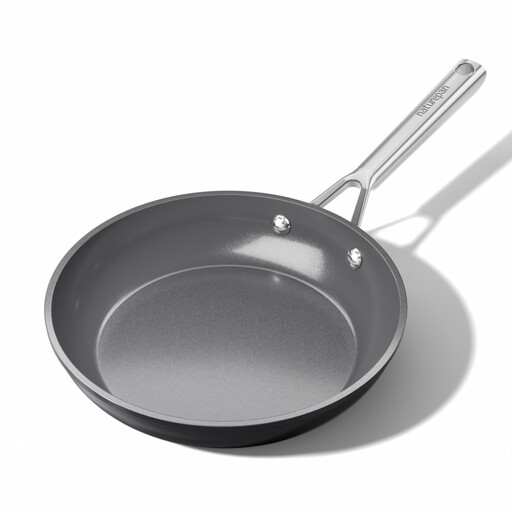
MATCH FOR: Health-Conscious Cooks
Naturepan Diamond Titanium Ceramic Frying Pan, 24cm - Non-stick coating, PTFE/PFOA/PFAS-free - Heat-resistant handle - Suitable for induction hob/oven - Dishwasher-safe - Grey

Naturepan Diamond Titanium Ceramic Frying Pan 24cm

Why This Fits Their Persona: For users actively seeking a PFAS-free pan, this model is a clear choice. The ceramic coating is explicitly stated to be free of PTFE, PFOA, and other PFAS, enabling low-fat, health-conscious cooking.

How It Avoids the Trap

This pan bypasses the "health" trap with its transparent, PFAS-free material composition. The reinforcement with diamond and titanium particles aims to overcome the typical short lifespan of simpler ceramic coatings.

Key Advantage & Pros

Advantage: Guaranteed PFAS-free coating. Pros: High heat resistance (oven-safe up to 260°C), suitable for all hob types including induction.

MATCH FOR: Discerning All-Rounders
Silit Calabria 2-Piece Induction Pan Set, 2 Frying Pans (24 cm & 28 cm), Polished Stainless Steel, Nonstick Coating, Oven Safe, Heat-Reducing Handle, Wide Pour Rim, Induction Compatible

Silit Calabria 2-Piece Induction Pan Set

Why This Fits Their Persona: This set from Silit combines a robust stainless steel body with a practical non-stick coating. It's the ideal solution for cooks who value the durability of stainless steel but don't want to forgo the convenience of a coated pan. Its oven-safe feature adds to its versatility.

How It Avoids the Trap

The SiliTherm universal base ensures efficient and even heat distribution on induction. The robust stainless steel body makes the pans more resilient than pure aluminium pans, countering the trap of cookware that wears out quickly.

Key Advantage & Pros

Advantage: A combination of durability (stainless steel) and convenience (non-stick). Pros:Oven-safe pan (up to 260°C), wide pouring rim for drip-free pouring.

Looking for more options?

We have compiled a complete, up-to-date list of products that fully meet these strict selection criteria and German safety regulations.

Frequently Asked Questions (FAQ)

1. How can I identify a good induction frying pan in the store? A simple method is the magnet test: hold a magnet to the pan's base. The stronger it sticks and the larger the magnetic area, the better its suitability for induction. Also, look for a thick, perfectly flat base and a certain weight, which indicates solid material quality.

2. How long does a non-stick pan really last? The lifespan heavily depends on the quality of the coating and its care. High-quality, multi-layer PTFE or reinforced ceramic coatings can last for several years with proper use (no metal utensils, hand washing recommended, avoiding overheating). Inexpensive, single-layer coatings are often unusable in less than a year.

3. Are ceramic pans a better alternative to PTFE pans? There is no universally "better" choice; it's a trade-off of features. Ceramic pans are guaranteed to be PFAS-free and highly heat-stable, making them attractive for health-conscious users and for high-heat searing. High-quality PTFE pans often offer slightly longer and more reliable non-stick performance, especially for delicate foods like eggs. The decision depends on your personal priorities.