
Lieferung heute & morgen

Qualitätsgarantie

Willkommens-Angebote freischalten: KOSTENLOSE Lieferung | Bis zu 80 % RABATT | Kostenlose 30-Tage-JoyPlus-Testphase
App herunterladen
Buying a new induction frying pan seems simple. But the reality is often different: the pan that was just advertised as perfect warps after a few weeks, loses contact with the cooktop, and heats unevenly. The non-stick effect diminishes, and your fried egg stubbornly sticks to the bottom.
Many of these problems can be traced back to subtle defects or exaggerated marketing claims. As your Joybuy Product Recommendation Officer, I'll help you recognise these pitfalls and make an informed decision that suits your cooking habits and your budget.
Before we get to the recommendations, it's important to understand the typical sources of error that lead to frustration in the kitchen.
To avoid the problems mentioned above, you should pay attention to three technical features that are essential for a durable and functional induction frying pan.
The base is the heart of any induction pan. Look for a multi-layer sandwich base or a forged pan body with an integrated, full-surface stainless steel plate. A base thickness of at least 4-5 mm is a good benchmark to prevent warping and ensure even heat retention. A pan designated as a pan for all hob types usually has such a robust construction.
The choice of coating affects the cooking experience and durability.
Regardless of the material, proper care is crucial: hand washing is almost always recommended to maximise the coating's lifespan.
The most common sizes are the 24 cm frying pan and the 28 cm frying pan.
Ensure the pan's base diameter matches the size of your induction cooking zone to achieve optimal energy efficiency.
Here are some models that represent a considered choice for different user profiles, based on their objective features.
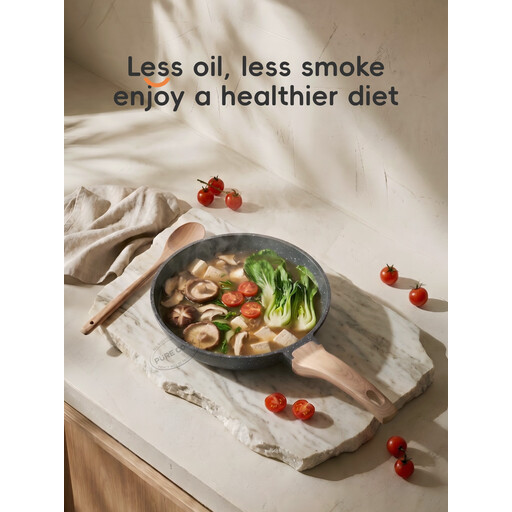
Why This Fits Their Persona: With a 20 cm diameter, this pan is ideal for singles, couples, or for preparing small side dishes and breakfast items. Its light weight and heat-insulating wooden handle make it easy to use.
The aluminium alloy body ensures fast and even heat conduction, counteracting the problem of "hot spots." The base is explicitly designed for induction.
Lightweight design for easy handling; food-safe non-stick coating for low-fat cooking and simple cleaning.
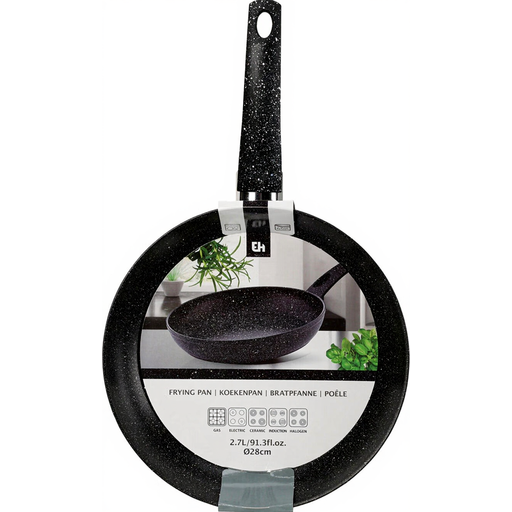
Why This Fits Their Persona: With a 28 cm diameter and 2.7-litre capacity, this pan is designed for family-sized portions. Its robust construction is geared towards daily, intensive use.
The forged aluminium body, with a solid thickness of 2.7 mm and a full-surface induction base, minimises the risk of warping and ensures stability on the hob.
Robust granite non-stick coating, described as scratch-resistant and PFOA-free; large capacity for versatile dishes.
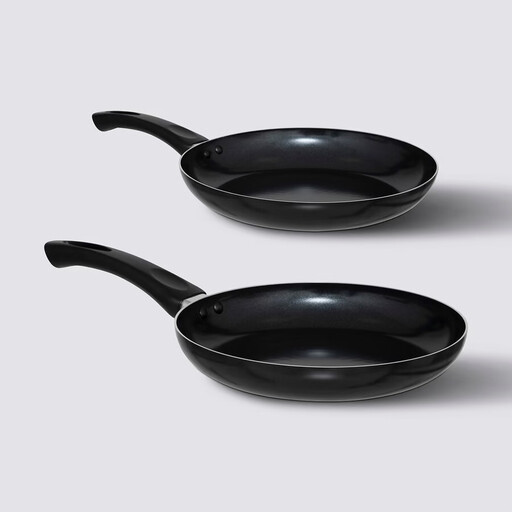
Why This Fits Their Persona: This set covers the two most common sizes, offering flexibility for various dishes—from a small omelette in the 24 cm pan to a family meal in the 28 cm pan. It's a practical starter kit or addition.
Instead of buying one pan in the wrong size, this set offers an economical solution for different needs. Both pans are explicitly designed for all hob types, including induction.
Practical induction pan set with two useful sizes; both pans feature a two-layer non-stick coating.
We have compiled a complete, up-to-date list of products that fully meet these strict selection criteria and German safety regulations.
How can I tell if a pan is suitable for induction? Look for the induction symbol (a stylised coil) on the product packaging or the pan's base. A simple test: hold a magnet to the bottom of the pan. If it sticks firmly, the base is ferromagnetic and therefore suitable for induction hobs.
Why is my frying pan warping on the induction hob? This usually happens due to a pan base that is too thin or of low quality, which cannot withstand the rapid and intense heat of the induction field. A so-called thermal shock—quenching a hot pan with cold water—can also lead to deformation. Invest in a pan with a thick, forged, or multi-layer base to avoid this.
How do I extend the life of my non-stick pan? Proper care is crucial. Avoid using metal cooking utensils and opt for wood, silicone, or plastic instead. Never overheat the pan when it's empty. Even though many pans are declared dishwasher-safe, gentle hand washing with a soft sponge and mild detergent is better for the coating in the long run.