
Lieferung heute & morgen

Qualitätsgarantie

Willkommens-Angebote freischalten: KOSTENLOSE Lieferung | Bis zu 80 % RABATT | Kostenlose 30-Tage-JoyPlus-Testphase
App herunterladen
The search for the right frying pan for an induction hob can quickly become overwhelming. The market is flooded with promises of durability, health-safe coatings, and perfect searing results. Yet, it's not uncommon to find that after just a few months, the pricey purchase loses its performance, the coating gets scratched, or the heat distribution on the induction hob is uneven. As your Joybuy Product Recommendation Officer, I'll help you identify the crucial features and sidestep marketing traps.
Before we dive into the key features, let's look at three typical problems that lead to disappointment:
To avoid a bad buy, you should focus on three core technical parameters. These determine the performance, longevity, and safety of your new pan.
The material of the pan's body and the construction of its base are crucial for heat conduction and distribution.
The coating determines how well your food slides off and how easy the pan is to clean. Health aspects play a central role here.
Everyday functionality depends on the right size and practical details.
Here are some recommendations tailored to specific user profiles that meet the criteria mentioned above.
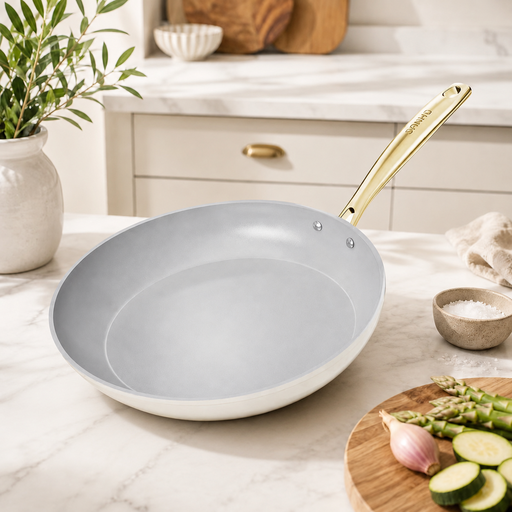
Why It's a Match: Ideal for anyone who prioritises healthy cooking. The coating is explicitly free from the entire PFAS group, as well as lead and cadmium, ensuring safety for daily family meals.
Directly addresses the pitfall of vague "toxin-free" claims with its clear PFAS-free declaration. The patented diamond-titanium coating aims for greater durability than conventional ceramic pans.
Oven-safe up to 260°C for maximum flexibility. The aluminium core with a stainless steel base ensures fast, even heat distribution on induction hobs.
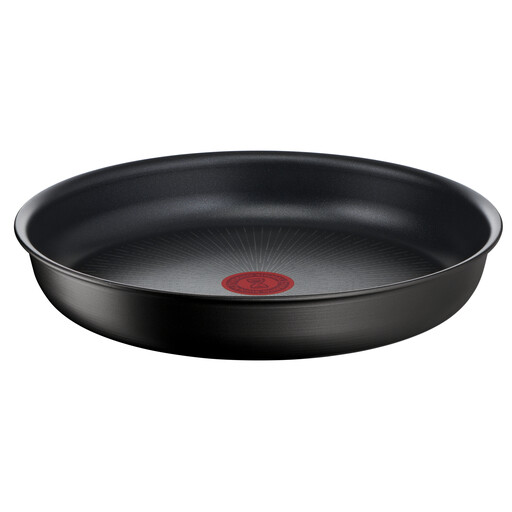
Why It's a Match: The Ingenio series is the ultimate solution for those with limited storage. The detachable handle (sold separately) allows multiple pans and pots to be stacked, creating order in the kitchen cupboard.
This pan is more than just cookware; it's part of a system that moves from the hob to the oven, to the table, and into the fridge. This solves the problem of inflexible pans with fixed handles that get in the way in the oven or cupboard.
Oven-safe up to 250°C (without the handle). The Thermo-Fusion base technology ensures rapid and even heat distribution on induction hobs. According to the manufacturer, its Titanium non-stick coating is exceptionally scratch-resistant.
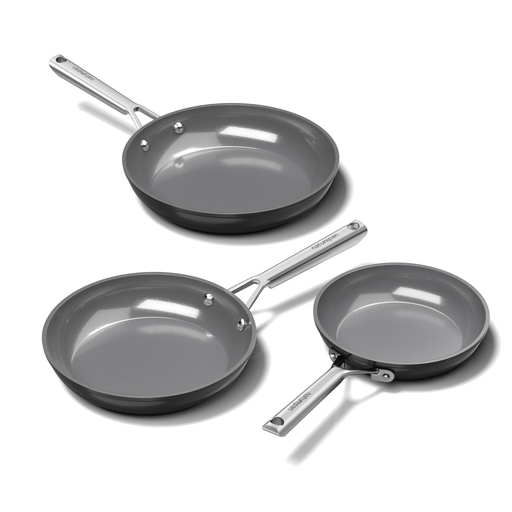
Why It's a Match: This induction pan set (20, 24, and 28 cm) covers all of a family's daily cooking needs—from a small fried egg to a large one-pan meal. It's a one-and-done purchase for all occasions.
Instead of buying multiple individual pans of varying quality and brands, this set offers a uniform, coordinated solution. All pans are PFAS-free and optimised for induction, which prevents inconsistencies.
The ceramic coating, reinforced with diamond and titanium particles, promises high durability. All pans are oven-safe up to 260°C and dishwasher-safe.
We have compiled a complete, up-to-date list of products that fully meet these strict selection criteria and all relevant safety standards.
1. How can I tell if a pan is truly suitable for induction? The easiest method is the magnet test: if a standard household magnet sticks firmly to the entire base of the pan, the basic requirement is met. In the product details, look for terms like "full-surface induction base" or "sandwich base with a ferromagnetic layer." This indicates better heat distribution than bases where only a small pattern is magnetic.
2. How do I properly care for a coated pan to extend its lifespan? Avoid using metal utensils; instead, opt for tools made of wood, silicone, or plastic. Allow the pan to cool down after cooking before exposing it to cold water to prevent thermal shock. Hand washing with a soft sponge and mild detergent is gentler than the dishwasher, even if many pans are declared dishwasher-safe. Never heat the pan empty on the highest setting.
3. Are ceramic pans more scratch-resistant than other non-stick pans? Pure ceramic coatings are very hard but can be brittle and develop micro-cracks from impacts or the use of metal utensils, which impairs the non-stick performance. Modern ceramic or synthetic coatings reinforced with titanium or diamond particles often offer greater mechanical resistance, making them more robust against scratches in everyday use. However, longevity always depends heavily on proper care and handling.