
Lieferung heute & morgen

Qualitätsgarantie

Willkommens-Angebote freischalten: KOSTENLOSE Lieferung | Bis zu 80 % RABATT | Kostenlose 30-Tage-JoyPlus-Testphase
App herunterladen
The search for a new induction frying pan can quickly become overwhelming. The market is flooded with promises of durability, perfect non-stick performance, and health safety. However, not every product lives up to its advertising claims. As your Joybuy Product Recommendation Officer, I'll help you identify the crucial features and avoid common purchasing traps.
Many buyers invest in a pan that loses its effectiveness after just a few months. This is often due to three common problems that are rarely mentioned in marketing:
To make an informed decision, you should focus on three core technical parameters that determine the performance and longevity of an induction pan.
For efficient use on an induction cooktop, a fully ferromagnetic base is essential. While some pans only have a thin, bonded steel plate, a solid, thick base ensures fast and, most importantly, even heat distribution right to the edge. This prevents food from burning in the centre while remaining raw at the edges. Look for specifications mentioning a solid induction base to harness the full power of your cooktop. This applies to all cooktop types but is most noticeable with induction.
The choice of non-stick coating is crucial for the cooking experience and maintenance.
Both options allow for low-fat cooking. The decision depends on your personal priority: maximum hardness (ceramic) or long-lasting non-stick performance (high-quality PTFE).
The pan's body is responsible for heat retention and conduction. A cast aluminium pan strikes a great balance. Cast aluminium is lighter than stainless steel or cast iron but conducts and retains heat excellently. This ensures even cooking results and allows for precise temperature control. Forged aluminium is another great option that combines durability with low weight.
Based on these objective criteria, we have identified a few models that are particularly well-suited for different user profiles.
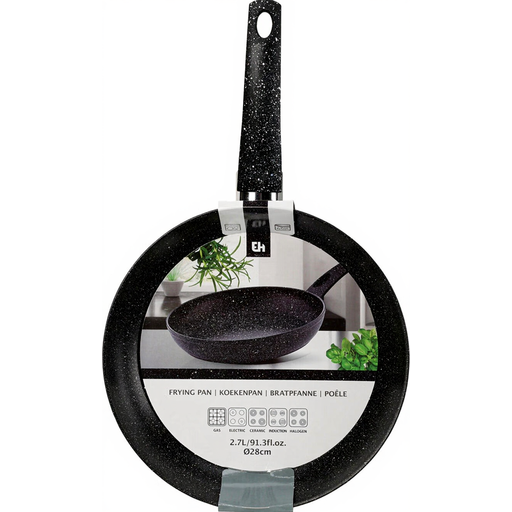
Why This Fits Their Persona: Ideal for daily use in families or for preparing larger portions. The 28 cm pan offers ample space, and the forged aluminium ensures fast, even heating without being heavy.
The fully etched base ensures efficient and even heat transfer on induction cooktops, bypassing the "Induction Gap." The granite non-stick coating is explicitly declared as PFOA-free.
High scratch and temperature resistance of the coating; suitable for all cooktops; soft-touch handle for secure handling.
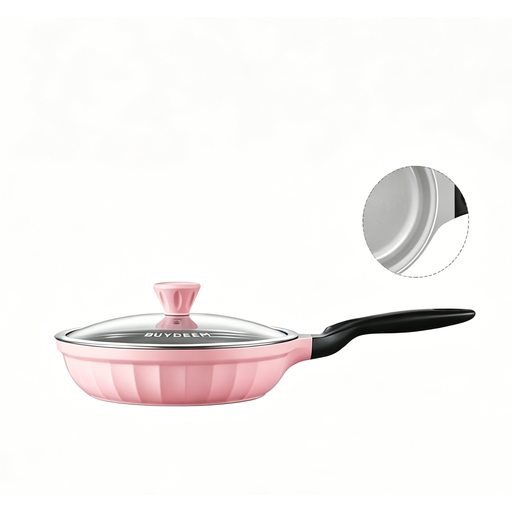
Why This Fits Their Persona: Perfect for users who prioritise toxin-free materials. The Swiss-engineered ceramic pan allows for low-fat cooking of delicate foods like fish or eggs without releasing harmful substances.
Directly addresses the "Toxin-Free" Maze with an explicit declaration: according to the manufacturer, the ceramic coating is free of PFAS, PFOS, and PFOA. The cast aluminium body ensures even heat distribution.
Fast and even heating; comes with a matching glass lid; suitable for all cooktops, including induction.

Why This Fits Their Persona: This induction pan set is a practical solution for households that need flexibility. With 20, 24, and 28 cm sizes, there's a suitable pan on hand for every task—from a fried egg to a family meal.
The forged aluminium body ensures even heat distribution across all three pans. The triple-layer ceramic coating is a robust, toxin-free alternative to conventional coatings.
Three sizes for maximum versatility; suitable for all cooktops; oven-safe up to 450°C (842°F) according to the manufacturer.
We've compiled a complete, up-to-date list of products that fully meet these strict selection criteria and safety regulations.
You can identify a high-quality induction frying pan by its thick, heavy, and fully magnetic base. A simple test: hold a magnet to the bottom. If it sticks firmly across the entire surface, the pan is well-suited for induction. Also, look for a solid pan body (e.g., made of cast aluminium) and a clearly declared, toxin-free coating.
To preserve the non-stick performance of your non-stick pan, you should follow a few basic rules:
Not necessarily. A ceramic pan is an excellent choice for health-conscious cooks, as it is free of PTFE and related chemicals. It is very hard and heat-resistant. However, its non-stick performance can diminish more quickly with improper handling. A modern, high-quality PTFE pan that is explicitly certified as PFOA-free and PFAS-free often provides a more durable and robust non-stick effect. The choice depends on your personal cooking habits and priorities.