Joybuy Insights

Induction Frying Pan Buyer’s Guide: How to Avoid Costly Mistakes

Buying a new induction frying pan seems simple. But reality often tells a different story: the advertised non-stick performance fades after a few months, the base warps, and food cooks unevenly. Many manufacturer promises turn out to be marketing hype, leading to frustration and wasted money.

As a Joybuy Product Recommendation Officer, I filter through the noise to bring you the information that matters, so you can make an informed decision. This guide reveals the three most common pitfalls to watch out for and highlights the technical features that truly count.

The 3 Most Common Traps When Buying an Induction Pan

  1. The "Induction-Ready" Deception: Many pans are labelled "suitable for all stovetops," yet their performance on an induction cooktop is subpar. The reason is often a base that is too thin or insufficiently ferromagnetic, which fails to efficiently absorb the cooktop's energy. The result: the pan heats up slowly, the heat is distributed unevenly, and energy consumption increases.
  2. The Short-Lived Non-Stick Coating: A non-stick pan that starts sticking after a short time is a well-known frustration. This is often due to low-quality coatings that scratch easily or degrade when overheated. Furthermore, some manufacturers advertise their products as "toxin-free" without clearly specifying if this includes PFAS chemicals, a critical point for health-conscious buyers.
  3. The Unstable Pan Base: A pan that warps after just a few uses and wobbles on the cooktop is not only impractical but also inefficient. A warped base loses direct contact with the cooking surface, leading to massive energy loss and uneven cooking results. This is usually a sign of poor material quality and a base that is too thin.

What Really Matters: The Core Features of a Good Induction Pan

To avoid the problems mentioned above, you should check three key aspects before buying. These determine the longevity, performance, and safety of your new pan.

1. The Pan's Base: The Foundation for Efficiency

For an induction pan, the base is the most critical component. It must be ferromagnetic for the cooktop's magnetic field to generate heat at all.

  • Material and Thickness: A thick, warp-resistant base made from materials like cast aluminium or a multi-layered sandwich base with a ferromagnetic core (often stainless steel) is crucial. A solid base thickness of at least 4-5 mm prevents warping at high temperatures and ensures even heat retention and distribution.
  • Practical Test: Hold a magnet to the bottom of the pan. If it attracts strongly, the magnetic conductivity is good. A full-induction base is more efficient than one with only spotty magnetic zones.

2. The Coating: A Focus on Health and Durability

The type of pan coating is a central criterion. The choice directly impacts handling, cleaning, and health considerations.

  • PTFE Coatings (often known as Teflon): These offer excellent non-stick properties. Be sure to look for the PFOA-free pan label. Modern PTFE coatings are safe with proper use (do not heat above 260°C / 500°F).
  • Ceramic Pans: A ceramic pan is a popular alternative. It is free of PTFE and PFAS and often more heat-resistant. However, its non-stick effect can diminish more quickly than that of high-quality PTFE pans if not cared for properly.
  • Reinforced Coatings: Some manufacturers reinforce their coatings with particles like titanium or diamond to increase scratch resistance and longevity.

3. Material, Size, and Shape: Suited to Your Needs

The pan's body material, size, and shape should match your cooking habits.

  • Material: A cast aluminium pan offers a great balance of fast heat conduction and good heat retention at a moderate weight. Stainless steel pans are more robust and durable but are often heavier and more challenging for beginners to use without a coating.
  • Size: A 24 cm pan is ideal for single households or couples, while a 28 cm pan is suitable for families or preparing larger portions.
  • Shape and Function: A classic frying pan is an all-rounder. A sauté pan with high sides and often two handles is excellent for dishes with a lot of sauce. A pan declared oven-safe (ideally with a detachable or heat-resistant handle) vastly expands its uses.

Induction Pans for Different Needs

Based on the criteria above, we have curated a selection of products suitable for various user profiles and requirements.
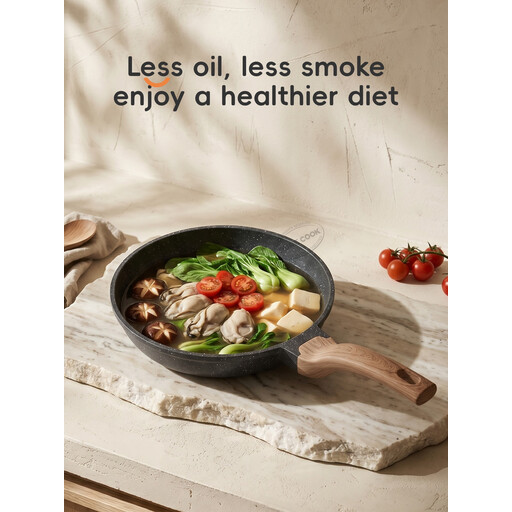
MATCH FOR: Budget-Conscious Beginners
PURECOOK Nonstick Skillet with Wooden Handle|24cm|Marble Coated Aluminum Frying Pan for Everyday Cooking

PURECOOK Nonstick Skillet with Wooden Handle | 24cm

Why This Fits Their Persona: Ideal for daily use in smaller households or as a starter pan. It offers solid non-stick performance for everyday dishes like eggs or vegetables at a very accessible price point.

How It Avoids the Trap

The aluminium alloy body ensures fast, even heating on induction, bypassing the trap of poor performance despite being 'induction-suitable'.

Key Advantage & Pros

Excellent value for money; lightweight design for easy handling; suitable for all common stovetops, including induction.
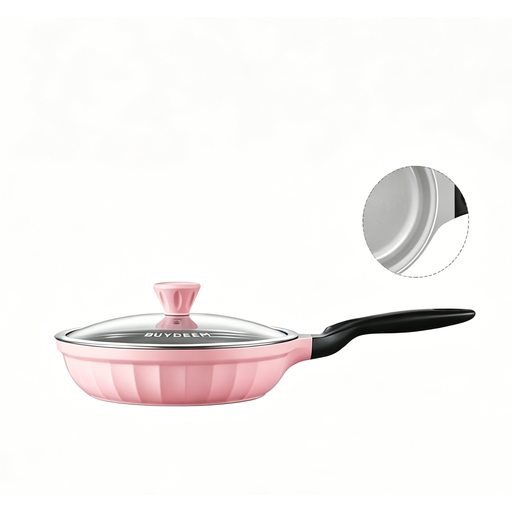
MATCH FOR: Quality-Focused Family Cooks
BUYDEEM Cast Aluminum Non Stick Frying Pan,Rapid Even Heat Milk Pan with Glass Lid,All Stovetops Compatible,No PFOA/PFAS,Cooking Pot with Cool Handle,Cheflite Series , PL41, 26cm , 2.4L,Pink

BUYDEEM Cast Aluminum Non Stick Frying Pan, 26cm

Why This Fits Their Persona: Perfect for families who cook daily and prioritise healthy, chemical-free materials. The 26 cm size and included glass lid make it versatile for a wide variety of dishes.

How It Avoids the Trap

Features a Swiss ceramic coating that is explicitly certified as PFAS- and PFOA-free. The cast aluminium body prevents the base from warping.

Key Advantage & Pros

Toxin-free ceramic coating; even heat distribution thanks to cast aluminium construction; includes a glass lid for versatile cooking.
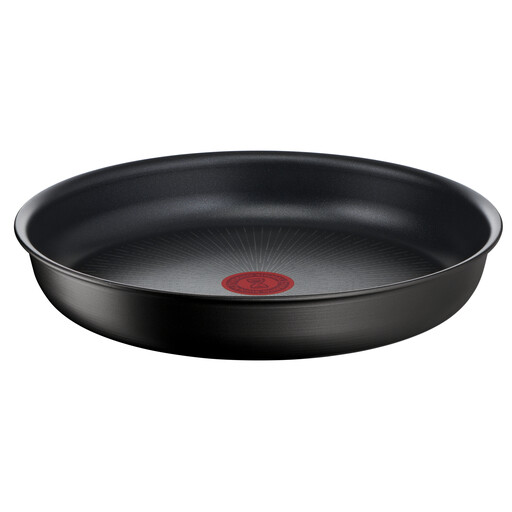
MATCH FOR: Flexible and Space-Saving Cooks
Tefal Ingenio Unlimited Frying Pan 28cm [Stackable, Space-Saving, Non-Stick Coating, L7630632]

Tefal Ingenio Unlimited Frying Pan 28cm

Why This Fits Their Persona: For cooks with limited storage space or those who need cookware that can seamlessly transition from the stovetop to the oven. The large 28 cm pan is ideal for preparing bigger meals.

How It Avoids the Trap

Its high oven-safe temperature (up to 250°C / 482°F without the handle) and Tefal's scratch-resistant coating make it a true multi-functional tool, unlike pans with handles that can melt.

Key Advantage & Pros

Extremely space-saving due to its stackable design; high oven-safe temperature; Thermo-Signal technology indicates the ideal cooking temperature (handle sold separately).

Looking for More Options?

We've compiled a complete, up-to-date list of products that fully meet these strict selection criteria and safety standards.

Frequently Asked Questions (FAQ)

How can I tell if a pan is truly suitable for induction?

The official induction symbol (a pictogram of several loops) on the packaging or the pan's base indicates induction suitability. For a quick test at home, you can hold a simple magnet to the bottom of the pan. If it sticks firmly, the base is ferromagnetic and therefore suitable for induction cooktops.

How do I properly care for a non-stick pan?

To maximise the lifespan of the non-stick coating, you should follow a few basic rules:

  • Only use wooden, silicone, or plastic utensils.
  • Avoid overheating the empty pan.
  • Let the pan cool down completely before cleaning to prevent thermal shock.
  • Clean the pan by hand with a soft sponge and mild dish soap. Most manufacturers advise against cleaning in the dishwasher, as harsh detergents can damage the coating.

Are ceramic pans always the better choice?

A ceramic pan is a great choice for health-conscious cooks as it is free of PTFE, PFOA, and PFAS and can withstand higher temperatures, making it ideal for searing. However, the non-stick properties of some models can be more delicate and may degrade faster with improper handling or the use of oil sprays. PTFE-coated pans often offer a slightly more durable and forgiving non-stick performance for everyday use at low to medium temperatures. The choice ultimately depends on your personal priorities: maximum heat resistance and being toxin-free (ceramic) or a very robust, everyday non-stick performance (high-quality PTFE).