
Lieferung heute & morgen

Qualitätsgarantie

Willkommens-Angebote freischalten: KOSTENLOSE Lieferung | Bis zu 80 % RABATT | Kostenlose 30-Tage-JoyPlus-Testphase
App herunterladen
The search for the right induction frying pan can quickly become overwhelming. The market is flooded with promises of superior non-stick properties and universal compatibility. However, not every pan advertised as "induction-compatible" delivers satisfactory results in practice. Weaknesses often emerge after just a few weeks of use: food sticks, the base warps, or heat is distributed unevenly. This guide will help you recognise common marketing traps and make an informed decision.
Before we dive into the important features, let's highlight the most common reasons for a bad purchase. If you know what to look out for, you can search for quality more effectively.
To avoid the problems mentioned above, you should carefully check three technical aspects before buying. These are the key determinants of your new pan's performance and longevity.
The crucial criterion for an induction frying pan is its base. A high-quality induction base should have a full-surface ferromagnetic layer. This means that a magnetic stainless steel plate is seamlessly integrated into the aluminium or cast aluminium body.
The material of the pan's body and the type of coating define its intended use and maintenance requirements.
The size of the pan should match your hob and your needs. A 24 cm pan is a versatile all-rounder for two-person households, while a 28 cm pan is better suited for families or preparing larger quantities. Ensure that the diameter of the pan's base roughly corresponds to the diameter of your induction cooking zone to ensure optimal energy transfer. For dishes with a lot of liquid or for braising, a pan with a high rim or a special sauté pan with a lid is the right choice.
Here are some models that represent a considered choice for different user profiles based on their objective features.
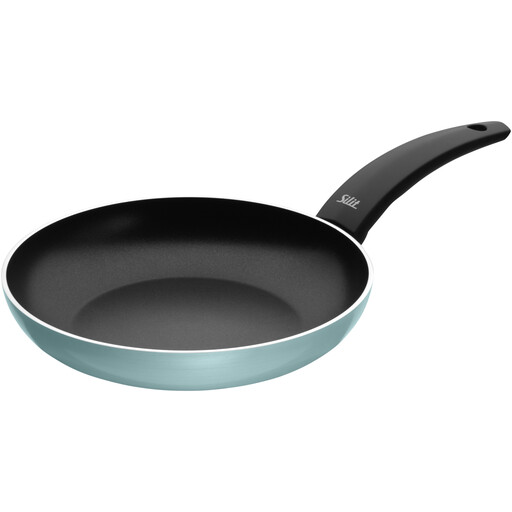
Why this model is a good fit: Ideal for daily use in smaller households. The 24 cm size is perfect for omelettes, vegetables, or one to two pieces of fish. The lightweight aluminium construction makes handling straightforward.
Silit specifies a base construction designed for even heat distribution, which counteracts the "fake induction-readiness" pitfall. The Silitan coating is a branded PTFE coating that promises a defined quality standard.
Fast heating and good heat conduction thanks to the aluminium body. The easy-care surface is designed for gentle, low-fat cooking.

Why this model is a good fit: With a 28 cm diameter, high rim, and glass lid, this pan is ideal for families or for preparing braised dishes, curries, or larger batches of fried potatoes.
As a cast aluminium pan, it offers significantly better heat retention than thin aluminium pans. This counters the pitfall of using the wrong material for braising and ensures constant cooking temperatures.
Excellent heat retention for even cooking and braising. The included pan with lid increases versatility and energy efficiency.

Why this model is a good fit: The focus here is clearly on health-conscious cooking. Its explicit designation as PFAS-free and its Ti-Ceramic coating appeal to users who want to avoid potentially harmful chemicals.
This model directly addresses concerns about short-lived and potentially hazardous coatings. The clear declaration as a PFAS-free ceramic pan creates transparency and avoids the trap of "mystery" non-stick sealants.
The Ti-Ceramic coating is known for its robustness and non-toxic properties. The set also includes a lid, a wooden spatula, and a scrubber, making it a well-thought-out complete package.
We've compiled a complete, up-to-date list of products that fully meet these strict selection criteria and German safety regulations.
The easiest way is the magnet test. Hold a standard magnet to the bottom of the pan. If the magnet sticks firmly to the base, the pan is ferromagnetic and therefore suitable for induction hobs. If it doesn't stick, or only very weakly, the pan will not work on an induction hob.
To maximise the life of the coating, you should follow a few basic rules: Clean the pan by hand with a soft sponge and mild washing-up liquid. Avoid the dishwasher, even if the manufacturer allows it, as aggressive detergents can damage the coating. Only use utensils made of wood, silicone, or plastic. Never preheat the pan empty on the highest setting, and let it cool down completely before washing to avoid thermal shock.
Uneven heating is often a sign of a low-quality or warped pan base. If the base is no longer flat on the hob, energy transfer is disrupted. Humming or buzzing noises can also occur, especially at high power or if the diameter of the pan base is not an optimal match for the size of the cooking zone. A high-quality pan with a thick, flat, and full-surface induction base will minimise these effects.