
Lieferung heute & morgen

Qualitätsgarantie

Willkommens-Angebote freischalten: KOSTENLOSE Lieferung | Bis zu 80 % RABATT | Kostenlose 30-Tage-JoyPlus-Testphase
App herunterladen
Finding a new induction frying pan seems simple. But the reality is often different: the pan heats unevenly, the base warps after just a few weeks, or the highly-praised non-stick performance quickly deteriorates. As a Joybuy Product Recommendation Officer, I see every day which features truly matter and which marketing promises often lead to disappointment. This guide will help you separate the wheat from the chaff and find a pan that meets your needs on an induction cooktop.
Before we dive into the key features, let's highlight the typical traps that often lead to a bad purchase.
To avoid these pitfalls, you should focus on three core aspects. These determine whether an induction frying pan truly masters the technology.
For optimal performance on an induction cooktop, a fully ferromagnetic base is essential. Look for a "sandwich base" or a multi-layered construction. These bases typically consist of a layer of aluminium or copper (for rapid heat conduction) sandwiched between two layers of stainless steel. The outer layer must be magnetic to absorb energy from the induction field. A thick, warp-resistant base ensures even heat distribution and prevents the pan from deforming.
The choice of material and coating depends on what you plan to cook.
The most common size for households is the 28 cm frying pan. Check if the handle is heat-insulated. If the pan needs to be oven-safe, the handle must also be made of a heat-resistant material like stainless steel and contain no plastic parts. A well-balanced handle also ensures safe handling.
Here are some recommendations tailored to different needs and cooking habits.
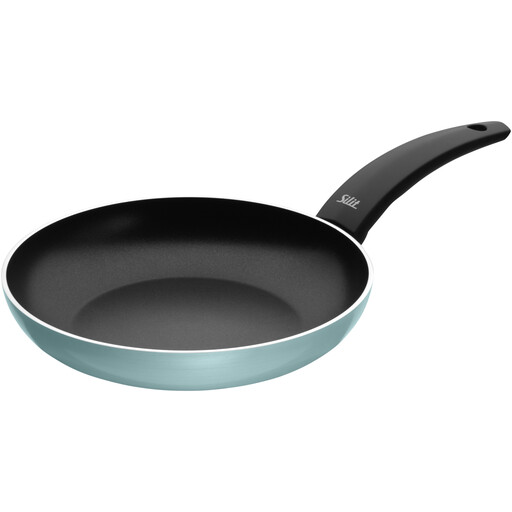
Why This Fits Their Persona: Ideal for cooking novices or as a reliable everyday pan. It combines easy handling and cleaning with a solid price-performance ratio for daily use on induction cooktops.
The aluminium body with an induction-compatible base ensures fast, even heating, bypassing the trap of an inefficient, bonded-on base. The Silitan non-stick coating is designed for low-fat frying, and its temperature limits are clearly defined.
Good heat conduction due to aluminium; easy-care PTFE non-stick coating for delicate foods. Suitable for all cooktop types.

Why This Fits Their Persona: Perfect for chefs who value durability, high heat resistance, and versatility. The uncoated surface is ideal for searing meat, and the pan can go directly from the hob to the oven.
The three-layer (Tri-Ply) construction prevents the pan from warping and provides superior heat retention. As an uncoated stainless steel pan, there are no non-stick promises that can wear off—performance depends on proper cooking technique.
Excellent heat distribution and retention. Robust, scratch-resistant (even for metal utensils), and oven-safe. Includes a glass lid to monitor the cooking process.
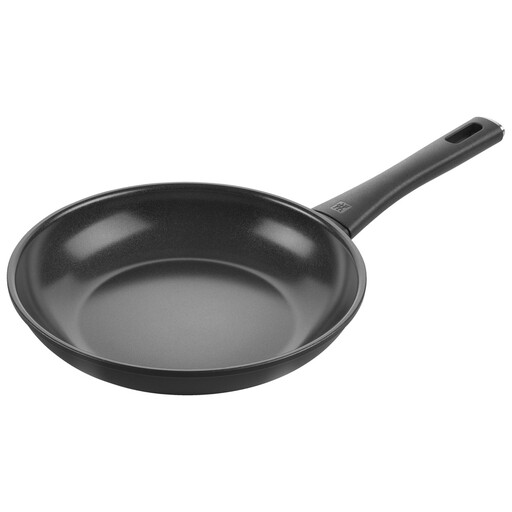
Why This Fits Their Persona: For those who want effective non-stick performance but wish to avoid PTFE and PFOA. The ceramic pan is a great choice for gentle, low-fat frying of vegetables, fish, and egg dishes.
This pan directly addresses concerns about chemical coatings by using a CeraForce ceramic coating that is free of PTFE and PFOA. The forged aluminium body ensures dimensional stability and good heat conduction.
PTFE- and PFOA-free ceramic coating. Very high oven-safe temperature up to 250°C. Fast and even heat distribution thanks to forged aluminium.
We have compiled a complete, up-to-date list of products that fully meet these strict selection criteria and comply with German safety regulations.
The easiest way is the magnet test. Hold a standard magnet to the bottom of the pan's base. If the magnet sticks firmly, the pan is ferromagnetic and therefore suitable for induction cooktops.
Warping is usually caused by thermal stress. The main causes are: a pan base that is too thin, heating the empty pan on the highest setting (especially with the "boost" function), or rinsing a hot pan with cold water. A thick, multi-layered base is significantly more resistant to deformation.
To protect your non-stick pan, you should follow three rules: