Joybuy Insights

Induction Frying Pan Buying Guide: Avoid Costly Mistakes

The search for the right induction frying pan can quickly become overwhelming. The market is filled with marketing claims that often create more confusion than clarity. Many buyers invest in a pan that loses its functionality after just a few months or is unsuitable for their induction hob. Before you make a decision, it's crucial to understand the most common pitfalls to find a durable and functional addition to your kitchen.

As your Joybuy Product Recommendation Officer, I'll help you define objective criteria for your selection and distinguish marketing hype from genuine product features.

The 3 Most Common Pitfalls When Buying a Pan

  1. The Myth of the "Indestructible" Non-Stick Coating: Many manufacturers advertise extremely durable coatings. In practice, however, almost all non-stick layers wear out with daily use, especially with improper care. A coated pan with a ceramic or modern composite surface can be a good choice, but expecting lifelong non-stick performance is often unrealistic.
  2. The "Induction-Ready" Label with No Performance Guarantee: Just because a pan is marked as suitable for induction doesn't mean it distributes heat efficiently and evenly. Pans with a base that is too thin or only partially ferromagnetic tend to form "hot spots" in the centre while the edges remain cool. This causes food to cook unevenly and can lead to burning.
  3. Confusion Over Chemical Terms (PFAS, PFOA, PTFE): Terms like PFOA-free or PFAS-free are relevant for health-conscious buyers. But what do they actually mean? PFAS (per- and polyfluoroalkyl substances) is a large group of chemicals that includes PFOA and PTFE. While PTFE (known by the brand name Teflon) is used in many classic non-stick coatings, more and more consumers are looking for alternatives to avoid potentially harmful substances.

What Really Matters in an Induction Pan

To make an informed decision, you should focus on three core technical parameters that directly impact your pan's performance and longevity.

1. Material and Base Construction

The core of a good induction pan is its base. For optimal performance on an induction hob, the pan's base must be ferromagnetic. High-quality models use a multi-layer construction (often called a "sandwich base"):

  • Stainless steel pan: A pure stainless steel pan is robust and durable, but it's a poorer heat conductor. Therefore, it's often combined with an aluminium core.
  • Aluminium core: Aluminium is an excellent heat conductor. Encased between layers of stainless steel, it ensures fast and very even heat distribution from the base to the rim.
  • Ferromagnetic outer layer: This layer of magnetic stainless steel is essential for interacting with the induction field. A thick, full-surface base ensures maximum energy efficiency and prevents warping.

2. Type of Coating

The choice of coating depends on your cooking habits and priorities.

  • Ceramic coating: A ceramic pan is a popular alternative to traditional non-stick coatings. It is often free of PTFE and PFOA and allows for healthy frying with little fat. Modern ceramic coatings are often reinforced with particles like titanium or diamond to increase their durability.
  • PTFE coating (classic non-stick): These coatings offer excellent non-stick properties. Models from established manufacturers are now typically PFOA-free. However, they can release fumes if overheated, so they should not be heated empty on the highest setting.
  • Uncoated stainless steel pan: Ideal for searing meat at high heat. It requires a bit more practice and fat but is extremely durable, scratch-resistant, and oven-safe at high temperatures.

3. Size and Practical Features

The right size is crucial for daily use.

  • 24 cm pan: Ideal for single-person households, couples, or for preparing side dishes and smaller meals like fried eggs.
  • 28 cm pan: The standard size for families or anyone who regularly cooks larger quantities. It offers enough space for multiple pieces of meat, vegetables, or one-pan meals.

Also, look for features like being oven-safe (important if you want to finish dishes in the oven) and whether the pan is dishwasher-safe. A heat-insulated handle provides extra safety on the hob.

Top Picks for Every Profile

Instead of making a one-size-fits-all recommendation, we have identified models that meet specific needs and avoid the pitfalls mentioned earlier.
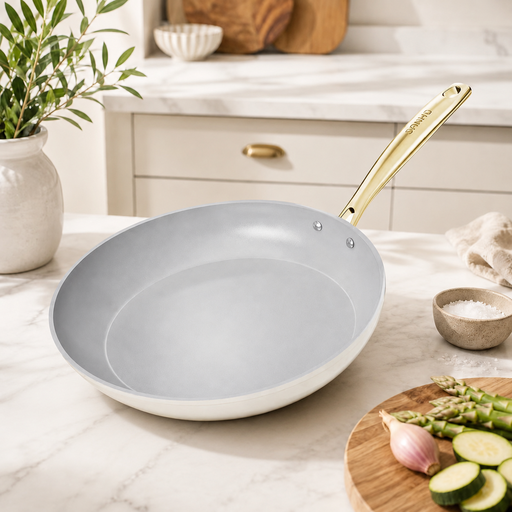
MATCH FOR: Health-Conscious Daily Users
Sanho 26cm Non Stick Frying Pan, Diamond-Titanium Ceramic, PFAS Free

Sanho 26cm Non-Stick Frying Pan, Diamond-Titanium Ceramic, PFAS-Free

Why This Fits Their Persona: Ideal for daily use in families or by health-conscious cooks who value toxin-free preparation without sacrificing the convenience of a non-stick coating.

How It Avoids the Trap

The pan is explicitly declared as free of PFAS, PFOA, and PTFE, bypassing the confusion around chemical additives. The aluminium core with a stainless steel base ensures even heat distribution on induction hobs.

Key Advantage & Pros

The patented diamond-titanium ceramic coating offers high scratch resistance. Additionally, the pan is oven-safe up to 260°C, making it highly versatile.
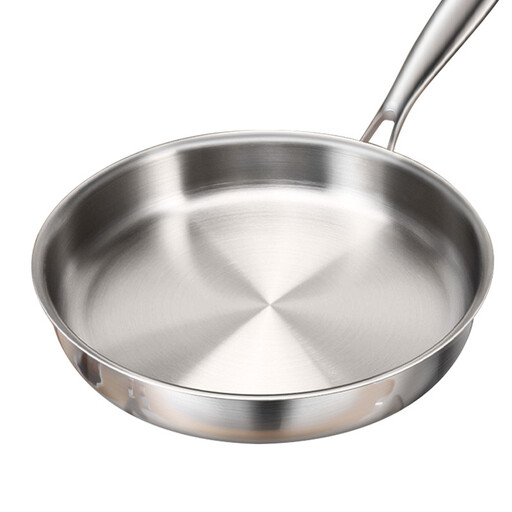
MATCH FOR: Ambitious Home Chefs
PURE COOK 304 Triple-Ply Stainless Steel Frying Pan Series

PURE COOK 304 Triple-Ply Stainless Steel Pan, 28cm

Why This Fits Their Persona: Perfect for chefs who want maximum control, high temperatures for searing, and an extremely durable pan without a coating. Ideal for steaks, fried potatoes, and dishes that are finished in the oven.

How It Avoids the Trap

As an uncoated stainless steel pan, there is no non-stick layer that can wear out. The triple-ply construction with an aluminium core guarantees superior, even heat distribution and avoids typical hot spots.

Key Advantage & Pros

Extremely robust and resistant to scratches, even when using metal utensils. Its high heat resistance allows for searing and use in the oven.
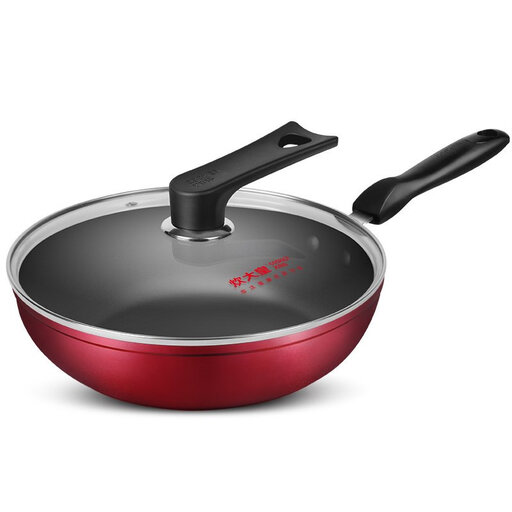
MATCH FOR: Pragmatic Family Managers
COOKER KING Frying Pan - Non Stick - PFAO Free - 28cm

COOKER KING Frying Pan - Non-Stick - PFOA-Free - 28cm

Why This Fits Their Persona: A straightforward, large pan for everyday use. The 28 cm pan is ideal for family-sized portions, and the non-stick coating simplifies both cooking and cleanup in a hectic daily routine.

How It Avoids the Trap

This pan offers a clear product feature: a PFOA-free non-stick coating. The robust construction ensures even heat distribution and is designed for all hob types, including induction.

Key Advantage & Pros

The combination of a large diameter (28 cm), reliable non-stick performance, and universal hob suitability makes it a practical all-rounder for the family kitchen.

Looking for more options?

We have compiled a complete, up-to-date list of products that fully meet these strict selection criteria and safety standards.

Frequently Asked Questions (FAQ)

1. How can I tell if my old pan is induction-compatible?

The easiest way is the magnet test. Hold a standard magnet to the base of the pan. If the magnet sticks firmly, the base is ferromagnetic, and the pan is suitable for induction hobs.

2. What does PFAS-free mean, and why is it relevant?

PFAS is a large group of industrial chemicals that are very persistent in the environment. Some of these substances are suspected of posing health risks. A ceramic pan or stainless steel pan labelled as PFAS-free is manufactured without this group of chemicals. This is important information for consumers who value health- and environmentally-conscious product choices.

3. How do I properly care for a coated frying pan to extend its lifespan?

To maintain the non-stick effect for as long as possible, you should follow a few basic rules:

  • Avoid metal utensils; instead, use cooking tools made of wood, silicone, or plastic.
  • Never heat the pan empty on the highest setting.
  • Let the pan cool down after use before rinsing it with cold water to avoid thermal shock.
  • Even if many pans are listed as dishwasher-safe, gentle hand washing is often the better choice for preserving the coating.