
Lieferung heute & morgen

Qualitätsgarantie

Willkommens-Angebote freischalten: KOSTENLOSE Lieferung | Bis zu 80 % RABATT | Kostenlose 30-Tage-JoyPlus-Testphase
App herunterladen
The search for the right induction frying pan can quickly become overwhelming. The market is filled with promises of superior performance and durability. Yet, it's not uncommon to find that after just a few months, the new pan has warped, the coating is failing, or the heat distribution on the induction hob is uneven. The result is often frustration and the feeling of having wasted money on a product that can't handle the demands of daily use.
As your Joybuy Product Recommendation Officer, I'm here to help you distinguish marketing promises from genuine product features. Below, we'll highlight the most common pitfalls and show you which technical features to look for to make an informed decision.
Many product features sound convincing on paper but prove problematic in practice. Here are three typical marketing traps you should be aware of.
Almost every modern pan today carries the "suitable for all hobs" label, including induction. However, this claim alone is no guarantee of good performance. A pan only works efficiently on an induction hob if its base has ferromagnetic properties. Models with a base that is too thin or insufficiently magnetic will heat up slowly, unevenly, and consume unnecessary energy. The food cooks in some spots while remaining raw in others.
A coated pan with non-stick properties promises searing without sticking and easy cleanup. However, many budget-friendly models use coatings that quickly lose their effectiveness with improper use—such as overheating or using metal utensils. Scratches and wear can render the pan unusable, often requiring replacement in less than a year.
The oven-safe feature is essential for many dishes that are seared on the hob and finished in the oven. Often, however, the specified heat resistance only applies to the pan's body. The handle, especially if made of plastic, significantly limits the maximum temperature. A pan with a handle that is only heat-resistant up to 70°C is not suitable for gratins or braising at high temperatures, severely restricting your culinary options.
To avoid the pitfalls mentioned above, it's important to focus on the objective and measurable properties of a pan.
For optimal performance on an induction hob, the construction of the base is critical. A high-quality base consists of multiple layers (often called a "sandwich base"), typically featuring an aluminium core encased in ferromagnetic stainless steel.
The choice of surface depends heavily on your cooking habits.
The most common size is the 28 cm pan, as it is versatile enough for preparing meals for two to four people. For specific needs, other types are available:
Based on the criteria above, we have curated a selection of products suitable for different user profiles and requirements.
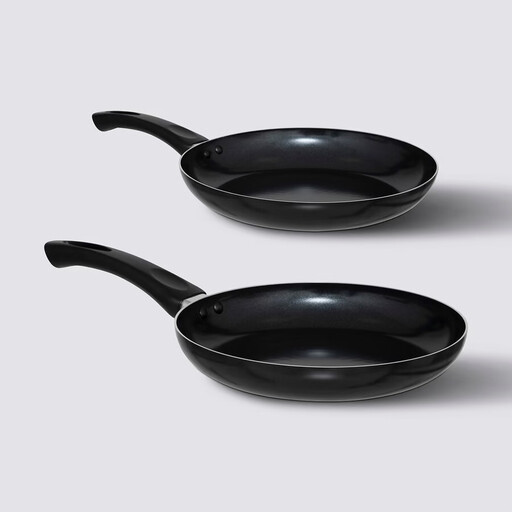
Why This Fits Their Persona: Ideal for a first kitchen or as a basic setup. This set covers everyday cooking needs with two common sizes without breaking the budget. The aluminium construction ensures fast heating.
This set is explicitly specified for induction and other hob types, offering a functional basic setup that bypasses the trap of unclear compatibility.
Offers two pan sizes (24 cm and 28 cm) in one package. Its compatibility with all hob types, including induction, makes it a flexible choice.
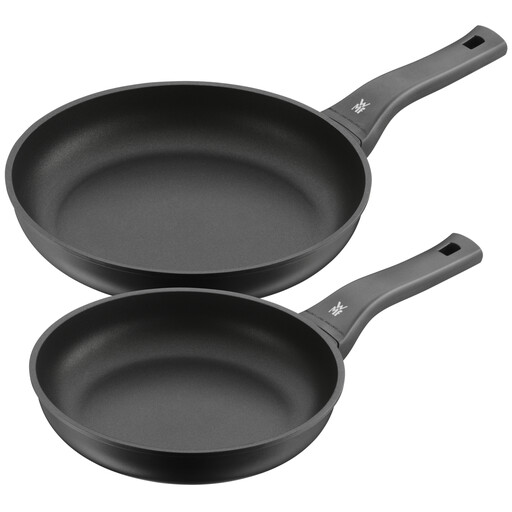
Why This Fits Their Persona: Those who cook daily value reliability and durability. This induction pan set from WMF combines a well-known brand name with proven technology for continuous use.
The three-layer PermaDur non-stick coating is designed for durability and is more resilient than basic coatings. The TransTherm universal base ensures optimised heat distribution on induction hobs.
The dimensionally stable cast aluminium body and the TransTherm base guarantee even heat distribution and retention. The heat-reducing handle provides additional safety.
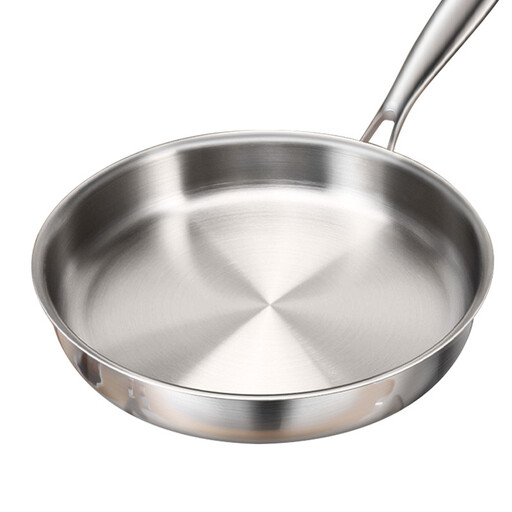
Why This Fits Their Persona: Anyone looking for precise control and maximum heat for the perfect steak will reach for an uncoated stainless steel pan. This model is designed for high temperatures and is extremely robust—a tool for demanding tasks.
As an uncoated pan, it completely bypasses the pitfall of short-lived non-stick coatings. The triple-ply construction is designed for maximum heat distribution and dimensional stability, making it ideal for induction.
The multi-layer (3-ply) stainless steel construction provides excellent heat conduction and retention. The surface is scratch-resistant and can withstand the use of metal utensils.
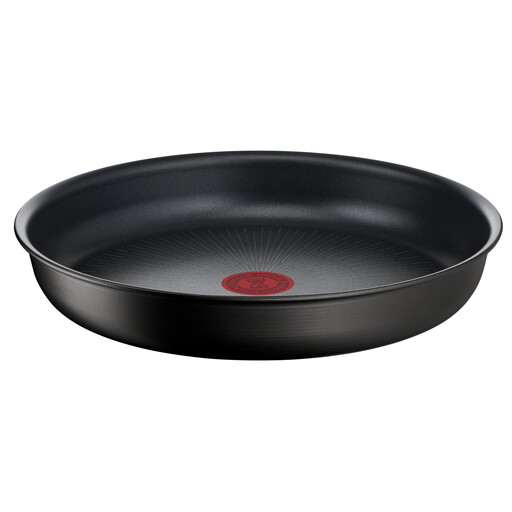
Why This Fits Their Persona: In kitchens with limited storage, every space-saving detail is invaluable. The Ingenio system with its detachable handle allows pans to be stacked and used flexibly from the hob to the oven to the fridge.
Because the handle is removable, the pan body is fully oven-safe. This elegantly bypasses the trap of a non-heat-resistant handle. According to Tefal, the Titanium 6X non-stick coating is up to 6 times more durable than standard coatings.
Extremely space-saving, stackable design. The Thermo-Signal indicator shows when the pan has reached the ideal frying temperature, simplifying handling.
Perhaps you're specifically looking for a pan for the perfect steak. We've compiled a complete, up-to-date list of products that meet strict selection criteria and safety regulations.
There are two simple methods. Look for the induction symbol, which resembles a horizontal coil, on the pan's base or packaging. Alternatively, you can perform the magnet test: hold a standard magnet to the base of the pan. If it sticks firmly, the pan is suitable for induction hobs.
To protect the non-stick coating, you should follow a few basic rules. Avoid using sharp-edged metal utensils; opt for wood or silicone instead. Never heat the pan empty on the highest setting. Although many pans are labelled as dishwasher-safe, hand washing with a soft sponge and mild detergent is recommended, as harsh cleaning agents can damage the coating.
A higher price often correlates with objective quality features. Brands like WMF or Silit frequently invest in more sophisticated base constructions (e.g., TransTherm universal base), which ensure better heat distribution and retention on induction hobs. They also often use multi-layered and more durable non-stick sealants. Whether the investment is worthwhile for you depends on your individual cooking habits and quality expectations.