
Lieferung heute & morgen

Qualitätsgarantie

Willkommens-Angebote freischalten: KOSTENLOSE Lieferung | Bis zu 80 % RABATT | Kostenlose 30-Tage-JoyPlus-Testphase
App herunterladen
Buying a new induction frying pan might seem straightforward, but the market is flooded with marketing promises that often obscure more than they clarify. Many buyers find that after just a few months, the pan base warps, the coating deteriorates, or the cooking results are uneven. As your Joybuy Product Recommendation Officer, I'm here to help you identify these pitfalls and make an informed decision based on facts, not advertising slogans.
Before we dive into the essential features, let's highlight the typical issues that can lead to a poor purchase.
To find a durable and functional pan for induction, you should check three technical aspects.
The heart of any induction pan is its base. Since aluminium itself is not magnetic, aluminium pans require a special base plate made of a ferromagnetic material (usually stainless steel).
A good coated frying pan makes low-fat cooking and cleaning easier. The two most common types are PTFE and ceramic.
The right size depends on your household. A 24 cm pan is usually sufficient for one to two people, while a 28 cm pan is well-suited for families or cooking larger portions. An important additional feature is being oven-safe. A pan declared as oven-safe allows you to sear dishes on the hob and then finish them in the oven. Always check the maximum temperature resistance, especially that of the handle.
Based on objective product characteristics, we have identified a few models that are well-suited for specific user profiles.
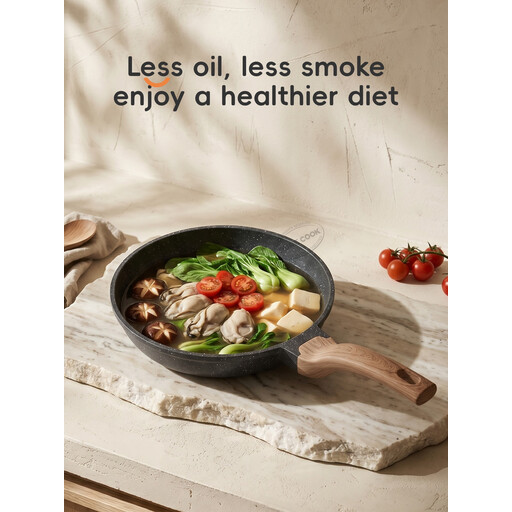
Why it's a good fit: A straightforward and functional solution for daily use. The 24 cm size is ideal for smaller households and quick meals. It offers all the necessary basic functions without costly extras.
The product description is transparent: it's an aluminium alloy with a stone-look non-stick coating. No false claims about materials are made.
The lightweight aluminium body ensures fast, even heating and easy handling, making it highly practical for everyday use.
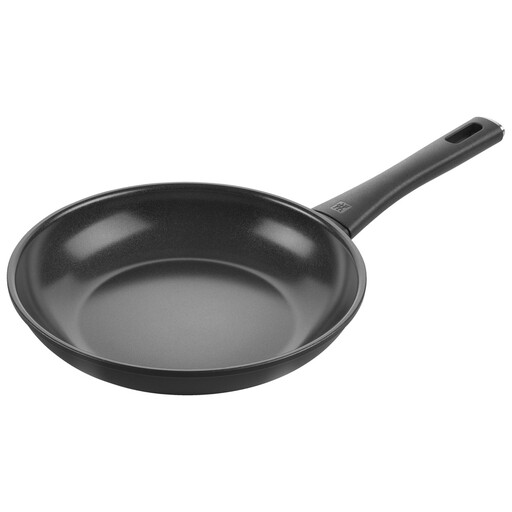
Why it's a good fit: For ambitious cooks who value durability, precise heat control, and versatility. Being oven-safe significantly expands its range of uses.
The forged aluminium body is dimensionally stable and resists warping. The CeraForce ceramic coating is clearly declared as PTFE- and PFOA-free, ensuring transparency.
Its high oven-safe temperature of up to 250 °C and heat-insulating stainless steel handle make it a flexible tool for complex dishes that start on the hob and finish in the oven.
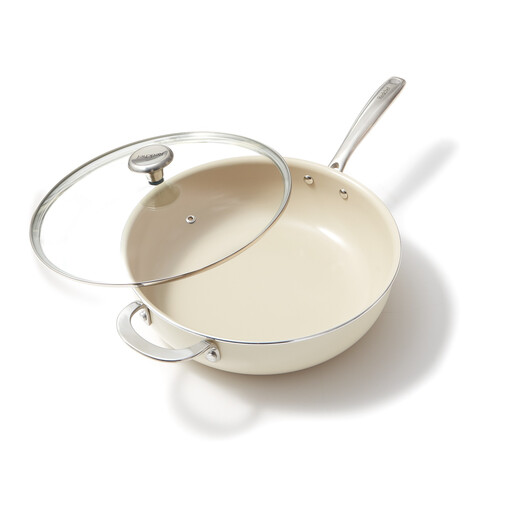
Why it's a good fit: With a 28 cm diameter and high sides, this pan is ideal for preparing large quantities. The included glass lid and health-conscious ceramic coating are particularly relevant for families.
The product description explicitly lists that the ceramic coating is free of PFAS, PFOA, lead, and cadmium. The heavy-gauge cast aluminium body is torsion-resistant and prevents the base from warping.
The large capacity of approx. 4.7 litres and the included lid make it a versatile braising and frying pan suitable for a wide variety of dishes.
We have compiled a complete, up-to-date list of products that fully meet these strict selection criteria and German safety regulations.
The most reliable sign is the induction symbol (a coil or a lightning bolt in a square) on the bottom of the pan or on its packaging. Alternatively, you can perform the magnet test: hold an ordinary fridge magnet to the pan's base. If it sticks firmly, the pan is ferromagnetic and therefore suitable for induction hobs.
Proper care is crucial. Avoid metal utensils and use ones made of wood, silicone, or plastic instead. Never heat the pan empty on the highest setting. Allow the pan to cool completely after use before cleaning it with water and a soft sponge to prevent thermal shock. Even if some pans are declared dishwasher-safe, hand washing is generally recommended to protect the coating.
Both have their merits. A coated frying pan with PTFE often provides a very effective and durable non-stick performance. A ceramic pan is free of fluoropolymers and can often withstand higher temperatures. However, its non-stick properties can diminish more quickly if overheated or scratched. For health-conscious consumers who want to avoid all types of PFAS, ceramic is a good alternative. Both modern coating types are PFOA-free in accordance with EU regulations.