
Lieferung heute & morgen

Qualitätsgarantie

Willkommens-Angebote freischalten: KOSTENLOSE Lieferung | Bis zu 80 % RABATT | Kostenlose 30-Tage-JoyPlus-Testphase
App herunterladen
An induction frying pan needs to do more than simply work magnetically with the hob. For keen home cooks, families and households with limited storage space, the right size, a durable coating, a secure handle and easy cleaning are also important. Anyone who focuses solely on terms such as ‘scratch-resistant’, ‘ceramic’ or ‘dishwasher-safe’ may overlook important details.
A 28 cm frying pan usually refers to the top rim, not the actual heated base area. If the base of the pan is significantly smaller than the induction zone, heat distribution may be uneven. For small portions, 20 to 24 cm is often sufficient. Family meals or larger quantities benefit from 28 to 30 cm, but require enough space on the hob.
You should therefore check three measurements:
For example, the 24 cm Silit Belluna is recommended for a hob with a diameter of around 18 cm. According to the product details, the 20 cm version is designed for a cooking zone of approximately 14.5 cm.
A coated frying pan may feature PTFE, ceramic or a hybrid surface. These materials differ in terms of care, temperature limits and usage recommendations.
The term scratch-resistant frying pan should not be interpreted as permission to use knives or sharp-edged metal turners. Even surfaces described as scratch-resistant remain sensitive to improper handling.
A dishwasher-safe frying pan may be placed in the dishwasher according to the product description, but many manufacturers still recommend hand-washing to help preserve the coating for longer. The lowest temperature limit of individual components is also important. With some models, the pan itself is oven-safe, while the plastic handle can only withstand a significantly lower temperature.
Before buying, you should check:
An aluminium frying pan is usually lightweight and heats up quickly. To work on an induction hob, it generally needs a magnetic stainless steel base or a suitable induction disc. Coated aluminium models are often suitable for delicate foods such as eggs, fish or pancakes.
Multi-layer stainless steel frying pans often have an aluminium core for heat conduction. They are generally heavier, but can distribute heat evenly throughout the pan body. An uncoated stainless steel frying pan requires the right temperature and fat technique, as food can stick more easily.
For a single-person household or small side dishes, 20 to 24 cm is practical. A 28 cm frying pan provides more room for vegetables, meat or several portions. High sides are useful when tossing vegetables, preparing sauces or using the pan for braising.
A lid expands the range of uses. A frying pan with lid is suitable for finishing cooking, braising and keeping food warm, for example. Check whether the lid is included or must be purchased separately.
A plastic or Bakelite handle remains relatively easy to handle during normal hob use, but may limit oven use. A removable handle saves storage space and makes it easier to move the pan from the hob to the oven. With these systems, the handle must lock into place correctly before every use. The Tefal Ingenio Unlimited is supplied without a handle; the matching handle is required separately.
For everyday use, the following also matter:
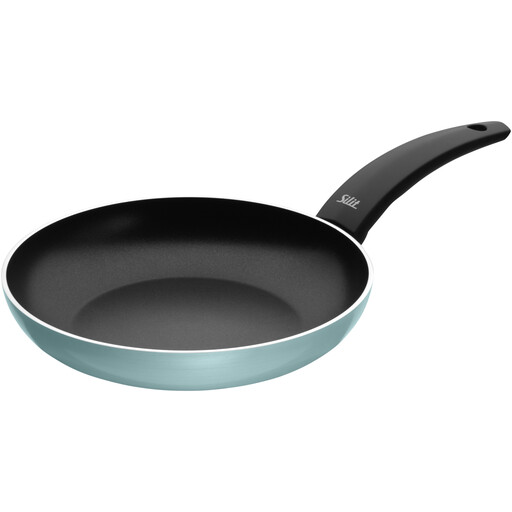
Why this product suits the profile: The 24 cm size is suitable for small to medium-sized portions. According to the product details, the pan works on induction, gas, electric and ceramic hobs.
The stated optimum hob diameter of around 18 cm makes it easier to match the pan base to the cooking zone. The temperature limit of 260 °C for the pan body and 70 °C for the oven must be observed carefully.
Coated aluminium, low weight, Bakelite handle and, according to the supplier, a 5-year guarantee covering materials, workmanship and non-stick performance.
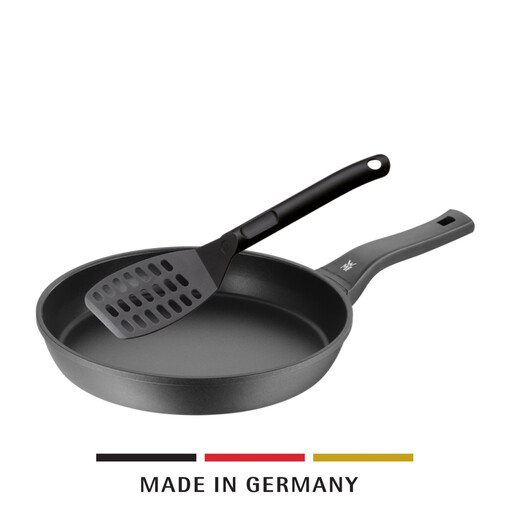
Why this product suits the profile: The 28 cm pan body provides plenty of room for larger portions. The included turner is designed for everyday use straight out of the box.
The specifications state an optimum hob diameter of around 22 cm and an oven temperature limit of 70 °C. This makes it easier to match the features to your own cooker and intended use.
Coated cast aluminium, high sides, 3-layer PermaDur PTFE coating and, according to the supplier, a 5-year guarantee.
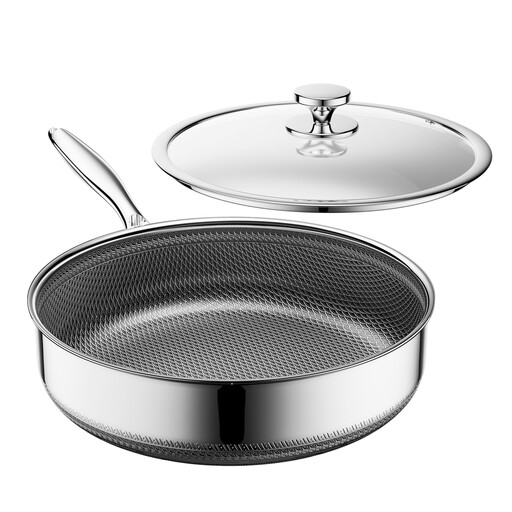
Why this product suits the profile: The deep shape with glass lid is suitable for braised dishes, vegetable pan dishes and recipes where liquid needs to remain in the cookware.
The specifications clearly distinguish between the pan’s temperature limit of up to 260 °C and the glass lid’s limit of up to 148 °C. Hand-washing is also recommended despite the pan being dishwasher-safe.
Stainless steel and ceramic construction, glass lid, induction compatibility and, according to the product description, a PFAS-, PTFE- and PFOA-free coating.
Its lifespan depends heavily on how it is used. Use wooden, silicone or plastic turners, and do not heat the pan empty for extended periods. On an induction hob, a medium setting is usually sufficient, as heat becomes available quickly.
When cleaning:
Low-fat frying is possible with many non-stick frying pans, but it does not replace proper temperature control. With uncoated stainless steel models, preheating and an adequate, evenly distributed layer of fat are particularly important.
We have put together a complete, regularly updated list of products that fully meet these strict selection criteria and the safety regulations applicable in the EU.
An induction frying pan needs a magnetic base. Suitable examples include frying pans made from magnetic stainless steel or aluminium models with an integrated stainless steel induction disc. Check the induction symbol and the manufacturer’s information before buying.
There is no universal lifespan. The type of coating, temperature, kitchen utensils and cleaning method all play a part. Heating the pan empty, using metal tools and abrasive sponges can damage the surface prematurely. A manufacturer’s guarantee also only applies under the specific conditions stated.
That depends on the specific model. Some frying pans are explicitly dishwasher-safe, but hand-washing is often recommended nonetheless. Handles, coatings and lids in particular should be cared for according to the relevant instructions.