
Lieferung heute & morgen

Qualitätsgarantie

Willkommens-Angebote freischalten: KOSTENLOSE Lieferung | Bis zu 80 % RABATT | Kostenlose 30-Tage-JoyPlus-Testphase
App herunterladen
An induction frying pan needs to do more than simply respond magnetically to the hob. Its size, base construction, coating, handle and cleaning requirements all determine whether it remains practical for everyday use. Anyone who focuses only on terms such as “non-stick”, “suitable for all hob types” or “scratch-resistant” may overlook important details.
A frying pan for induction may also be suitable for gas, electric and ceramic hobs. However, this does not automatically mean that it can be used in the oven without restrictions. The maximum temperature, as well as the material used for the handle and any lid, is crucial.
A plastic or Bakelite handle can limit oven use. For example, the WMF PermaDur Premium is listed as oven-safe up to 70 °C, even though the pan is heat-resistant up to 260 °C. These two specifications should not be treated as equivalent.
A coated induction frying pan makes it easier to remove delicate food. However, it generally requires more careful use. Metal utensils, abrasive sponges, high heat and prolonged heating while empty can damage the surface.
“Dishwasher-safe” is not necessarily proof of quality in every situation either. Despite this approval, manufacturers recommend hand-washing many pans to help protect the coating over the long term.
A 28 or 30 cm pan provides plenty of cooking space, but it needs a sufficiently large induction zone. On some models, the usable base is considerably smaller than the top rim. For even heating, the magnetic base of the pan should match the cooking zone as closely as possible.
For a two-person household, a 22 to 24 cm pan is often sufficient. Anyone cooking for several people is more likely to benefit from 28 cm or more. The greater weight and additional storage space required should also be taken into account.
An induction hob heats the magnetic base of the pan directly. A multi-layer construction can distribute heat more evenly. Stainless steel models often feature an aluminium core between layers of stainless steel. This construction combines magnetic compatibility with a heat-conducting middle layer.
A stainless steel frying pan for induction is generally uncoated. This makes it suitable for high temperatures and use with a range of kitchen utensils. However, food can stick more easily. Preheating, using the right temperature and adding enough fat are more important with these models than with a non-stick frying pan.
When choosing a traditional non-stick coating, users should consider the following:
A ceramic pan for induction is not necessarily made from solid ceramic. It is often an aluminium or stainless steel body with a ceramic coating. The Naturepan models are specifically described as metal pans with a ceramic surface.
The classic shallow frying pan is suitable for eggs, vegetables, meat and pancakes. A tall sauté pan with lid is more practical for sauces, stews and dishes with a larger volume. A wok pan for induction needs a sufficiently large, flat contact surface so that the induction zone can heat the base reliably.
For crêpes, dosa or tortillas, a crêpe pan with a low rim offers advantages. It makes turning and spreading the batter easier, but is less versatile than a tall all-purpose pan.
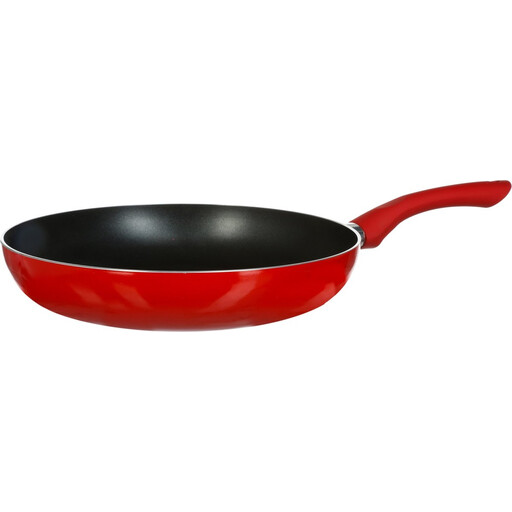
Why this product suits this profile: This 30 cm aluminium pan is aimed at households looking for a large everyday cooking surface and compatibility with gas, electric, ceramic and induction hobs. Two non-stick layers and a stated capacity of 2.8 litres cover typical pan dishes.
The specifications explicitly mention the stainless steel induction base and suitability for several hob types. Dishwasher cleaning is also possible, although hand-washing is recommended to help protect the pan.
30 cm diameter, 940 g weight, two non-stick layers and broad hob compatibility.
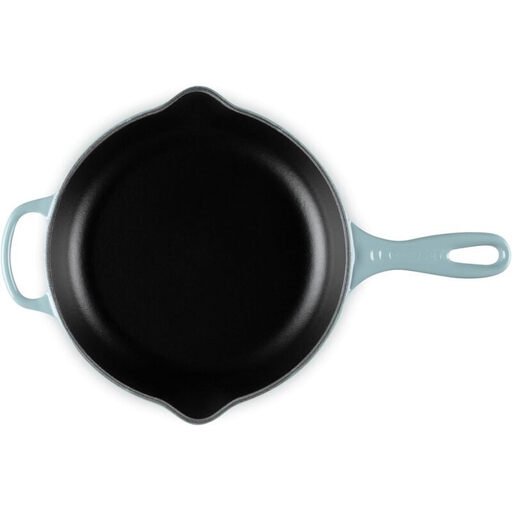
Why this product suits this profile: This enamelled cast iron pan is listed as suitable for induction, other hob types, ovens and barbecues. At 1.93 kg, it is heavier, but the product description states that it retains heat for longer.
The oven limit is stated as 350 °C, and the surface is enamelled rather than covered with a traditional non-stick coating. Users should nevertheless avoid abrasive cleaning products and metal scouring pads.
Cast iron body, enamel finish, serving function and suitability for the hob, oven and barbecue.
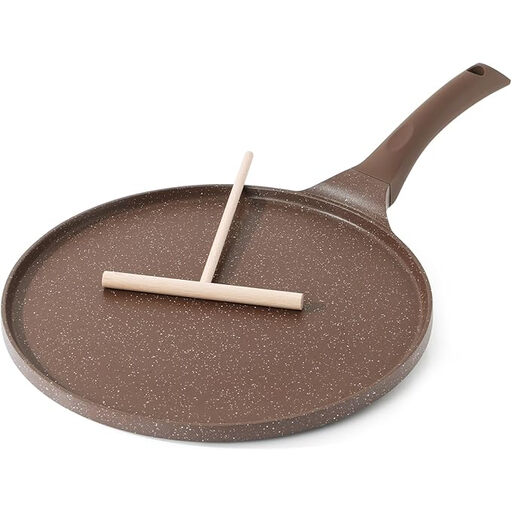
Why this product suits this profile: With a rim height of 1.27 cm, this shallow crêpe pan is designed for crêpes, pancakes, dosa, tortillas and omelettes. The manufacturer states that it is suitable for induction, gas and electric hobs, as well as oven use up to 302 °F.
Its intended use is clearly limited to shallow foods rather than promising to be a versatile sauté pan. The product specifications also explicitly advise hand-washing and avoiding metal utensils.
Shallow shape, magnetic stainless steel base, Bakelite handle and Swiss Granite non-stick coating according to the manufacturer.
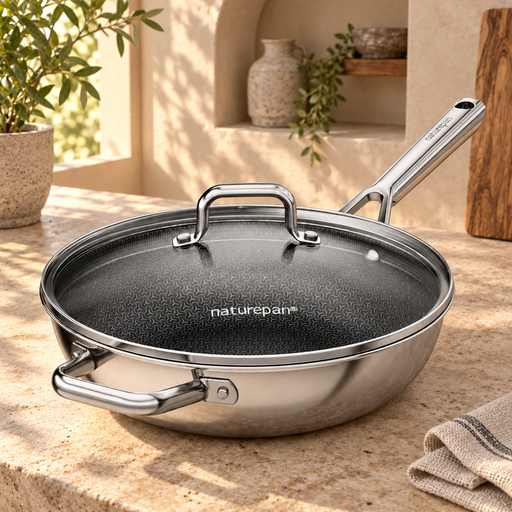
Why this product suits this profile: This tall 28 cm pan with lid is suitable for sauces, braised dishes, vegetables and larger portions. The manufacturer states that it is suitable for induction, gas, electric and ceramic hobs, as well as oven use up to 230 °C without the lid.
The specifications clearly distinguish between hob and oven use and state that the lid must be removed before placing the pan in the oven. Hand-washing is recommended despite the pan being dishwasher-safe.
28 cm diameter, tall rim, matching lid, ceramic coating and compatibility with several hob types.
For a coated induction frying pan, medium heat is recommended. The pan should not be left empty on the highest setting for a prolonged period. Wooden, silicone or nylon turners reduce the risk of scratches. Allow the cookware to cool naturally before cleaning; a sudden change in temperature can put stress on the material and coating.
An uncoated stainless steel pan requires a different technique. Heat the pan first, then add the oil. If the food is added too early, it is more likely to stick. Stainless steel is dishwasher-safe, but cleaning with a soft sponge helps protect the surface.
Before buying an ovenproof frying pan, check three specifications: maximum temperature, whether the handle is oven-safe and whether the lid is approved for oven use. Models with plastic handles often have a lower oven limit than cookware made entirely from metal.
We have put together a complete, regularly updated list of products that fully meet these strict selection criteria and the safety regulations applicable in the EU.
For everyday cooking, 26 to 28 cm is often a practical size. A coated version makes it easier to prepare delicate foods. If you prefer high temperatures or want to avoid coatings, you can choose a stainless steel pan with a multi-layer base.
No. Suitability should be stated explicitly in the product specifications. Many models in this selection are listed as suitable for induction, gas, electric and ceramic hobs. An additional check with the manufacturer may be required for halogen or infrared hobs.
There is no standard service life that applies in every case. It depends on heat, kitchen utensils, cleaning and frequency of use. Avoiding metal tools, abrasive cleaning products and prolonged heating while empty helps reduce typical surface damage. The key is to follow the manufacturer’s specific care instructions.