
Lieferung heute & morgen

Qualitätsgarantie

Willkommens-Angebote freischalten: KOSTENLOSE Lieferung | Bis zu 80 % RABATT | Kostenlose 30-Tage-JoyPlus-Testphase
App herunterladen
An induction frying pan needs to do more than simply work on an induction hob. The base, coating, size and intended use are all important. If you only look for terms such as “non-stick” or “suitable for all hob types”, you can easily overlook crucial details.
An induction-compatible frying pan needs a magnetic or ferromagnetic base. The base diameter should also match the cooking zone. If the pan is considerably smaller or the base is not fully in contact with the hob, heat distribution may be uneven.
The description “suitable for all hob types” often covers gas, electric, ceramic and induction hobs. However, compatibility with halogen or infrared hobs is not always explicitly confirmed. You should therefore check the manufacturer’s specifications before buying.
Many models described as a ceramic pan are made from aluminium or stainless steel and simply have a ceramic non-stick coating. This is not necessarily a disadvantage, but it should be understood correctly. A coated aluminium pan usually responds more quickly to temperature changes, while stainless steel or cast iron models may be heavier and retain heat for longer.
A non-stick frying pan is not automatically suitable for maximum heat. Heating it empty for a long time, exposing it to sudden temperature changes and using sharp-edged metal utensils can damage the surface. Information such as “dishwasher-safe” also does not mean that using a dishwasher will extend the coating’s service life.
For eggs, fish, pancakes and vegetable dishes, a coated frying pan is practical because food is easier to release at moderate heat. Aluminium distributes heat quickly and generally keeps weight low. A ceramic coating can be used with little oil, but it also requires gentle cleaning.
A stainless steel frying pan does not have a non-stick coating and is suitable for searing. However, the right technique is important: preheat the pan, add the oil afterwards and control the temperature. With uncoated stainless steel, food may stick more firmly if the pan is too cold or too hot.
Cast iron retains heat for a long time and is suitable for high-heat searing. However, models are considerably heavier. This should be taken into account if you regularly lift, pour from or store the pan.
With a deep frying pan, the internal height is just as important as the diameter. A frying pan with a lid can also be used for braising, sautéing and keeping food warm. A glass lid makes it easier to monitor the food, while a well-fitting lid helps retain moisture in the pan.
Before buying, check whether the pan is dishwasher-safe, which utensils are recommended and whether the handle is removable or suitable for use in the oven. With coated models, wooden, silicone or nylon utensils are usually the better choice. Even with stainless steel, abrasive cleaners and wire wool should be avoided if you want to protect the surface.
The maximum oven temperature does not always apply equally to the pan and the lid. With some products, the lid must be removed before using the pan in the oven. Handles and lids can become hot, so oven gloves or pan holders are essential for safe handling.

Why this product suits this profile: The lightweight aluminium pan is designed for gas, electric, ceramic and induction hobs, making it suitable for everyday portions.
Hob compatibility and the 24 cm diameter are clearly specified. However, the stated temperature limit should still be observed, and the pan should not be overheated while empty.
Coated aluminium, a 24 cm diameter and a plastic handle; according to the product information, it comes with a five-year manufacturer’s warranty.
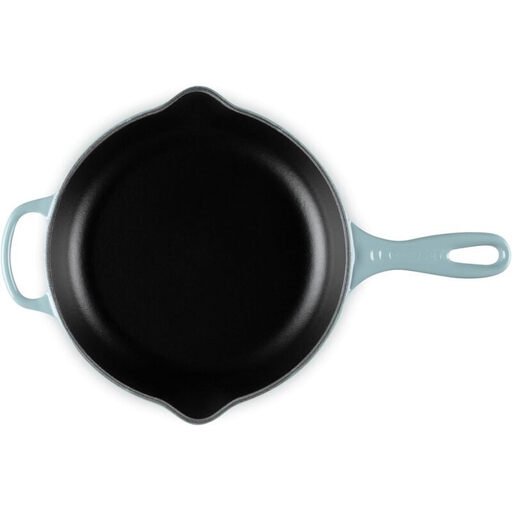
Why this product suits this profile: The enamelled cast iron pan is designed for all hob types, including induction, as well as for use in the oven and on the grill.
The material is clearly identified as enamelled cast iron. At 1.93 kg, it is visibly heavier than aluminium pans.
Heat-retaining cast iron, enamel coating, serving function and a stated maximum temperature of 350 °C.
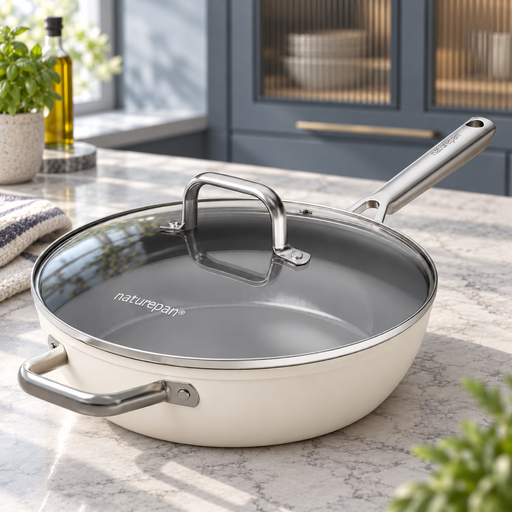
Why this product suits this profile: The deep shape and included lid are ideal for sauces, vegetable stir-fries, braised dishes and larger portions.
It is explicitly described as ceramic-coated aluminium, rather than solid ceramic. The coating requires low to medium heat and gentle utensils.
28 cm diameter, 7.5 cm body height, lid and suitability for induction, gas, electric and ceramic hobs.
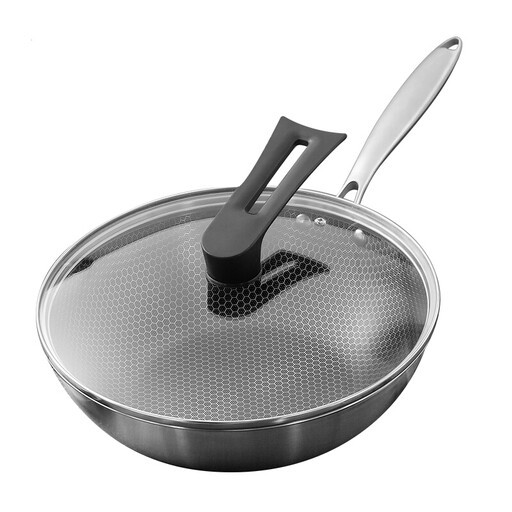
Why this product suits this profile: The 30 cm version is designed for sautéing, stir-frying and larger quantities, and comes with a matching lid.
The product details specify stainless steel, a honeycomb structure, a lid and compatibility with gas, induction and electric hobs. You should still check the actual hob compatibility before buying.
30 cm diameter, stainless steel construction, honeycomb surface and lid for versatile pan dishes.
We have put together a complete, regularly updated list of products that fully meet these strict selection criteria and the safety regulations applicable in the EU.
Look for the manufacturer’s statement “suitable for induction” or “suitable for induction hobs”. A magnet test on the base can provide an initial indication. However, the official product specifications remain decisive, particularly for coated aluminium or multi-layer pans.
For one or two people, 20 to 24 cm is often sufficient. A 28 cm induction frying pan provides more space for several portions. If you regularly prepare wok dishes, you can choose a wok induction model measuring 30 to 32 cm with a sufficiently high inner wall.
The service life depends on heat, cleaning methods, utensils and frequency of use. It is not possible to give a reliable general lifespan. Low to medium heat, avoiding heating the pan empty and gentle washing can help preserve the surface for longer. If you prefer an uncoated alternative, consider a stainless steel frying pan combined with a suitable cooking technique.