
Lieferung heute & morgen

Qualitätsgarantie

Willkommens-Angebote freischalten: KOSTENLOSE Lieferung | Bis zu 80 % RABATT | Kostenlose 30-Tage-JoyPlus-Testphase
App herunterladen
The search for a new induction frying pan can be more complicated than it first appears. The market is filled with marketing claims that often hide more than they reveal. As a Joybuy Product Recommendation Officer, I'll help you identify objective criteria for your decision and avoid common purchasing pitfalls.
Many buyers invest in a pan that stops working after just a few months. This is often due to three common misconceptions:
To make an informed decision, you should examine three core technical features. These determine the pan's longevity, safety, and cooking performance.
The non-stick pan is a staple in modern kitchens, but the differences in coatings are significant.
A ferromagnetic base is essential for induction hobs. But its quality determines performance. A good induction base should be:
A good frying pan should adapt to your daily cooking routine.
Instead of making blanket recommendations, we have identified models that meet specific needs and solve common problems.
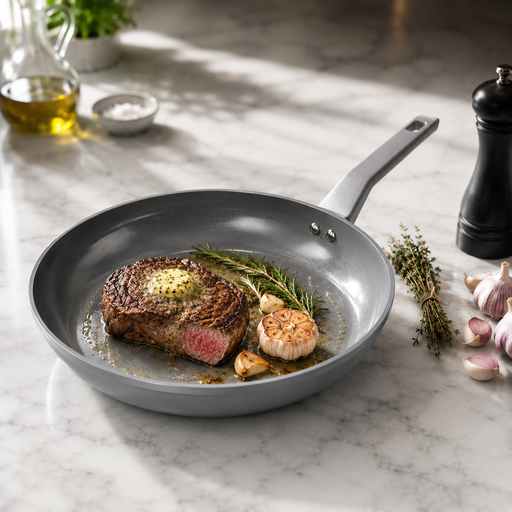
Why it's a great fit: Ideal for daily use in families and for health-conscious cooks who value a verifiably non-toxic and easy-to-clean solution. Perfect for eggs, fish, or vegetables with little to no oil.
This model counters the "non-toxic trap" with a clear declaration: the coating is 100% free of PFAS, PFOA, and PTFE. The ceramic layer, reinforced with diamond and titanium particles, is also more durable than standard coatings.
The 4+1 layer construction with an aluminium alloy core ensures fast and very even heat distribution on induction hobs. The pan is also dishwasher-safe.
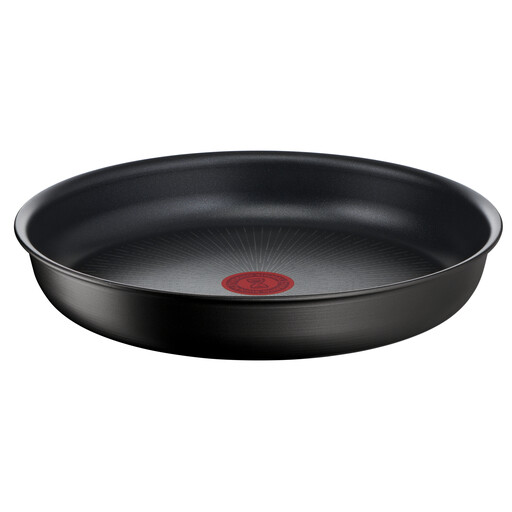
Why it's a great fit: Perfect for kitchens with limited storage. The detachable handle allows for space-saving stacking and a seamless transition from the hob to the oven, fridge, or table.
This system solves the problem of bulky pans. It's not just a pan, but a versatile cookware system. Being oven-safe up to 250°C (without the handle) is a genuine functional benefit, not an empty marketing claim.
According to Tefal, the Titanium Anti-Scratch non-stick coating is up to six times more durable than the brand's standard coating. The Thermo-Fusion base ensures fast, even heat distribution.
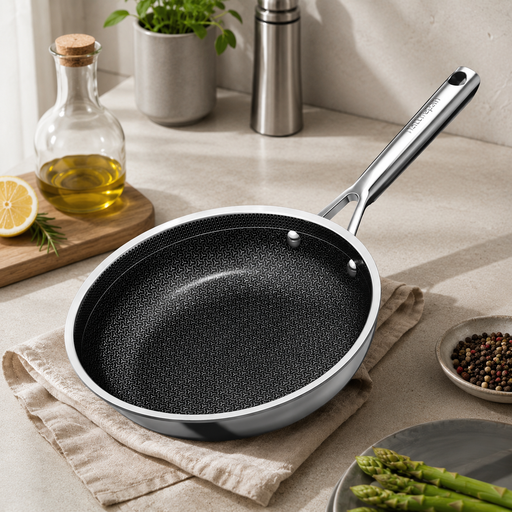
Why it's a great fit: For cooks who want to combine the benefits of stainless steel (high-heat searing) and non-stick (easy cleanup, no sticking). Ideal for steaks, fried potatoes, and dishes that require excellent browning.
This model avoids the trade-off between searing and non-stick. The laser-etched hexagonal pattern with raised stainless steel ridges allows for high-heat searing, while the ceramic valleys provide the non-stick function.
The 5-layer hybrid construction is designed for high performance. The pan is oven-safe up to 260°C and compatible with all hob types, making it an extremely versatile tool for demanding dishes.
We have compiled a complete, up-to-date list of products that fully meet these strict selection criteria and German safety regulations.
The lifespan of a coated pan heavily depends on the quality of the coating and its care. Basic PTFE coatings can lose their effectiveness after 1-2 years of daily use. High-quality coatings reinforced with ceramic or titanium often last 3 to 5 years or longer with proper care—avoiding metal utensils, overheating, and harsh cleaning agents.
No. A pan will only work on an induction hob if its base is made of a ferromagnetic material. When buying, look for the induction symbol (a stylised coil) on the packaging or the bottom of the pan. A simple test: if a magnet sticks to the base of the pan, it is induction-compatible.
Yes, one of the main features of pans with a pure ceramic coating is that they are manufactured without the chemical group of PFAS (per- and polyfluoroalkyl substances), which includes PFOA and PTFE. This makes them a popular choice for users who want to be on the safe side. Nevertheless, always check the manufacturer's product description for explicit confirmation.