
Lieferung heute & morgen

Qualitätsgarantie

Willkommens-Angebote freischalten: KOSTENLOSE Lieferung | Bis zu 80 % RABATT | Kostenlose 30-Tage-JoyPlus-Testphase
App herunterladen
Buying a new induction frying pan seems simple at first glance. But often, after just a few weeks, you find that your fried eggs still stick, the pan base is warping, or the heat is distributed unevenly. This is often due to exaggerated marketing claims and hidden defects that complicate daily cooking. As your Joybuy Product Recommendation Officer, I'll help you identify these pitfalls and make an informed decision.
Before we dive into the important features, let's look at three common problems that can lead to a poor purchase:
To find a durable and functional pan, you should check three core parameters. These will help you objectively assess the product's quality.
The base of the pan is the most critical component for use on an induction cooktop. Pay attention to the following properties:
The choice of coating depends on your cooking habits and priorities.
The material of the pan's body affects its weight, heat conduction, and robustness.
The most common size is the 28 cm (11-inch) frying pan, a versatile all-rounder for most households. For specific needs, an induction pan set or a special braising pan may be the better choice.
Here are some recommendations tailored to different needs and user profiles.

Why This Fits Their Persona: Ideal for daily use in kitchens that need a reliable, straightforward, and lightweight pan. The 26 cm (10-inch) size is a practical all-rounder for singles and small families.
The aluminium alloy body ensures fast and even heat conduction, which bypasses the inefficiency trap of budget pans. It is explicitly designated as induction-compatible.
Lightweight and easy to handle: The light aluminium body makes it easy to manage.
Good heat conduction: Heats up quickly and distributes heat evenly.
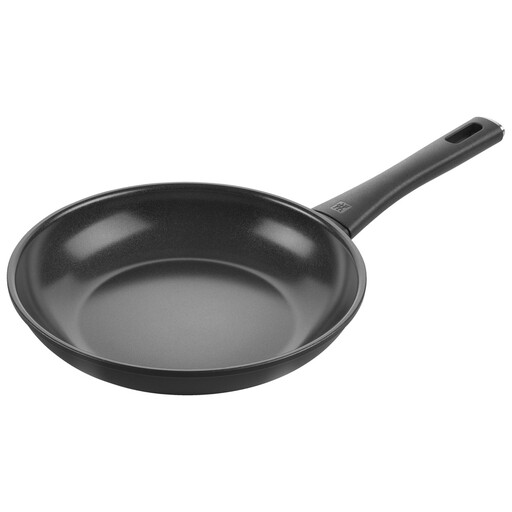
Why This Fits Their Persona: Perfect for users who value low-fat cooking and toxin-free materials. The ceramic coating and high-quality construction from a well-known brand provide peace of mind for daily use.
This pan goes beyond the "PFOA-free" standard by using a CeraForce Granite ceramic coating, which the manufacturer states is 100% PTFE- and PFOA-free.
High heat resistance: The ceramic coating is robust and suitable for higher temperatures.
Even heat distribution: The forged aluminium body ensures fast and uniform heating.
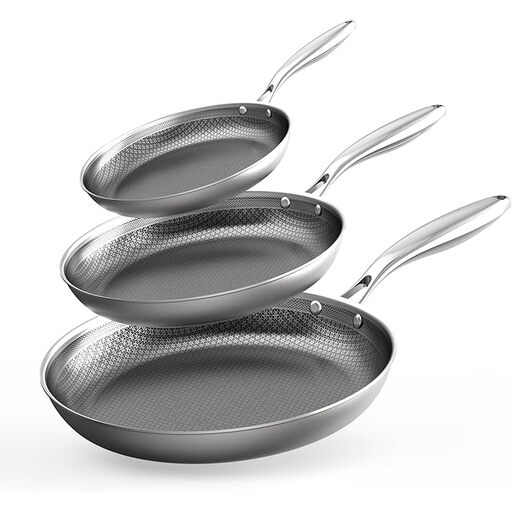
Why This Fits Their Persona: This induction pan set is the solution for anyone outfitting a new kitchen or wanting to have the right pan size ready for any cooking situation. It avoids the "one-size-fits-all" compromise.
Instead of a single, ill-fitting universal pan, this set offers three different sizes (approx. 20, 25, 30 cm / 8, 10, 12 in) for various purposes. The stainless steel construction promises durability and robustness.
Versatility: Three sizes for maximum flexibility in the kitchen.
Robustness: Stainless steel is resilient and designed for intensive use. The pans are also oven-safe.
We've compiled a complete, up-to-date list of products that fully meet these strict selection criteria and German safety regulations.
The easiest way is the magnet test: hold a standard household magnet to the outer base of the pan. If the magnet sticks firmly, the pan is suitable for induction. Additionally, you will often find a symbol representing a coil on the packaging or the pan base itself, which indicates induction compatibility.
A warped base, also known as bowing, usually has two causes. First, it can be due to poor material quality and a base that is too thin to withstand the thermal stress. Second, it can be caused by thermal shock, which occurs when a hot pan is rinsed with cold water. Always let your pan cool down before cleaning it.
To maximize the life of the coating, you should follow a few basic rules: