
Lieferung heute & morgen

Qualitätsgarantie

Willkommens-Angebote freischalten: KOSTENLOSE Lieferung | Bis zu 80 % RABATT | Kostenlose 30-Tage-JoyPlus-Testphase
App herunterladen
An induction frying pan needs to do more than simply react magnetically to the hob. A suitable base, the right size and a coating that matches how you plan to use it are all crucial. If you focus only on colour, supposed premium terminology or a high temperature rating, you can quickly end up with a model that is unnecessarily difficult to handle or clean in everyday use.
The description frying pan for all hob types should always be checked against the manufacturer’s specifications. For induction, the pan needs a ferromagnetic base that sits as flat as possible on the cooking zone. A base that is too small or uneven can impair heat transfer. The pan’s diameter must also match the cooking zone: a 24 cm frying pan is not automatically optimised for a 24 cm induction zone.
A non-stick frying pan is often suitable for delicate foods and frying with little oil. However, this does not mean it should be heated empty or left permanently on the highest setting. For PTFE or ceramic coatings, the relevant manufacturer’s instructions are decisive. Metal utensils, abrasive sponges and sudden changes in temperature can place additional strain on the surface.
A 20 cm frying pan is practical for individual portions, eggs or small side dishes. For two or three people, a 24 cm frying pan is often more versatile. A 28 cm frying pan or 30 cm frying pan provides more space for vegetables, several pieces of meat or larger family portions, but it also requires more room and may heat unevenly on small cooking zones.
An aluminium frying pan is generally comparatively lightweight and heats up quickly. With coated aluminium pans, particular attention should be paid to the sturdy induction base and care of the surface.
Multi-layer stainless steel with an aluminium core distributes heat across several layers of material as part of its construction. An uncoated stainless steel pan, as offered with some models, requires suitable temperature control and oil techniques, as food can stick more easily.
A cast-iron induction pan retains heat for longer and is suitable for searing food thoroughly or serving it at the table. However, it is considerably heavier. At 1.93 kg, you should check whether the weight suits your preferred way of handling cookware.
A PTFE coating is found on many traditional non-stick pans. It can make it easier to release delicate foods and simplify cleaning. Before buying, check the manufacturer’s information on maximum temperature, oven use and warranty.
A ceramic-coated pan is also suitable for low-fat frying and straightforward cleaning. Suppliers often recommend medium to low heat and utensils made from wood, silicone or plastic. “Scratch-resistant” should not be interpreted as approval for sharp-edged metal utensils.
A dishwasher-safe frying pan may be placed in the dishwasher according to the product information. However, hand-washing is often recommended for coated surfaces to help extend their service life. Temperature limits also vary considerably: some pans have an oven-safe body, while the plastic handle is only suitable for a lower temperature.
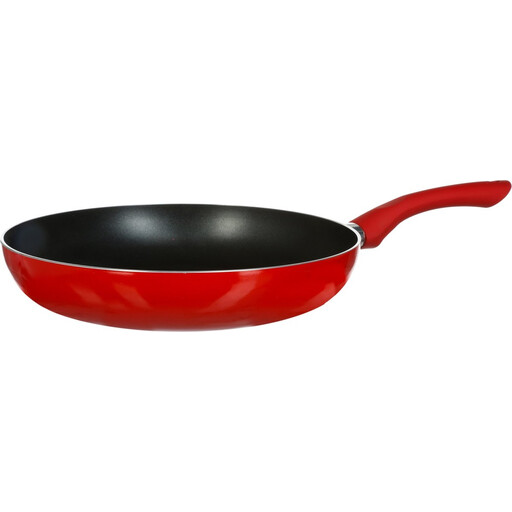
Why this product suits the profile: The 30 cm diameter and 2.8-litre capacity are suitable for larger portions. At 940 g, this aluminium pan remains comparatively easy to handle.
The stainless steel induction disc and the stated suitability for gas, electric, ceramic and induction hobs make its hob compatibility clear.
Aluminium body, two non-stick layers, 30 cm diameter and, according to the supplier, dishwasher-safe.
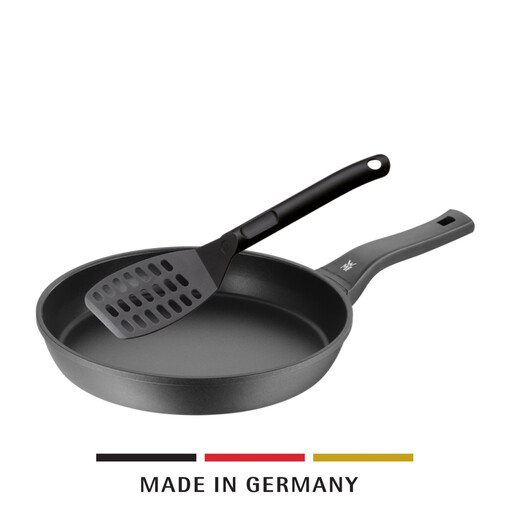
Why this product suits the profile: This 28 cm coated cast aluminium pan is aimed at households looking for a larger everyday pan with accessories and clearly stated temperature limits.
The supplier’s specifications explicitly mention induction, gas, electric and ceramic hobs. The plastic handle is oven-safe up to 70 °C; the pan itself is heat-resistant up to 260 °C.
Three-layer PermaDur PTFE coating, ergonomic Bakelite handle and included turner. According to the manufacturer, a five-year warranty applies subject to the stated conditions.
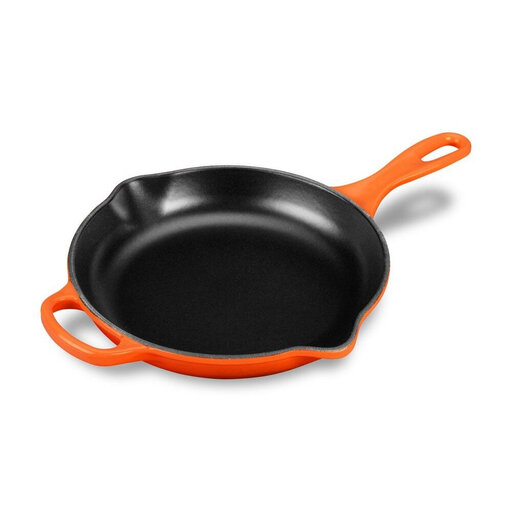
Why this product suits the profile: This enamelled cast-iron pan is designed for induction, other hob types, the oven and the grill. It is ideal for those who prefer heat retention and serving from the same pan.
The 1.93 kg weight is clearly stated, so you can take it into account before buying. The enamelled surface does not require traditional seasoning.
Enamelled cast iron, 23 cm diameter, oven suitability and, according to the product information, dishwasher suitability. An additional handle makes it easier to balance the pan.
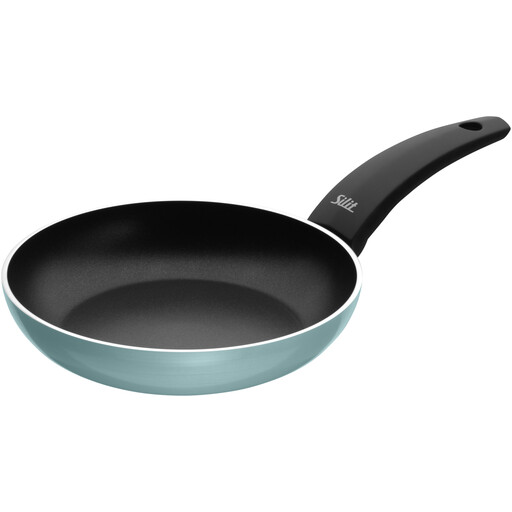
Why this product suits the profile: The compact format is suitable for eggs, pancakes, small side dishes and individual portions. The aluminium body and Bakelite handle make it easy to handle.
The recommended cooking-zone size of 14.5 cm is stated. Induction, gas, electric and ceramic hobs are also listed as suitable.
20 cm diameter, PTFE coating, rapid heating and, according to the supplier, a five-year warranty covering materials, workmanship and non-stick properties.
We have put together a complete, regularly updated list of products that fully meet these strict selection criteria and the safety regulations applicable in the EU.
For one person or small side dishes, 20 cm is sufficient. A 24 cm pan is suitable for smaller households and everyday portions. Families often choose 28 or 30 cm. The key factor is not just the rim diameter, but also the usable base and the size of the cooking zone.
Its service life depends on heat, utensils, cleaning and storage. Heating it empty, using metal utensils and abrasive cleaners can damage the coating more quickly. A warranty statement, such as five years for certain Silit and WMF models, is a manufacturer’s commitment subject to the relevant conditions, not a general statement of service life.
This depends on the specific model. The Naturepan pan is stated to be dishwasher-safe, although hand-washing is recommended at the same time. For coated surfaces, mild washing-up liquid, a soft sponge and allowing the pan to cool completely before washing are gentler options.