
Lieferung heute & morgen

Qualitätsgarantie

Willkommens-Angebote freischalten: KOSTENLOSE Lieferung | Bis zu 80 % RABATT | Kostenlose 30-Tage-JoyPlus-Testphase
App herunterladen
An induction frying pan needs to do more than simply sit magnetically on the hob. Whether you are cooking eggs, vegetables, fish or meat, the key factors are a suitable base area, controllable heat and a coating or surface that suits your cooking style. If you only look for terms such as “non-stick”, “scratch-resistant” or “dishwasher-safe”, you can easily overlook important limitations.
A 20 cm frying pan usually refers to the top diameter. The area that is actually heated may be smaller. For example, the Silit Belluna 24 cm is stated to be suitable for a cooking zone of around 18 cm in diameter. This can be relevant when using a small induction hob, as a significantly larger pan may not heat evenly.
A coated frying pan makes it easier to fry with little fat and to clean up afterwards. However, high heat when empty, metal utensils and abrasive sponges can damage the surface. Even a non-stick frying pan described as robust should not be heated empty on the highest setting for a prolonged period.
A dishwasher-safe frying pan can generally be placed in the dishwasher, but detergents, high temperatures and contact with other cookware can put greater strain on the surface. For coated models, hand washing with a soft sponge is often recommended. The manufacturer’s specific instructions always take precedence.
The size should suit both the hob zone and your household. A large pan on a small induction zone can lead to uneven temperature distribution.
An aluminium frying pan generally heats up quickly and is comparatively lightweight. For induction cooking, it needs a magnetic base. The Silit Belluna has a coated aluminium pan body and, according to the product information, is suitable for gas, electric, ceramic and induction hobs.
An uncoated stainless steel frying pan is durable and can withstand higher temperatures, depending on the model. However, it requires the right technique: preheat the pan, add oil and control the heat. The Maxcook model is described as having a three-layer construction made from stainless steel, an aluminium core and stainless steel.
Multi-layer constructions can distribute heat across the cooking surface. The decisive factors are not just the names of the materials, but also the information about the base structure and induction compatibility.
With a ceramic-coated frying pan or a PTFE-based surface, you should check the permitted temperatures and care instructions. A coating is not a licence to use every heat setting.
Examples from the product information:
Statements such as “PFOA-free” or “PFAS-free” should always be considered in relation to the specific product description and the stated contents of the delivery. They cannot be used to make a blanket statement about every frying pan from a particular brand.
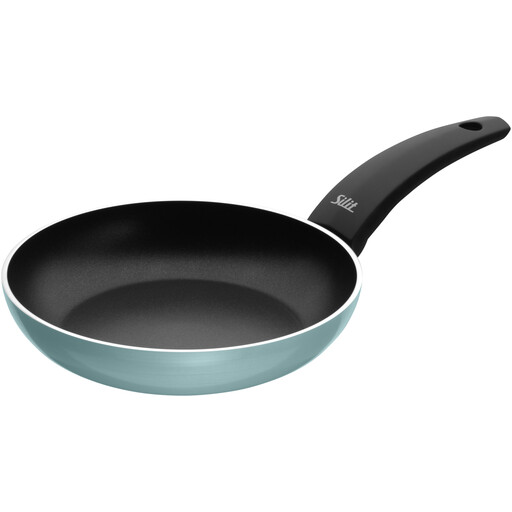
Why this product suits this profile: The compact size is suitable for smaller portions, one or two people and hobs with a smaller diameter. The coated aluminium is described as lightweight and quick to heat up.
The stated cooking-zone diameter of around 14.5 cm helps you match the pan to a small hob zone. The maximum oven temperature of 70 °C also limits improper use.
20 cm diameter, PTFE coating according to the product information, and suitability for induction, gas, electric and ceramic hobs.
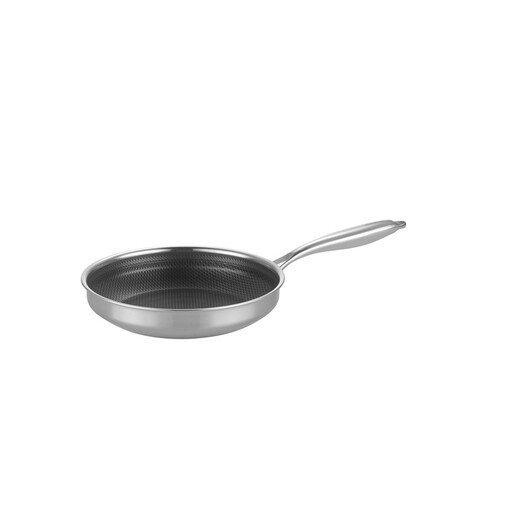
Why this product suits this profile: The combination of stainless steel, an aluminium core and a ceramic coating is aimed at users who want to consider the material construction, induction compatibility and an easy-care surface together.
The product information explicitly states that it is suitable for induction and several types of hob. The stated absence of PFAS, PTFE and PFOA should be checked against the current product details.
20 cm, three-layer construction, ceramic non-stick coating and dishwasher suitability according to the product description.
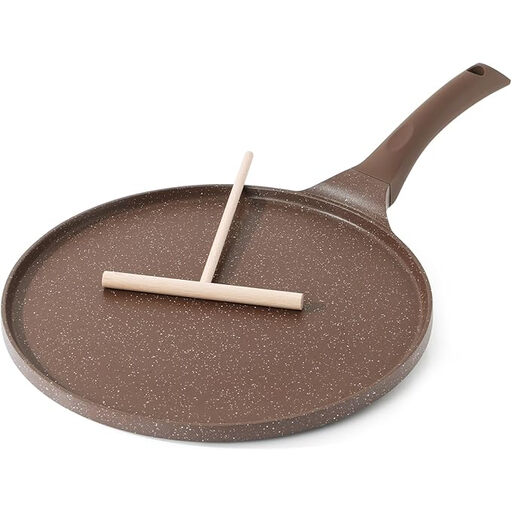
Why this product suits this profile: The flat crêpe pan is designed for pancakes, crêpes, tortillas and similar foods. Its low rim makes it easier to turn food and spread the batter.
The product details explicitly recommend hand washing. If you are looking for a dishwasher-safe frying pan, you should therefore choose a different model.
Aluminium core, magnetic induction base, flat design and, according to the product information, a coating without intentionally added PFOA, lead or cadmium.
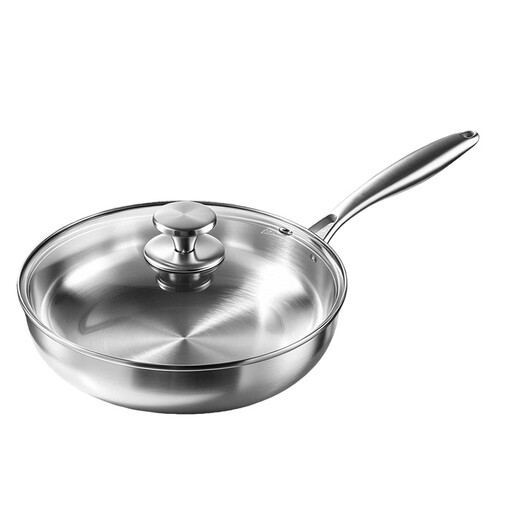
Why this product suits this profile: The uncoated stainless steel surface is designed for people who want to avoid a non-stick layer and are prepared to use the correct frying technique.
The description clearly states that there is no chemical non-stick coating and that food may stick if the temperature is incorrect.
Three-layer stainless steel and aluminium construction, 22 cm diameter, induction compatibility and dishwasher suitability according to the product information.
We have put together a complete, regularly updated list of products that fully meet these strict selection criteria and the safety regulations applicable in the EU.
A 24 cm frying pan is a practical compromise for many two-person households. For individual portions or small cooking zones, a 20 cm frying pan may be a better fit. The important thing is that the pan base matches the induction zone.
Possible reasons include a pan base that is too large for the hob zone, an uneven base or an unsuitable temperature setting. Also check that the pan is actually approved for induction cooking. With multi-layer frying pans, the material construction and base quality affect heat distribution.
It is not possible to give a reliable fixed service life. It depends on the heat, cooking utensils, cleaning method and frequency of use. Visible scratches, flaking or noticeably reduced non-stick performance are signs that the pan should be replaced. With proper care, uncoated stainless steel frying pans may remain usable for longer, but they require more practice when frying.