
Lieferung heute & morgen

Qualitätsgarantie

Willkommens-Angebote freischalten: KOSTENLOSE Lieferung | Bis zu 80 % RABATT | Kostenlose 30-Tage-JoyPlus-Testphase
App herunterladen
An induction frying pan needs to do more than simply stick magnetically to the hob. The base must be suitable, the coating or uncoated material appropriate, and the dimensions right for your household and hob zone. If you only look for terms such as “non-stick”, “scratch-resistant” or “suitable for all hob types”, you may overlook important details.
This buying guide explains what keen cooks and families in Germany should look for, which product features can be compared objectively and which frying pan suits different usage profiles.
The description frying pan for all hob types does not automatically mean that every cooking zone can be used optimally. For induction, the base must be ferromagnetic and should sit as flat as possible on the hob. A base that is too small or uneven can affect heat transfer. Before buying, compare the stated hob compatibility with the base diameter.
A coated frying pan or non-stick frying pan is convenient, but it requires suitable use. Heating it empty for a long time, using very high temperatures, metal turners and abrasive cleaning products can damage the surface. Even a coating described as a dishwasher-safe frying pan may be subjected to more wear through frequent dishwasher cycles than with gentle hand washing.
A 24 cm frying pan is often suitable for one or two portions and smaller hob zones. A 28 cm frying pan provides more space for family-sized portions, but requires sufficient room in the cupboard and on the hob. If the pan is too large, the outer area may heat up more slowly when the induction zone is significantly smaller.
Aluminium is lightweight and conducts heat quickly, but requires a suitable magnetic base for induction. Multi-layer constructions made from stainless steel and aluminium combine the magnetic properties of stainless steel with a heat-conducting core. Cast iron retains heat for a long time, but is considerably heavier.
For delicate foods such as eggs, fish or pancakes, a ceramic-coated frying pan or a classic non-stick coating is often chosen. An uncoated stainless steel frying pan does not use a chemical non-stick layer, but requires more attention to temperature and the amount of fat added.
Terms such as “titanium”, “granite” or “ceramic” do not always describe the entire body of the pan. So check the following:
A PFOA-free coating is a specific material specification, but it is not a general quality or health claim. Temperature limits and care instructions are also decisive for everyday use.
A shallow frying pan is practical for fried potatoes, omelettes and quick frying. A deep frying pan with lid is also suitable for stews, sauces, vegetables and one-pot recipes. A glass lid makes it easier to keep an eye on your food without opening the pan.
A fixed handle is straightforward and stable. A frying pan with removable handle, on the other hand, can be stacked to save space and, depending on the model, moved from the hob to the oven or fridge. Before use, make sure the handle is securely locked in place; you should also observe the relevant temperature limits.

Why this product suits the profile: The 24 cm size is manageable for smaller households and everyday portions. According to the product description, this aluminium frying pan is suitable for gas, electric, ceramic and induction hobs.
The specifications state both the compatible hob types and the suitable cooking-zone size. This makes it easier to assess compatibility before buying.
24 cm diameter, coated aluminium, Silitan non-stick surface and plastic handle.
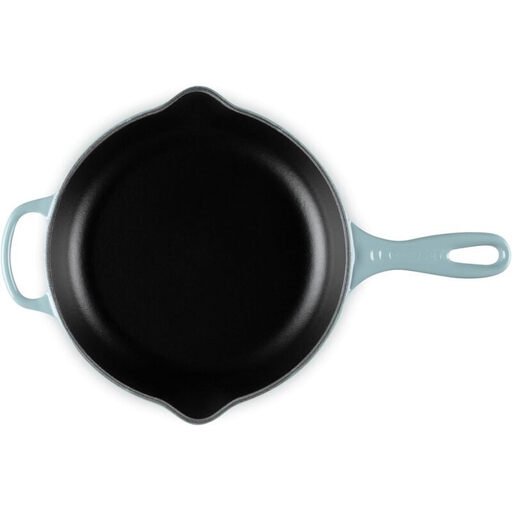
Why this product suits the profile: Cast iron retains heat for a long time and is specified as suitable for induction, ovens and grills. Before buying, consider whether the weight of 1.93 kg suits your own handling preferences.
The enamelled surface is not a traditional non-stick coating. This avoids the expectation that food will automatically slide around without temperature control.
Cast iron, 23 cm diameter, enamelled finish and stated heat resistance up to 350 °C.
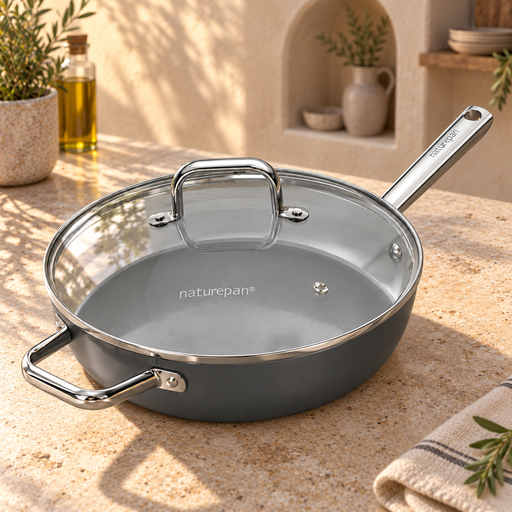
Why this product suits the profile: The high sides and supplied glass lid are useful for stews, sauces and larger portions. According to the product specifications, the ceramic coating is described as free from PTFE, PFAS and PFOA.
The product description specifies clear limits: up to 260 °C in the oven, low to medium heat for the coating and hand washing for longer-lasting surface care.
28 cm, 7.5 cm-high pan, lid, induction suitability and stated dishwasher suitability.
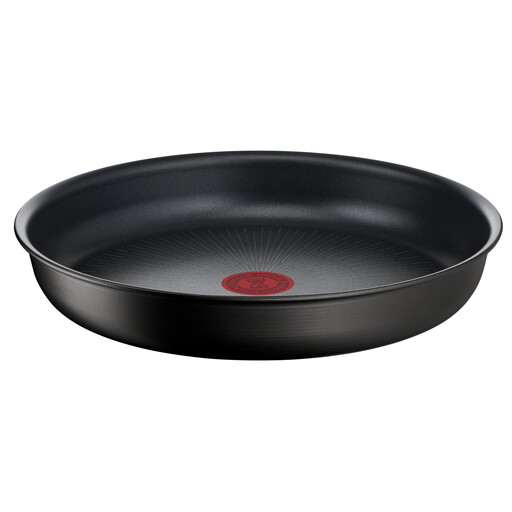
Why this product suits the profile: The removable handle allows several pans to be stacked. Important: according to the product description, this offer is supplied without a handle; the compatible handle must already be available separately.
The contents clearly state that the handle is not included. This allows you to check before buying whether you already have a compatible handle system.
24 cm, stackable system, Titanium-6X coating, Thermo-Signal indicator and suitability for gas, induction, ceramic and electric hobs.
A long-lasting frying pan depends on more than just its material. Follow the manufacturer’s instructions and these basic rules:
We have compiled a complete, regularly updated list of products that fully meet these strict selection criteria and the safety regulations applicable in the EU.
Suitable pans have clearly stated induction compatibility and a magnetic base that sits flat on the hob. A magnet test can provide an initial indication, but it does not replace the manufacturer’s compatibility information.
24 cm is often suitable for one or two portions. 28 cm offers more space for family meals, but requires a sufficiently large cooking zone and more storage space. The actual base diameter and the shape of the induction zone are also important.
Dishwasher suitability makes cleaning easier, but does not automatically extend the coating’s lifespan. Gentle hand washing, moderate temperatures and suitable kitchen utensils will generally protect the surface more effectively.