
Lieferung heute & morgen

Qualitätsgarantie

Willkommens-Angebote freischalten: KOSTENLOSE Lieferung | Bis zu 80 % RABATT | Kostenlose 30-Tage-JoyPlus-Testphase
App herunterladen
An induction frying pan needs to do more than simply stick magnetically to the hob. The construction of the base, diameter, coating, handle, care requirements and intended use are all important. If you only look for terms such as “non-stick” or “suitable for all hob types”, you may overlook important limitations.
A frying pan may be generally suitable for induction but still not be ideally suited to your cooking zone. A base that is too small or does not sit evenly can affect heat transfer. You should therefore check:
Some models also distinguish between induction, infrared and halogen hobs. These specifications should not automatically be treated as equivalent.
A coated frying pan can make cooking with little oil easier. However, overheating, metal turners and abrasive cleaning products can damage the surface. The care instructions provided by the manufacturer are particularly important for a ceramic frying pan or a PTFE-based coating.
Claims such as PFOA-free frying pan or PFAS-free frying pan should be read carefully. “PFOA-free” does not mean the same as “PFAS-free”. What matters is the specific wording used by the manufacturer and whether it applies to the entire pan or only to the coating. No medical or health effects can be inferred from these claims.
A frying pan with lid is practical for casseroles, sauces and vegetables. However, the lid may have a lower temperature limit than the pan body. A plastic or Bakelite handle often also limits oven use.
You should therefore check each point separately:
An aluminium non-stick frying pan usually heats up quickly and is comparatively lightweight. This can be convenient for everyday cooking, particularly when preparing omelettes, pancakes and delicate ingredients. The Silit Belluna 24 cm, for example, is described as having a coated aluminium body, induction compatibility and heat resistance up to 260 °C. According to the product description, however, it can only be used in the oven up to 70 °C.
An uncoated stainless steel frying pan is more resistant to scratches from suitable kitchen utensils and does not have a chemical non-stick coating. However, controlling the temperature correctly is more important. According to the product details, the Maxcook pan is made from three-layer 304 stainless steel with an aluminium core and is described as dishwasher-safe. When frying, the surface may be more prone to food sticking if the wrong technique is used.
A cast-iron frying pan retains heat for a long time and is ideal for high-heat searing. However, it is heavier: according to the product description, the Le Creuset Signature pan with a diameter of 23 cm weighs 1.93 kg. The weight, handling and care requirements should suit your kitchen before you buy.
For one or two portions, 20 to 24 cm is often sufficient. A 20 cm pan is practical for eggs, small portions of vegetables or individual pancakes, for example. A 24 cm pan offers more cooking surface for everyday use without taking up too much space on many hobs.
A deep frying pan or induction sauté pan measuring 28 cm is better suited to:
High sides help to reduce splashes, but they also increase the weight and the amount of cupboard space required. A crêpe pan, on the other hand, has a shallow rim and is designed for batter, tortillas or omelettes rather than casseroles.
Induction hobs respond quickly. Coated models should not be heated empty at a high setting for extended periods. For many coated pans, low to medium heat is the most suitable everyday setting. Wooden, silicone or nylon turners help to reduce the risk of scratching.
A removable handle can make storage easier and simplify moving the pan between the hob, oven and fridge. According to the product description, the handle is not included with the 24 cm Tefal Ingenio pan. This detail is easy to miss and may lead to additional purchase costs.
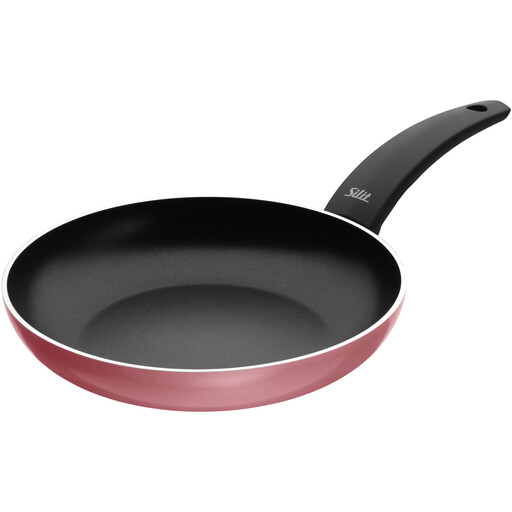
Why this product suits this profile: The 24 cm aluminium pan is designed for all common hob types, including induction, and is described as easy to handle.
The specifications clearly state the compatible hob types, material, temperature limits and cleaning requirements. This keeps important limitations visible.
Coated aluminium, a 24 cm diameter and a 5-year warranty stated by the manufacturer.
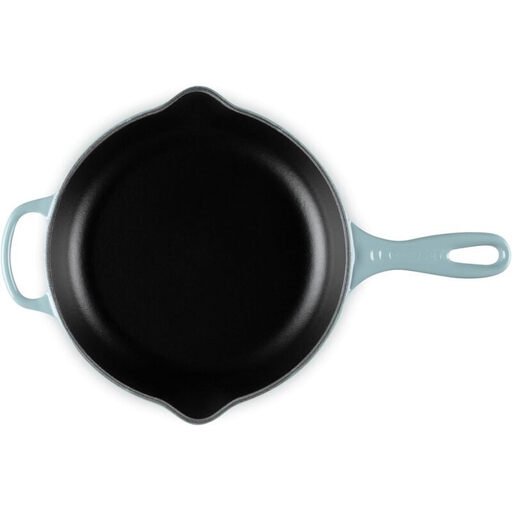
Why this product suits this profile: Enameled cast iron, induction compatibility and use in the oven and on the grill make it suitable for versatile cooking.
The material and maximum temperature of 350 °C are clearly specified. At the same time, the substantial weight of 1.93 kg is not hidden.
Enameled surface, oven and grill compatibility, plus a design suitable for serving at the table.
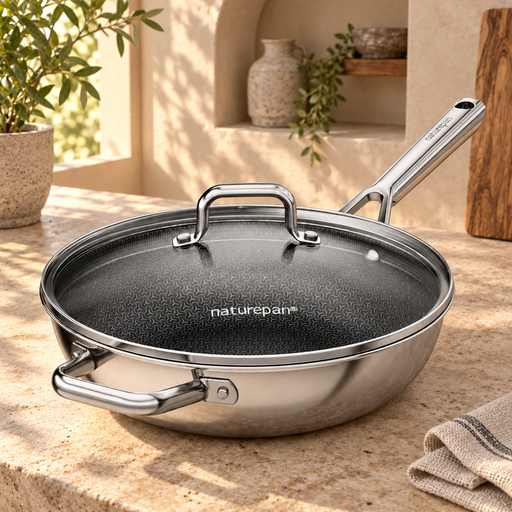
Why this product suits this profile: The deep 28 cm design with lid is made for sautéed dishes, sauces and casseroles in larger portions.
The product description distinguishes between the temperature limit of the pan body and use with the lid, and recommends hand washing to protect the coating.
Multi-layer stainless steel body with an aluminium core, textured hybrid surface, induction compatibility and a matching lid.
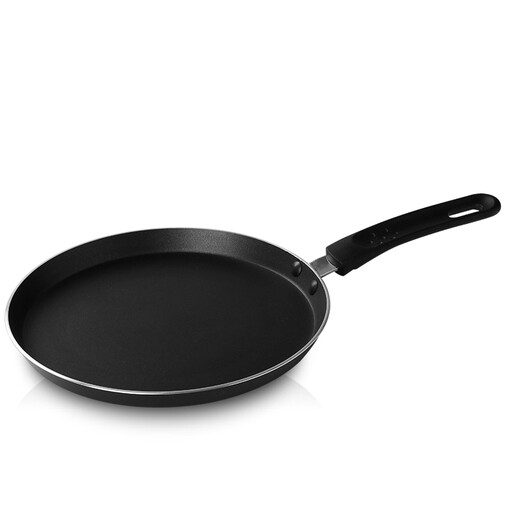
Why this product suits this profile: The shallow crêpe pan is designed for pancakes, crêpes and similar batter-based dishes and, according to the product name, is suitable for induction.
The product name clearly states the diameter, type of coating, induction compatibility and PFOA-free design.
24 cm diameter, shallow design and a PFOA-free non-stick coating, according to the product details.
We have put together a complete, regularly updated list of products that fully meet these strict selection criteria and the safety regulations applicable in the EU.
20 to 24 cm is suitable for smaller portions and everyday use. A 28 cm pan offers more cooking surface for family meals but requires a sufficiently large cooking zone and more storage space.
For delicate foods, a coated frying pan is usually easier to use than an uncoated stainless steel pan. However, the result also depends on the temperature, amount of fat and cooking utensils used. No coating should be overheated or scratched on a permanent basis.
Not every induction-compatible frying pan is suitable for the dishwasher. Hand washing is often recommended for coated models, even if cleaning in the dishwasher is technically possible. The specific manufacturer’s instructions for the model, handle and lid are decisive.