
Lieferung heute & morgen

Qualitätsgarantie

Willkommens-Angebote freischalten: KOSTENLOSE Lieferung | Bis zu 80 % RABATT | Kostenlose 30-Tage-JoyPlus-Testphase
App herunterladen
An induction frying pan needs to offer more than simply being magnetic. A flat base that sits securely on the hob, a suitable combination of materials and a size that matches both the cooking zone and your household are all essential. Focusing solely on a non-stick coating or eye-catching product description can mean overlooking important details.
Induction requires a magnetic, as-flat-as-possible pan base. A model may be described as suitable for induction, while the usable base is still too small for the cooking zone. In that case, heat is not transferred efficiently, or the pan only gets hot in the centre.
You should therefore look for:
A coated frying pan can make cleaning easier. However, its coating will generally remain effective for longer if you avoid heating it empty at a high temperature and use suitable kitchen utensils. Metal cutlery, abrasive cleaners and sudden temperature changes can put stress on the surface.
A ceramic frying pan is not automatically made from ceramic. The body is often made from aluminium and features a ceramic coating. This distinction should be clearly stated in the material specifications.
“Dishwasher-safe” describes one possible cleaning method, but does not necessarily say anything about the long-term appearance or lifespan of a surface. For coated pans, manufacturers often recommend washing by hand with a soft sponge. An uncoated stainless steel frying pan or an enamelled cast-iron pan may have different care requirements for daily use.
An uncoated stainless steel frying pan is resistant to scratches and suitable for searing food at high heat. Food may initially stick more readily. The “hot pan, cold oil” method and carefully controlled medium heat can help reduce sticking.
Multi-layer models, such as those with an aluminium layer between stainless-steel layers, can distribute heat more quickly and evenly. The PURECOOK Tri-Ply version is specified as having a construction made from 304 stainless steel, an aluminium core and stainless steel.
A coated frying pan is particularly suitable for eggs, pancakes and delicate foods. Check the maximum permitted temperature, which kitchen utensils are suitable and the recommended cleaning method.
With a PFAS-free pan, you should check the specific material information. “PFOA-free” or “PTFE-free” does not automatically refer to the entire PFAS group. According to the product description, the KT Hybrid model excludes PFAS, PTFE and PFOA. For other products, only rely on what is explicitly stated.
A cast-iron pan retains heat for a long time and is suitable for robust searing and slow braising. Uncoated cast iron needs to be dried and oiled regularly. Enamelled versions are usually easier to clean, but can be damaged by knocks or unsuitable kitchen utensils.
A large wok will not automatically fit every induction zone perfectly. On a round induction hob, the contact area of the base is particularly important. With an induction wok model, you should also look for a flat base.
A deep frying pan with lid expands the range of dishes you can prepare, especially when braising and reducing sauces. A glass lid makes it easier to monitor your food without allowing steam and heat to escape through frequent lifting.
You should also check:
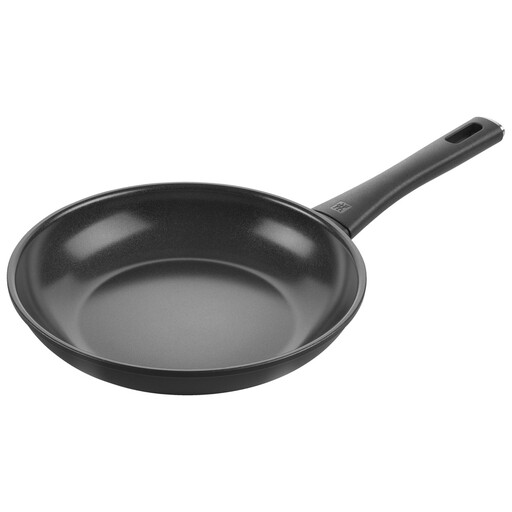
Why this product suits this profile: The 24 cm size is suitable for smaller portions and everyday dishes. According to the product specifications, the pan has a forged aluminium body, a CeraForce ceramic coating and is designed for induction hobs.
The specifications state the precise dimensions, coating type and hob compatibility. Hand washing and low to medium heat are recommended for the coating.
24 cm diameter; PTFE- and PFOA-free coating according to the product description; oven-safe up to 250 °C according to the specifications.
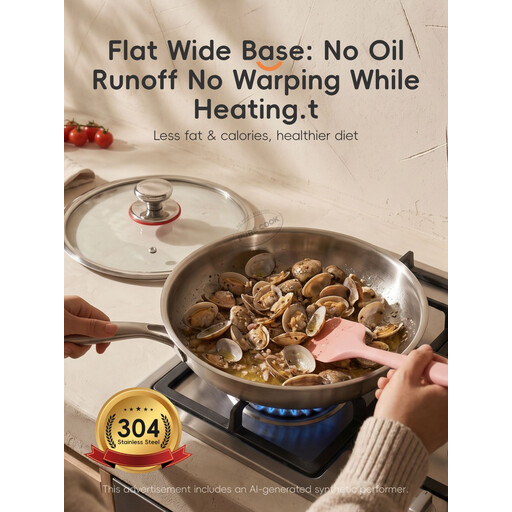
Why this product suits this profile: The three-layer construction with an aluminium core will appeal to users who value even heat distribution, a glass lid and compatibility with multiple hob types.
The product specifications explicitly state the 304 stainless steel, aluminium core, induction compatibility and dishwasher use. The pan is uncoated, so controlling the temperature correctly remains important.
28 cm diameter; glass lid included; suitable for gas, induction, ceramic and halogen hobs according to the specifications.
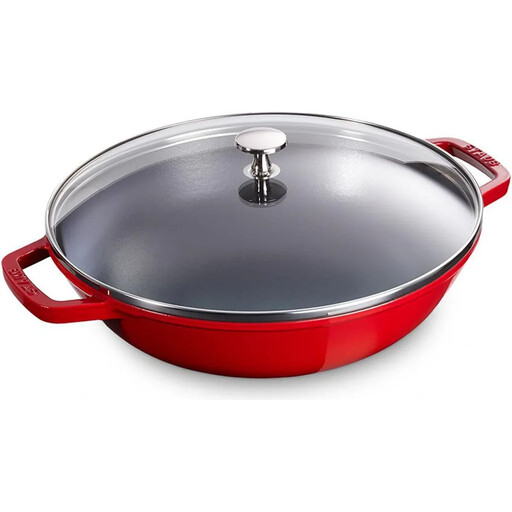
Why this product suits this profile: The 30 cm cast-iron wok is aimed at households that want to combine stir-frying, braising, steaming and preparing larger quantities.
The product description highlights the substantial weight of 4.27 kg, the temperature limit and the glass lid. This makes it easier to assess the space and handling requirements realistically before buying.
Enamelled cast iron; suitable for induction and other hob types; glass lid and draining insert according to the product specifications.
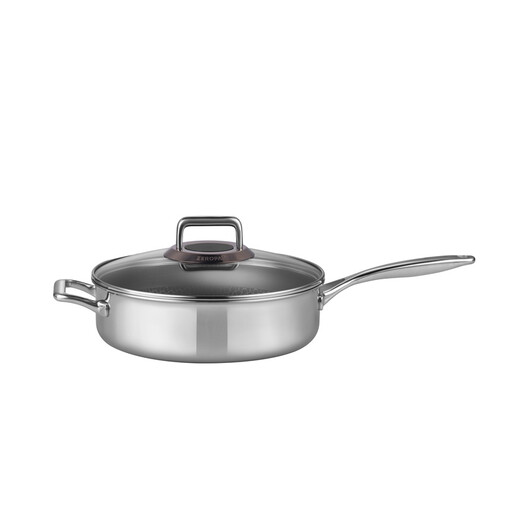
Why this product suits this profile: The 26 cm pan combines a stainless-steel body with a honeycomb-textured surface and, according to the product description, is suitable for all common hob types, including induction.
The product description explicitly states that it is free from PFAS, PTFE and PFOA. It also specifies oven suitability up to 260 °C and dishwasher safety.
26 cm diameter; three-layer base with aluminium core; dishwasher-safe and oven-safe up to 260 °C according to the specifications.
We have put together a complete, regularly updated list of products that fully meet these strict selection criteria and the safety regulations applicable in the EU.
Pans with a magnetic base are suitable, usually made from cast iron or magnetic stainless steel. The manufacturer’s statement that a pan is “suitable for induction” should be supported by a flat base and a contact area that matches the cooking zone.
24 cm is often sufficient for one or two portions. Sizes from 26 to 28 cm offer greater flexibility for everyday cooking. A 30 cm wok is suitable for larger quantities, but requires enough space and a suitably sized induction zone.
It is not possible to give a reliable general lifespan. This depends on the quality of the coating, heat, kitchen utensils and cleaning method. Low to medium temperatures, avoiding heating the pan empty and washing by hand can help protect the surface. Uncoated stainless-steel and cast-iron models have different care requirements, and their wear does not appear in the same way.