
Lieferung heute & morgen

Qualitätsgarantie

Willkommens-Angebote freischalten: KOSTENLOSE Lieferung | Bis zu 80 % RABATT | Kostenlose 30-Tage-JoyPlus-Testphase
App herunterladen
Choosing a new hob is an investment in your daily kitchen routine for years to come. An induction hob promises fast, safe, and energy-efficient cooking. However, the market is filled with models whose technical specifications and marketing promises often create more confusion than clarity. Many buyers only realise after installation that their new appliance doesn't meet their expectations.
As your Joybuy Product Recommendation Officer, I'll help you identify the typical pitfalls. We will focus on the objective criteria that truly matter, so you can make an informed decision and find a hob that perfectly suits your needs.
Before we dive into the important features, let's highlight three common issues that can lead to disappointment:
To avoid the problems mentioned above, you should focus on a few crucial technical parameters.
The total power of a hob is important, but how that power is distributed is even more critical. Pay attention to the following:
The choice of form factor depends entirely on your kitchen setup and your needs.
Modern hobs offer features that make everyday life safer and easier.
Here are some models that represent a considered choice for specific user profiles based on their objective features.
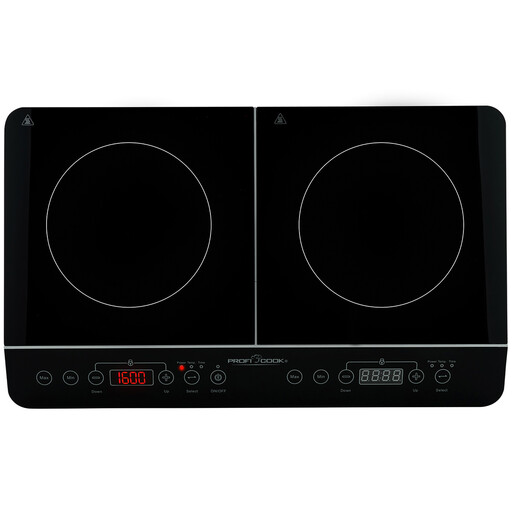
Why This Fits Their Persona: Ideal for small kitchens, student flats, or as a portable addition. This double induction hob requires no permanent installation and, with two cooking zones, offers enough capacity to prepare full meals.
The appliance has two clearly separated cooking zones, each with its own controls and display. This ensures transparent and efficient power distribution, bypassing the trap of a misleading total power rating.
Offers 10 temperature levels (60°C–240°C) for precise cooking and a 180-minute timer. The sensor-touch control is designed for comfortable handling.
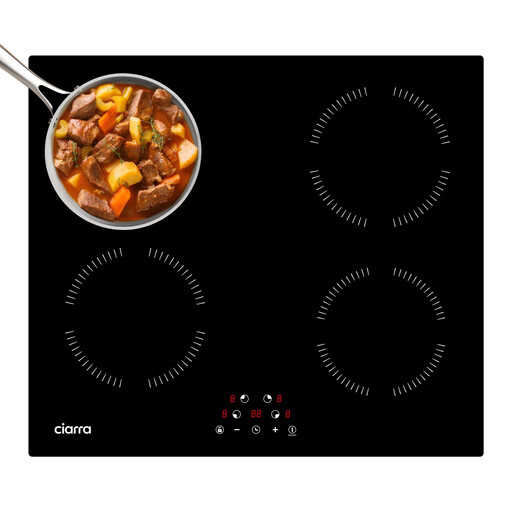
Why This Fits Their Persona: A classic 60 cm built-in hob designed for modernising a family kitchen. With four zones and all essential safety features, it meets the daily demands of a family.
The four cooking zones are designed for common pot sizes (160 mm and 180 mm), enabling efficient use without significant energy loss at the edges. The digital capacitive control panel is designed for a quick response.
Comprehensive safety features including a child lock, residual heat indicator, and automatic shut-off. 9 power levels per zone allow for precise control.
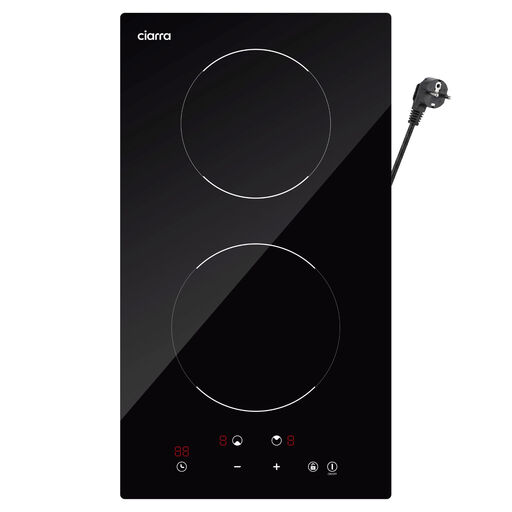
Why This Fits Their Persona: Perfect for single-person households or kitchens with limited space. This approx. 30 cm wide built-in hob offers the full functionality of an induction hob in a smaller footprint, leaving more room on the worktop.
With a total power of 3000 W distributed over just two zones, high performance per cooking zone is guaranteed. The intuitive touch control panel is designed for simple and reliable operation.
Compact design for a space-saving installation. Still offers key features like a 99-minute timer, 9 power levels, and a full suite of safety features.
We've compiled a complete, up-to-date list of products that fully meet these strict selection criteria and German safety regulations.
For induction, you need cookware with a ferromagnetic base. You can easily test if your pot or pan is suitable with a magnet: if it sticks to the bottom of the pot, the cookware is induction-compatible. Materials like cast iron, enamelled iron, and some special stainless steel alloys work well. Cookware made of pure aluminium, copper, or glass is not compatible.
Yes, induction cooking is generally more energy-efficient. With an induction hob, heat is generated directly in the base of the pot by an electromagnetic field. The cooking surface itself remains relatively cool. With a ceramic hob (also called a glass-ceramic hob), the heating element under the glass plate is heated first, which then transfers the heat to the pot. This indirect method leads to higher energy losses. According to manufacturers and energy consultants, the energy savings with induction can be up to 30% compared to conventional electric hobs.
An independent hob is a self-contained unit with its own controls. It can be installed into the worktop separately from an oven. This gives you maximum flexibility in kitchen planning, as you can place the hob in one location and the oven in another (e.g., in a tall cabinet at eye level). The opposite would be an oven-controlled hob, which is operated via the controls on its corresponding oven.