
Lieferung heute & morgen

Qualitätsgarantie

Willkommens-Angebote freischalten: KOSTENLOSE Lieferung | Bis zu 80 % RABATT | Kostenlose 30-Tage-JoyPlus-Testphase
App herunterladen
Choosing a new hob is a cornerstone of kitchen design. A 60 cm induction hob is a popular choice for many households, but ceramic and gas models also offer their own unique advantages. The right decision depends on your cooking habits, safety requirements, and kitchen design. This guide provides an objective overview of key criteria and presents a selection of models to help you make an informed choice.
The standard 60 cm width fits most kitchen counters, but the technology and features can vary significantly. Here are three key aspects that can influence your decision.
Choosing the heating technology is the first and most important consideration.
Modern hobs offer a range of features that enhance convenience and safety.
A standalone hob has its own controls and can be installed independently of an oven. This offers maximum flexibility in kitchen planning. For example, you can place the hob on a kitchen island while the oven is built into a tall cabinet at eye level. Most modern built-in hobs are designed to be standalone.
Here is a selection of different hob types, curated based on their technical specifications and functionality.
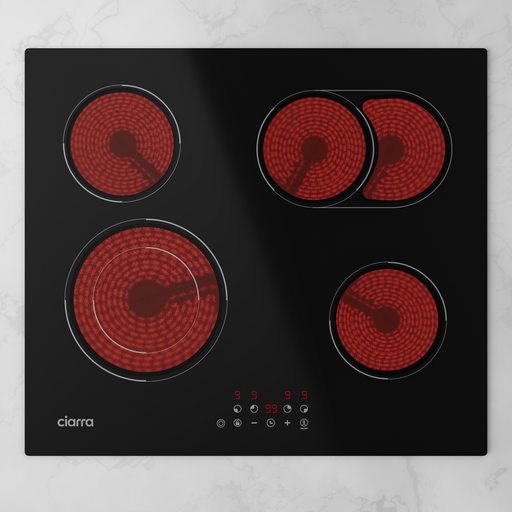
Why it stands out: This ceramic hob stands out for its high degree of flexibility. It features one oval and one round dual-circuit cooking zone, which can be adapted to different pot and pan sizes. The oval zone is particularly practical for long cookware like roasters.
Key benefits:
Best for: Users who appreciate the compatibility of a ceramic hob but don't want to miss out on flexible cooking zones for special cookware like a roaster.
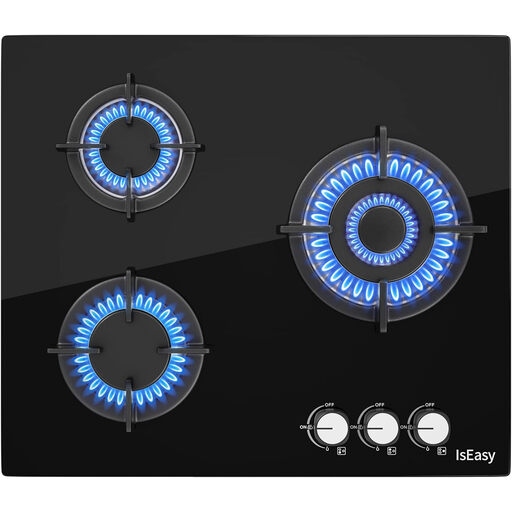
Why it stands out: This built-in gas hob combines high performance with a sophisticated safety concept. With a total output of 7750 W distributed across three burners, it enables efficient cooking. The thermoelectric flame failure device provides additional safety.
Key benefits:
Best for: Home chefs who prefer the direct heat control of an open flame and value high performance and reliable safety features.

Why it stands out: This 60 cm induction hob offers the core benefits of induction technology: speed, efficiency, and safety. The boost function on all four zones allows for extremely fast boiling, while the precise Touch Control and child lock enhance user convenience.
Key benefits:
Best for: Families and tech-savvy users looking for a fast, energy-efficient, and exceptionally safe hob. Ideal for anyone who values quick cleaning and modern control features.
If the models presented don't fully meet your needs, or if you'd like a broader overview of different technologies and designs, you can find more alternatives in our range.
Explore our full range of kitchen hobs and find the perfect model for your kitchen.
The main difference lies in the heating method. A ceramic hob generates heat through coils under the glass plate, which is then transferred to the pot. An induction hob creates an electromagnetic field that directly heats the base of magnetisable cookware. This makes induction faster, more energy-efficient, and the hob surface remains cooler.
Yes, standalone hobs, especially high-power induction and ceramic models, typically require a high-voltage connection (400 V) that must be installed by a qualified electrician. Gas hobs require professional connection to the gas line. The exact requirements are listed in the product description and the manufacturer's installation manual.
The child lock is an electronic locking function, usually activated by pressing a specific key combination on the Touch Control panel for a few seconds. When active, the hob no longer responds to touch, preventing children from accidentally turning it on or changing the settings. An icon on the display usually indicates its activated state.