
Lieferung heute & morgen

Qualitätsgarantie

Willkommens-Angebote freischalten: KOSTENLOSE Lieferung | Bis zu 80 % RABATT | Kostenlose 30-Tage-JoyPlus-Testphase
App herunterladen
An induction hob can be a suitable solution for a renovated kitchen, a small flat or an additional cooking area. At the same time, unclear installation dimensions, unsuitable cookware and underestimated connection requirements often lead to the wrong purchase. Camping and outdoor activities involve different considerations: weight, fuel, stability and safe use outdoors are the priorities.
This buying guide explains which details matter before you buy and which appliances suit different usage scenarios.
The specification “60 cm” does not automatically describe the required worktop cut-out. With a 60 cm built-in induction hob, the external dimensions and cut-out can differ considerably. For example, the TOPWISH model measures 590 × 520 × 60 mm, while the cut-out measures 565 × 495 mm.
Before placing your order, you should therefore check the following:
An appliance should not be selected based solely on its visible width.
An induction hob with a high total power output can supply several cooking zones at the same time. However, what matters is how the power is distributed across the individual zones and whether the connection is designed to support it. A 4-zone model from TOPWISH is specified with 7,200 W total power, four zones and nine power levels for each zone. According to the product details, the two larger cooking zones each reach up to 2,100 W with the booster.
For a two-person household or a small kitchen, a 2-zone induction hob may be sufficient. If you regularly use several pots and pans at the same time, four zones are likely to be more practical. The existing electrical installation should be checked before fitting. Appliances that require a fixed connection should be installed by a qualified electrician in accordance with local connection regulations.
Terms such as touch control, child lock and overheat protection are only useful when their functions are clearly explained. Look for specific information about:
With an induction hob with touch control, there should also be enough space around the controls. Wet or dirty control panels can affect input and must be cleaned according to the instructions.
Induction works with magnetic-based pan bottoms. A simple magnet test on the base shows whether an existing pan is generally suitable: if the magnet sticks, it should be compatible. The base should also be flat, clean and sufficiently large to ensure reliable heat transfer.
This is what distinguishes an induction hob from a 2-zone ceramic hob. A ceramic hob heats the glass surface using heating elements and is therefore generally compatible with a wider range of cookware. However, the surface may remain hot for longer after switching off. The relevant product description and operating instructions take precedence.
For two-zone models, the stated diameters of the appliances featured are, for example, 160 to 180 mm. The 4-zone model combines two 160 mm zones with two 180 mm zones. Check that the diameters are suitable for the pans you use most often.
A compact 30 cm solution requires a cut-out of 265 × 495 mm for the TOPWISH two-zone model. This may be relevant for narrow kitchen runs, kitchen islands or smaller households. The 60 cm format, on the other hand, provides more space between cooking vessels.
A portable gas stove is not designed for use in enclosed rooms, tents, vehicles or indoor spaces. Carbon monoxide can build up unnoticed in these areas. For outdoor use, you need a level, non-combustible surface, sufficient ventilation and a safe distance from flammable materials.
An outdoor gas stove with 1900 W may be suitable for short cooking times, but it requires a compatible butane or propane gas supply. Before every use, check the connections, seals and gas cartridge for damage. A lighter camping stove may be more practical for hikes, while a more stable appliance offers greater comfort during longer stays.
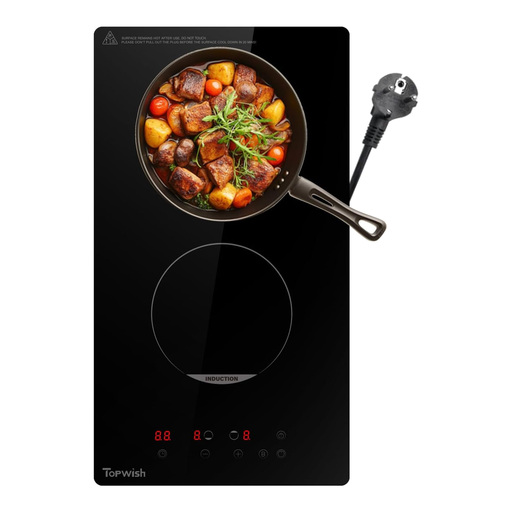
Why this product suits this profile: The compact built-in format with two cooking zones is suitable for smaller kitchens and households that do not regularly use four pots at once.
The stated external and cut-out dimensions make it easier to check compatibility before purchase. The product also lists a child lock, residual heat indicator and automatic switch-off.
3500 W total power, nine power levels, timer of up to 99 minutes and touch control.
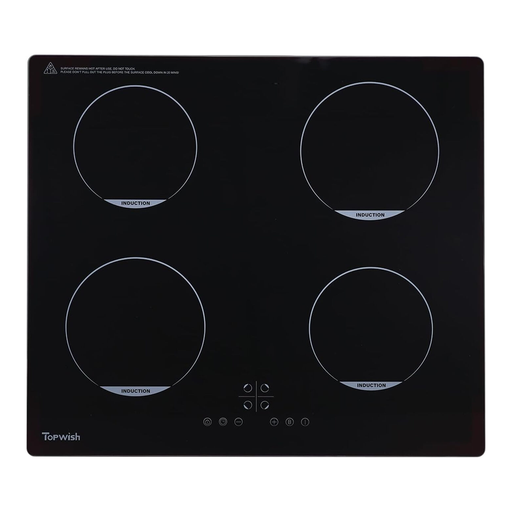
Why this product suits this profile: Four cooking zones and a 60 cm format are suitable for households that regularly prepare several dishes at the same time.
The product details state the external dimensions, cut-out size, total power and connection without a plug. This makes it possible to coordinate the installation with the electrical plan in advance.
Four zones, booster function, nine power levels, timer of up to 99 minutes and automatic switch-off after 90 minutes.
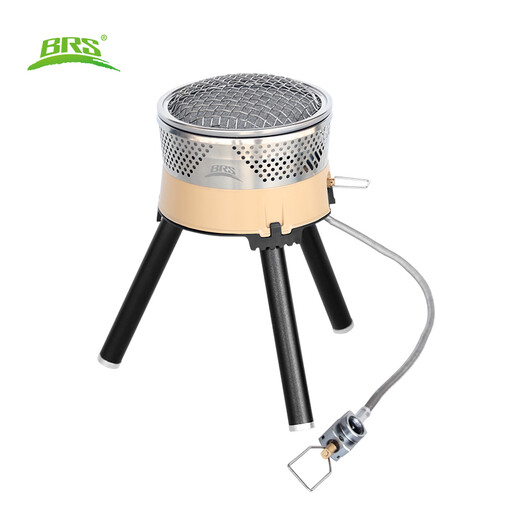
Why this product suits this profile: The compact gas stove is designed for camping, hiking and other outdoor cooking situations where a small pack size is important.
Its intended use in well-ventilated outdoor areas is clearly stated. The appliance is not designed for indoor spaces, tents or vehicles.
1900 W power, weight of 0,425 kg, compact dimensions and compatibility with butane and propane gas.
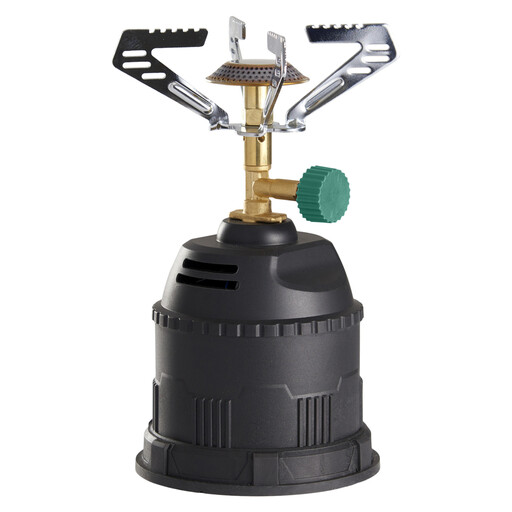
Why this product suits this profile: For short trips and picnics, this compact camping stove offers a low net weight and a stated burn time of up to four hours.
The usage instructions expressly cover outdoor use, a stable surface and checking that connections are leak-free.
1,22 kW power, 0,495 kg net weight, continuously adjustable flame and a stated burn time of up to four hours.
We have put together a complete, regularly updated list of products that fully meet these strict selection criteria and the safety regulations applicable in the EU.
The key considerations are the exact cut-out, installation depth, ventilation and electrical connection rating. Models without a plug must be connected by a qualified electrician. The information in the installation instructions and product details takes precedence.
Its service life depends, among other things, on how often it is used, cleaning, ventilation and correct connection. A general lifespan cannot be inferred from the power rating alone. The glass surface should only be cleaned once the residual heat indicator has gone out.
Running costs depend on the electricity tariff, cooking time, power level, pan size and cooking habits. Induction requires suitable magnetic cookware. For a fair comparison, you should monitor actual electricity consumption over several cooking sessions rather than comparing only the maximum wattage.