
Lieferung heute & morgen

Qualitätsgarantie

Willkommens-Angebote freischalten: KOSTENLOSE Lieferung | Bis zu 80 % RABATT | Kostenlose 30-Tage-JoyPlus-Testphase
App herunterladen
An induction hob can respond quickly while cooking, is usually easy to clean once it has cooled down and suits many modern kitchens. However, a low price or high wattage alone does not automatically mean it is the right choice. Incorrect purchases are often caused by unsuitable installation dimensions, a lack of compatible cookware or functions that do not match the way you cook day to day.
An induction hob 60 cm is usually around 59 to 60 cm wide externally. However, the crucial measurement for installation is the cut-out in the worktop. With several models, this is around 560 × 490 mm, for example, while compact two-zone appliances require considerably smaller cut-outs.
Before buying, you should therefore check:
A built-in induction hob with a connection cable and a model without a plug may have different installation requirements. In Germany, the connection should be carried out by a qualified electrician.
Figures such as 6,000, 7,200 or 7,400 watts refer to the possible total output. When several cooking zones are used at the same time, power management may distribute the available power between the zones. This is not a fault, but a technical limitation that should be taken into account with high-performance appliances.
For everyday use, it is therefore not just the total output that matters, but also:
An induction hob with touch controls, a timer or a child lock can be practical. However, sensor controls are sensitive to water, grease and objects placed over them. An intuitive control layout is more important than a long list of features.
Pay particular attention to:
An induction hob with 4 zones is suitable for families or households where several pots and pans are regularly used at the same time. An induction hob with 2 zones takes up less space and can be a sensible choice for small kitchens, holiday flats or as an additional cooking area.
For large roasting dishes, griddles or oval pans, an induction hob with FlexInduction or CombiZone can offer advantages. Two adjacent zones are combined to create a larger cooking area. Check the product information to see which dimensions and positions are actually supported.
Induction only works with magnetic cookware. A simple magnet test on the base of the pan provides an initial indication. Cast iron and magnetic stainless steel are often suitable. Aluminium, copper and glass require a magnetic base. The term Ceran induction hob is sometimes used by retailers; technically, this refers to an induction hob with a glass-ceramic surface.
A classic 60 cm induction hob is often approximately 592 × 522 mm. The cut-out may vary depending on the model. The connection rating also differs: compact two-zone appliances may have an output of around 3,000 to 3,500 watts, for example, while four-zone models can be rated at up to 7,400 watts.
Before placing your order, you should download the installation instructions or read all the information on the product page carefully. An appliance rated at 220–240 volts is not automatically suitable for every existing connection arrangement. The electrical installation must comply with local regulations.
An induction hob with a timer can switch individual zones off automatically after the set time. This can help with kitchen organisation, but it does not replace supervision while cooking. The hob should never be left unattended, particularly when using oil or fat.
A child lock prevents accidental inputs, but it is not a substitute for keeping children at a safe distance and supervising them. The glass-ceramic surface may remain hot after cooking because of the hot base of the pan. Wait until the residual heat indicator has gone out before cleaning.
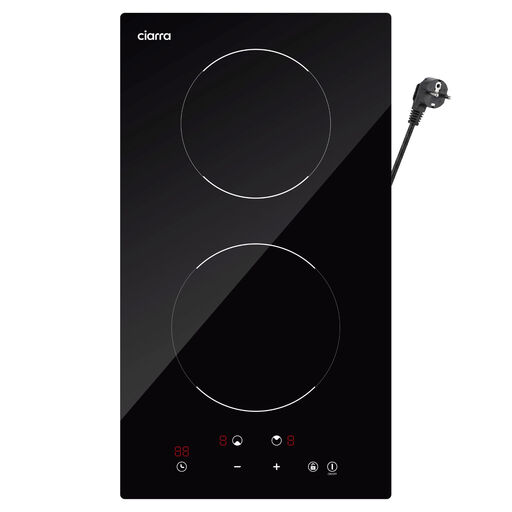
Why this product suits the profile: Two cooking zones and a stated total output of 3,000 watts make it suitable for smaller kitchens, single-person households or a space-saving modernisation.
The product details specify the cut-out dimensions, nine power levels, a timer, pan detection and automatic safety switch-off.
Compact dimensions of 290 × 520 × 62 mm, touch controls and a timer duration of up to 99 minutes.
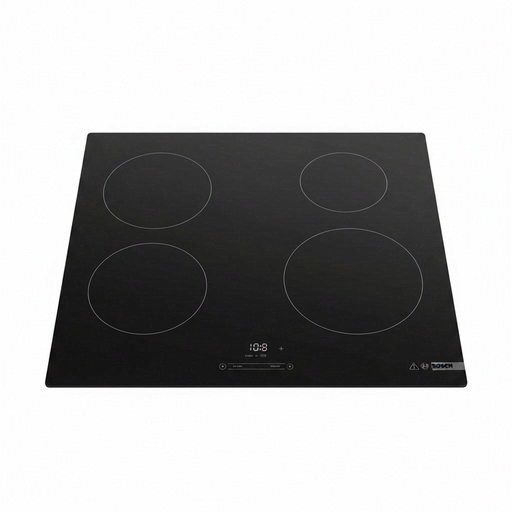
Why this product suits the profile: The 60 cm hob offers four zones, 17 power levels and several functions for regular family cooking.
Quick Start, Restart, pan detection, child lock and residual heat indicator are all explicitly listed in the product details.
Four booster functions, 17 power levels and a flush-fitting, frameless design.
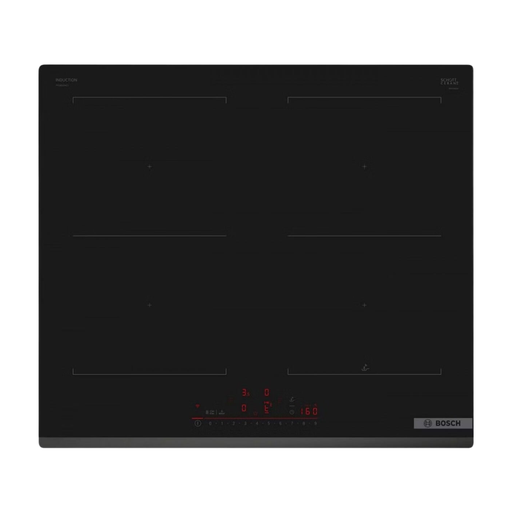
Why this product suits the profile: Four zones and the combinable FlexInduction area appeal to households that frequently use large pans, roasting dishes or several pots.
The specifications list combinable 180 mm zones, automatic pan detection, power management and separate timers.
7,400 watts total output, FlexInduction, TouchSelect and a two-stage residual heat indicator.
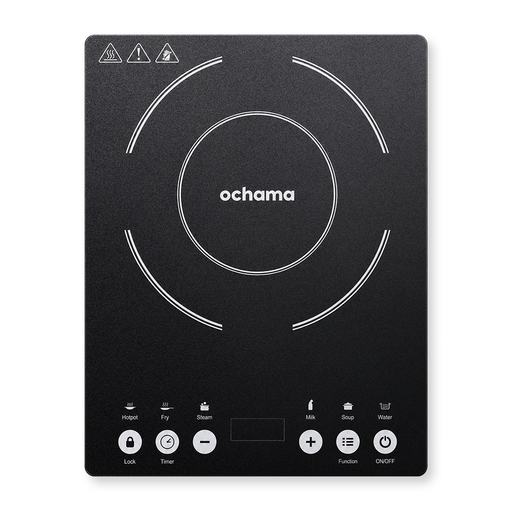
Why this product suits the profile: This portable induction hob is designed to provide extra cooking capacity in small kitchens or for flexible use on a suitable worktop.
The product description lists 10 power levels, six pre-set functions, a child lock and dry-boil protection.
Compact design, 2,000 watts, touch controls and a glass surface that can be cleaned with a damp cloth.
We have put together a complete, regularly updated list of products that fully meet these strict selection criteria and the safety regulations applicable in the EU.
Its service life depends on usage, installation, care and the quality of individual components. It is not possible to give one reliable general lifespan. Check the warranty terms, spare-parts information and the manufacturer’s instructions. Damage to the glass-ceramic surface or repeated overheating can affect its usability.
Running costs depend on the output, cooking time, electricity tariff and cookware used. Induction transfers heat directly to a suitable pan base. This can shorten heating times, but it is not a blanket guarantee of a specific saving. For a realistic assessment, compare your previous cooking times with your actual electricity consumption.
For built-in appliances that require a fixed connection, the connection should be carried out by a qualified electrician. Check the connection rating, fuse, cable specification and installation clearances in advance. A portable freestanding induction hob with a suitable mains plug is different, but it still requires a suitable socket that is not overloaded.