
Lieferung heute & morgen

Qualitätsgarantie

Willkommens-Angebote freischalten: KOSTENLOSE Lieferung | Bis zu 80 % RABATT | Kostenlose 30-Tage-JoyPlus-Testphase
App herunterladen
An induction hob can make planning your kitchen easier, provided the size, electrical connection and cookware are all compatible. However, product descriptions can often lead to the wrong choice. There are three common pitfalls in particular: assuming that a higher wattage automatically means better day-to-day performance, expecting flexible cooking zones to work with every pan base, and mistaking an inexpensive portable appliance for a full-size built-in induction hob.
This buying guide explains which technical details really matter and which models may suit different households.
A figure such as 7.400 W usually refers to the maximum connected load or total power. If you use several zones at once, power management may distribute the available power between them. That’s why it’s also important to consider the individual zones, power levels and any boost function.
An induction hob with PowerBoost can speed up heating for a limited time. However, the function isn’t essential for every type of cookware or every situation. What matters is whether your electrical supply and connection are suitable for the stated power.
An induction hob with FlexInduction links certain neighbouring zones. This is useful for long griddle pans or large roasting dishes, but it doesn’t create one continuous heating surface. Check which zones can actually be linked and the minimum size required for a pan base.
A double induction hotplate or portable induction hob is suitable for small kitchens, offices, temporary use or as an extra cooking option. A built-in appliance, on the other hand, needs a suitably sized cut-out, adequate ventilation and, in many cases, installation by a qualified electrician.
A 60 cm induction hob often has external dimensions of around 592 × 522 mm. The actual worktop cut-out may differ. For example, the Bosch PVQ631HC1E has a stated cut-out size of 560 × 490 mm. Always check the installation diagram for the specific model before buying.
The main types are:
A 4-zone induction hob is often a good fit for families and households that use several pans at once. A 3-zone induction hob may be enough if worktop space is limited or you mainly cook with large pans.
Check the diameter of the zones. A large zone won’t necessarily be ideal for every pan. The magnetic base of your cookware should be as close as possible in size to the stated zone diameter.
An induction hob with TouchControl lets you select a zone and set the power level using touch-sensitive controls. Other useful features include:
Only use pots and pans with a magnetic base. A simple magnet test on the base can give you an initial indication. Aluminium or ceramic cookware without a magnetic layer is generally not detected by an induction appliance.
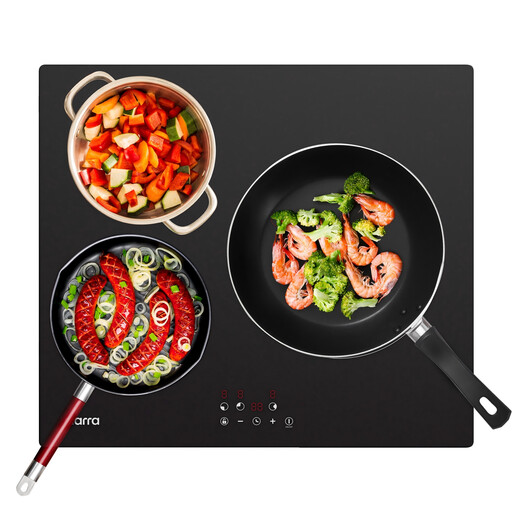
Why this product suits this type of buyer: This 3-zone model is suitable for smaller households looking for a built-in hob with touch controls and a timer.
The product details list three zones, nine power levels, a 99-minute timer and automatic pan detection. This makes the key features clear and easy to check.
5.600 W total power, TouchControl, child lock, residual heat indicator and overheat protection, according to the product details.
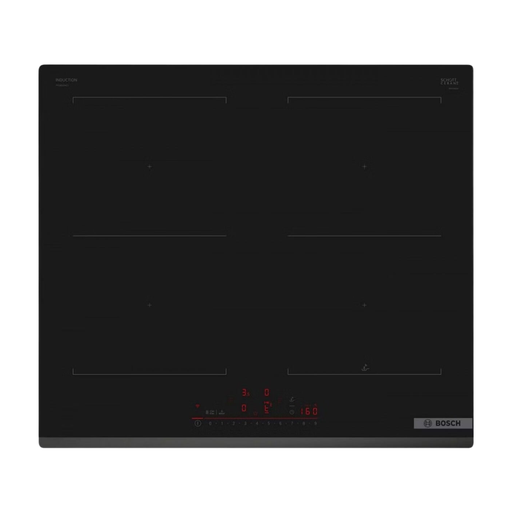
Why this product suits this type of buyer: With four cooking zones, CombiZone and DirectSelect, this hob is designed for households that regularly use several pans or cookware in different sizes.
The product details specify the external dimensions and cut-out size, as well as a combinable 360 mm zone. This makes it easier to check the fit before installation and helps set realistic expectations about FlexInduction.
7.400 W total power, four zones, boost function, individual timers, child lock and pan detection, according to the product description.
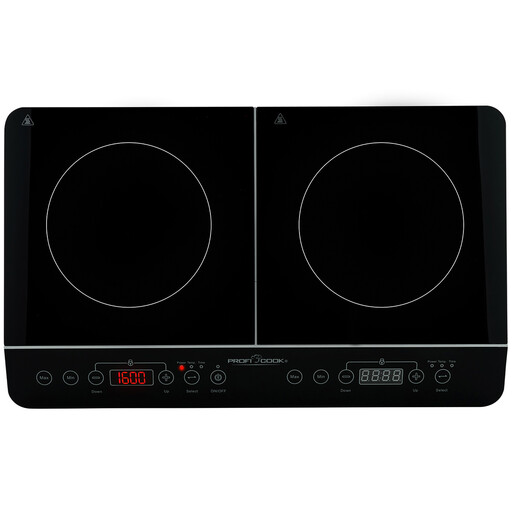
Why this product suits this type of buyer: This portable double induction hotplate is ideal as an extra cooking option, for small kitchens, events or occasional cooking away from your main kitchen.
The appliance is explicitly described as a portable double hotplate with non-slip feet. This makes it clear that it is different from a built-in induction hob.
Two hotplates, 3.500 W maximum power, 16 function levels, a 180-minute timer and automatic switch-off, according to the product details.
Before installation, check that your existing electrical connection is suitable for the appliance’s power consumption. Models with a high total power rating must not be plugged into an unsuitable extension lead. A built-in appliance should be connected by a qualified electrician.
Once the glass-ceramic surface has cooled, clean it with a soft, damp cloth. Dried-on residue can be removed with a suitable hob scraper. Abrasive cleaners and hard sponges may damage the surface.
Running costs depend not only on wattage, but also on how long you use the hob, the setting you choose and your electricity tariff. Induction heats the base of the pan directly, which can mean shorter heating times than with conventional methods. However, this doesn’t mean every household will make a guaranteed saving.
No. You need a magnetic, preferably flat base. A magnet test can give you an initial indication. Also check the minimum diameter specified by the manufacturer for the cooking zone.
Its lifespan depends on factors including how often it is used, how well it is cared for, the electrical connection and how the glass-ceramic surface is treated. A damaged or cracked hob must not be used. For a realistic idea of what to expect, check the manufacturer’s warranty terms, spare parts availability and maintenance advice.
The cost depends on the appliance’s actual power consumption, how long you cook for and your electricity rate. A boost function temporarily increases the power. For a rough estimate, multiply your electricity use in kilowatt-hours by your own unit rate to work out the cost.