
Lieferung heute & morgen

Qualitätsgarantie

Willkommens-Angebote freischalten: KOSTENLOSE Lieferung | Bis zu 80 % RABATT | Kostenlose 30-Tage-JoyPlus-Testphase
App herunterladen
An induction hob can be a practical choice for families, small kitchens and home cooks. Options range from portable single hobs and double induction hobs to built-in models with three or four cooking zones. However, differences in power, connection, dimensions and safety features often only become apparent after purchase.
If you focus only on a high wattage or a shiny glass-ceramic surface, you could overlook important details. Three common buying pitfalls are worth bearing in mind:
For one person or a small kitchen, a portable induction hob with around 2,000 watts is often enough. It can be set up, put away and used in a temporary kitchen or when you need an extra cooking surface, for example. If you regularly use two pans, you could choose a two-zone induction hob or a double induction hob.
For families, an induction hob with three zones or an induction hob with four zones is usually more practical. Check the following:
A built-in appliance rated at 5,600 to 7,200 watts should be connected in line with the manufacturer’s instructions and applicable installation requirements. Models without a plug will usually need to be installed by a qualified electrician. A 2,000-watt induction hob that plugs into a socket is generally easier to use, but it shouldn’t be connected to an overloaded multi-socket extension lead.
With a built-in induction hob, you need to check the overall dimensions and cut-out dimensions separately. For example, a hob measuring around 59 × 52 cm may require a worktop cut-out of 56 × 49 cm, or different dimensions. Before buying, check the installation instructions and required ventilation clearances.
Compact 30 cm models with two zones are suitable for small kitchens or as an addition to an existing cooking area. A portable hob doesn’t need a permanent cut-out, but it should be placed on a stable, heat-resistant, level surface. Do not cover the ventilation openings.
A good range of features means more than simply having several power settings. Look for clearly described functions:
The term glass-ceramic hob mainly describes the surface. On its own, it doesn’t tell you whether the appliance uses induction. Always check the stated heating technology and whether your cookware is suitable. A magnet test on the base of a pan gives you an initial indication. Aluminium or ceramic cookware without a magnetic base generally won’t work with induction.
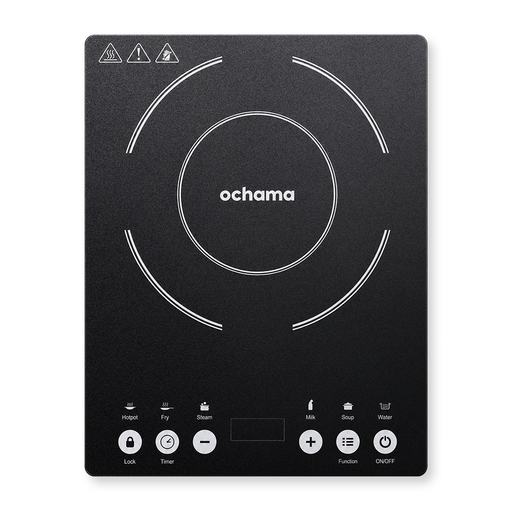
Why this product suits this profile: This portable single hob doesn’t need to be built in. It offers 10 power settings and six preset functions for different cooking tasks.
The power rating is complemented by specific control options. It also features a child lock and a protection programme for dry cooking.
2,000 watts, touch controls, a slim design and a glass surface that’s easy to clean.
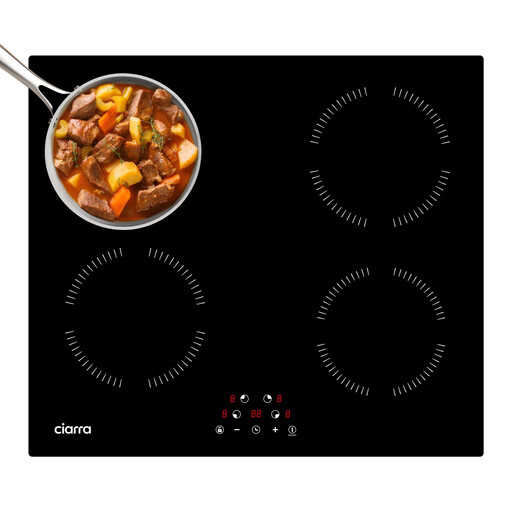
Why this product suits this profile: Four clearly specified zones and nine power settings make this a well-organised option for households that often use several pans at once.
The product details give both the overall dimensions and the cut-out dimensions. They also list pan detection, a residual heat indicator, overheating protection and automatic switch-off.
60 cm built-in format, four cooking zones, 6,000 watts of total power and an individual timer of up to 99 minutes.
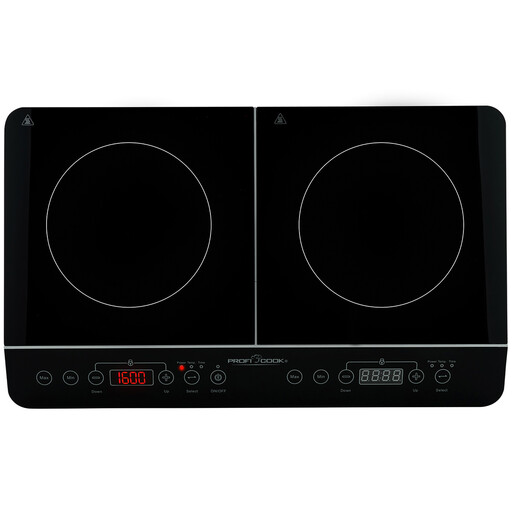
Why this product suits this profile: This portable double hob is a good option for households that need to cook with two pans but don’t want to install a permanent hob.
Rather than giving only a maximum temperature, the model specifies 16 function settings per zone, a 180-minute timer, pan detection and overheating protection.
Two cooking zones, temperature settings from 60 to 240 °C, an LED display and a maximum power rating of 3,500 watts.
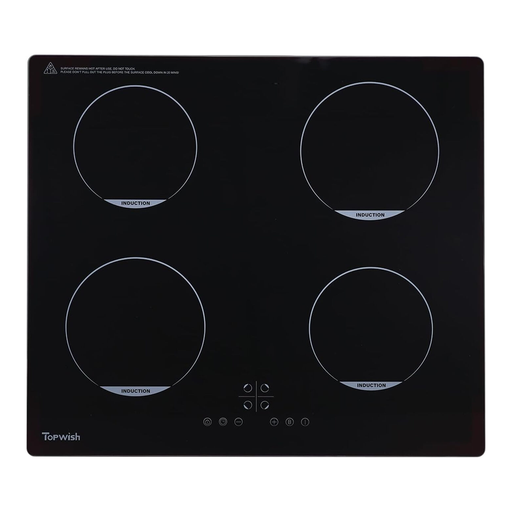
Why this product suits this profile: Four zones with nine power settings and a boost function are designed to let you prepare several dishes at the same time.
The specifications include overall dimensions of 59 × 52 cm, a cut-out size of 56.5 × 49.5 cm, a connection without a plug and the requirement for installation by a qualified electrician.
7,200 watts of total power, four boost functions, a timer of up to 99 minutes, child lock and residual heat indicator.
We’ve put together a complete, regularly updated list of products that meet these strict selection criteria and fully comply with the safety regulations in force in the EU.
Pans with a magnetic base are suitable, including those made from cast iron or magnetic stainless steel. Hold a magnet against the base: if it sticks, the cookware should be suitable for induction. Ideally, the base should be flat and a suitable size for the cooking zone.
Energy consumption depends on the power rating, cooking time, pan size and how you use the hob. Induction heats a suitable pan directly using an electromagnetic field. This doesn’t mean you can assume every model or household will save money. Compare the stated power rating and use the timer to avoid leaving the hob on unnecessarily.
Its lifespan depends, among other things, on how often it’s used, ventilation, cleaning and the electrical connection. Clean the surface only once it has cooled down or the residual heat indicator has gone out. Avoid abrasive cleaners, don’t block the ventilation openings and use an appliance with suitable electrical ratings. If the glass-ceramic surface is damaged, stop using the hob.