
Lieferung heute & morgen

Qualitätsgarantie

Willkommens-Angebote freischalten: KOSTENLOSE Lieferung | Bis zu 80 % RABATT | Kostenlose 30-Tage-JoyPlus-Testphase
App herunterladen
An induction hob can be a practical solution for fast-paced everyday cooking – from a portable single hob in student accommodation to a built-in hob with four zones. The choice ranges from an induction hot plate and double induction hot plate to a standalone built-in appliance. However, differences in power, connection and pan compatibility often only become apparent after purchase.
A high total power rating sounds convincing at first. However, on an induction hob with several plates, the available power is distributed between the cooking zones depending on the model. A 4-zone hob with 7,200 watts offers different capacity from a 2-zone model with 3,000 or 3,500 watts. The key question is whether you want to boil water, heat a frying pan and keep a sauce warm at the same time.
With a portable induction hob rated at 2,000 watts, the power is generally available to just one zone. This is often enough for a saucepan or frying pan; for preparing several dishes at once, an induction hob with 4 plates is more suitable.
A ceramic hob, or conventional electric hot plate, heats the glass surface first and then the cookware. With induction, the magnetic field is generated directly in the suitable base of the pan. This does not mean the surface stays cold: heat from the hot pan can make it noticeably warm during use.
A common cause of a wrong purchase is that existing pans are not magnetic. Hold a magnet against the underside. If it does not stick firmly enough, the cookware is not suitable for many induction appliances. You should also check the information on pan size and the permitted base shape in the relevant product description and instruction manual.
A built-in induction hob must fit the worktop precisely. The key measurements are not just the external dimensions, but above all the cut-out dimensions, installation height and space required for ventilation. For a 60-cm hob, typical cut-outs are approximately 56 × 49 cm, for example – but the specifications for the particular model are always definitive.
The electrical connection also varies. Portable hot plates are usually operated via a plug. Some built-in appliances, on the other hand, do not have a plug and require a proper connection to the mains. For high connection loads, installation should be carried out by a qualified electrician.
A touch-control hob is easy to wipe clean, but it does not always respond reliably to wet or greasy fingers. Clearly visible displays and separate controls for each cooking zone are useful features.
An induction hob with a timer can switch off a zone automatically after the set time. Check whether the timer is available separately for each zone and what range it covers, such as 1 to 99 minutes or up to 180 minutes on certain portable appliances.
Look for clearly explained functions such as:
These features reduce certain operating risks, but they do not replace supervision while cooking. Metal objects should not be left on the active surface. Anyone with a pacemaker should read the appliance manufacturer's guidance and, where necessary, seek medical advice before use.

Why this product suits the profile: The portable single hob takes up very little space and can be stored away in small kitchens, offices or when only needed occasionally. According to the product description, it offers 2,000 watts, ten power levels and six pre-set functions.
The clearly stated single-zone power prevents users from expecting a high total power rating to serve several cooking points. The child lock and dry-pan protection are also described.
Slimline housing, glass surface, touch controls and ten power levels for different cooking tasks.
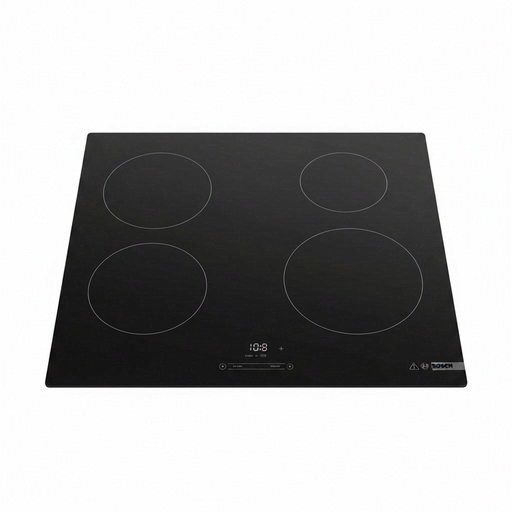
Why this product suits the profile: According to the product description, this 60-cm built-in induction hob has four zones, 17 power levels, Touch Select, Quick Start, Restart, a timer and a child lock.
The cut-out dimensions, 7,400-watt connection load and minimum worktop thickness are all specified clearly. This makes it possible to check the installation and electrical requirements in advance.
Four cooking zones, 17 levels, automatic switch-off and digital timers with switch-off function.
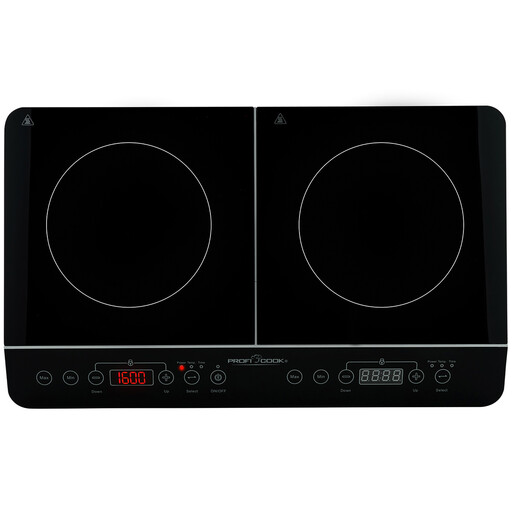
Why this product suits the profile: The portable double hot plate is suitable for households with limited space, camping or use as an additional cooking point. It offers 3,500 watts, two cooking zones, temperature levels from 60 to 240 °C and a timer of up to 180 minutes.
Automatic pan detection, overheating protection and switch-off after an extended period of inactivity address common operating errors. The non-slip feet help keep the appliance stable.
Two separately controlled plates, LED display, sensor touch controls and a long timer for extended cooking processes.
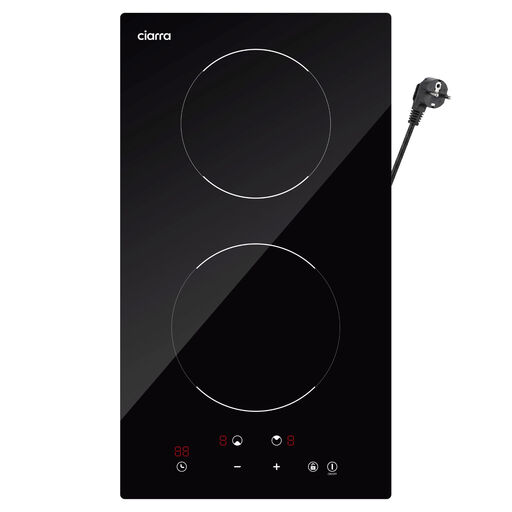
Why this product suits the profile: This standalone hob with two zones is designed for a compact built-in cut-out. According to the product specifications, it offers 3,000 watts, nine power levels, individual timers and 16-A protection.
The appliance and cut-out dimensions are listed separately. This makes it easier to compare them with a small worktop before buying.
Compact design, pan detection, residual heat indicator, child lock and overheating protection.
We have put together a complete, regularly updated list of products that fully meet these strict selection criteria and the safety regulations applicable in the EU.
A portable induction hot plate is a sensible choice if you want to remain flexible or are not planning any structural changes. It can be stored in a cupboard and used when needed on a stable, heat-resistant surface. Make sure there is sufficient ventilation and clear space around the ventilation openings.
A built-in 2-plate induction hob is a good fit for small kitchens and one-person households. A 3- or 4-zone model provides more space, but requires a suitable worktop cut-out and often a fixed electrical connection.
If you do not own induction-compatible pans, you can alternatively choose a conventional electric hot plate or ceramic hob. These appliances are generally less selective when it comes to cookware, but use a different heating technology and respond differently to changes in temperature.
Pans and frying pans with a magnetic base are suitable, including those made from cast iron or magnetic stainless steel. A magnet test on the underside provides an initial indication. The instructions for the particular hob and cookware remain decisive.
The cost depends on the power rating, usage time, electricity tariff and cooking method. For a rough estimate, multiply the power in kilowatts by the operating time in hours and your electricity price. A 2,000-watt hot plate running at full power for one hour uses 2 kilowatt-hours in theory. In everyday use, the highest setting is rarely used continuously.
Its lifespan depends, among other things, on how intensively it is used, ventilation, cleaning and correct operation. Avoid using empty pans, blocking the ventilation openings, harsh cleaning products and heavy impacts on the glass surface. For a built-in appliance, repairs and electrical work should only be carried out in accordance with the manufacturer's instructions and by suitably qualified professionals.