
Lieferung heute & morgen

Qualitätsgarantie

Willkommens-Angebote freischalten: KOSTENLOSE Lieferung | Bis zu 80 % RABATT | Kostenlose 30-Tage-JoyPlus-Testphase
App herunterladen
Choosing a new hob is a major decision for any kitchen. An induction hob promises fast, safe, and energy-efficient cooking. However, the market is flooded with models featuring a wide range of functions and price points. As a Joybuy Product Recommendation Officer, I'll help you separate the wheat from the chaff and navigate the common pitfalls, so you can make an informed decision.
Before we look at the important features, let's highlight the marketing traps that often lead to disappointment and unnecessary expense.
To find the right model, you should understand three fundamental technical aspects. These are crucial in determining the functionality and flexibility in your kitchen.
A standalone hob has its own controls and can be installed independently of an oven. This offers maximum flexibility in kitchen design. For example, you can place the hob on a kitchen island while the oven is installed in an eye-level tall unit. Oven-controlled hobs have become less common and are operated via the control electronics of a matching built-in oven, which limits your combination options.
The choice of size and cooking zones depends on your household and your cooking habits.
Instead of presenting an overwhelming list, we have selected models that cater to specific user profiles and cleverly avoid the pitfalls mentioned.
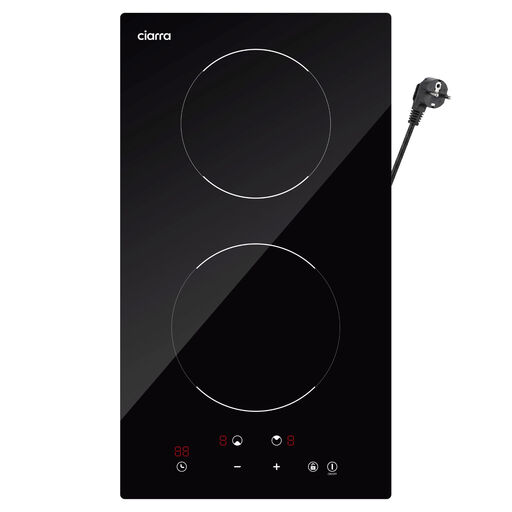
Why This Fits Their Persona: This 2-burner hob is ideal for kitchens with limited space. It offers the full speed and efficiency of induction technology in a compact 30cm format, without compromising on performance for daily needs.
It focuses on the essentials: rapid heat, precise control over 9 levels, and fundamental safety features. It deliberately omits expensive extra functions that would be unnecessary in this segment.
Powerful 3000W total output for fast cooking and a low-maintenance Touch Control surface. Installation is often simpler thanks to its 13A fuse compatibility.
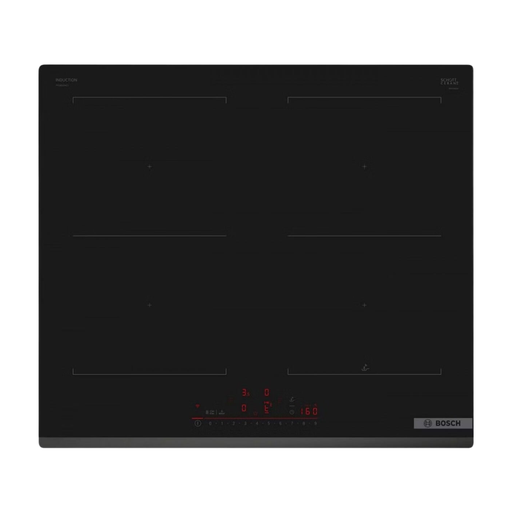
Why This Fits Their Persona: This Bosch induction hob in the standard 60cm size is a solid choice for families. The CombiZone (a form of Flex Induction) allows the use of roasting pans and large frying pans, significantly increasing flexibility in everyday cooking.
It offers a premium feature with the CombiZone that has real practical benefit, rather than just being a marketing gimmick. The HomeConnect function is present, but the core performance of the appliance justifies the price even without its use.
The high total power of 7400W ensures rapid heating on all zones. The DirectSelect control allows for intuitive and direct selection of power levels.
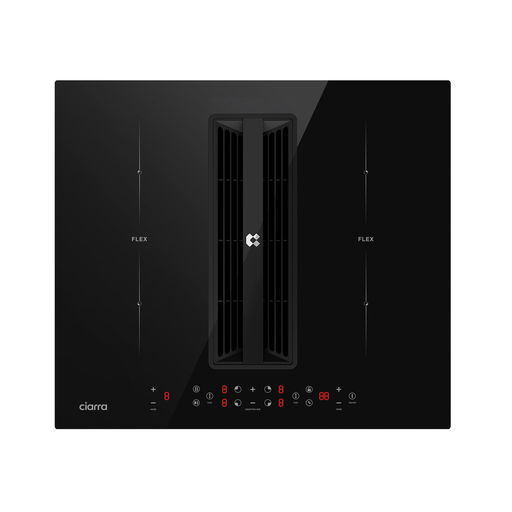
Why This Fits Their Persona: This hob with integrated extractor is the perfect solution for minimalist kitchen islands and open-plan living concepts. It combines a powerful induction hob with an effective downdraft extractor, creating an unobstructed view without a bulky extractor hood.
It solves a real design and planning problem instead of just adding features. The integration of hob and extractor in one unit simplifies installation and ensures a cohesive look.
Space-saving 2-in-1 design with a FlexZone for flexible cooking. The plasma filter system enables efficient recirculation mode without an external duct.
We have compiled a complete, up-to-date list of products that fully meet these strict selection criteria and UK safety regulations.
Many buyers looking to buy a glass-ceramic hob face the choice between induction and a conventional ceramic hob (radiant heating). The main difference lies in the technology:
For an induction hob, you need cookware with a ferromagnetic base. You can easily test if your pots and pans are suitable: hold a magnet to the bottom of the pot. If it sticks, the cookware is induction-compatible. Pots made of pure copper, aluminium, or glass will not work.
Yes, absolutely. Hobs with four zones typically have a high power rating (over 3,000 watts) and must be hardwired to a dedicated high-power circuit. In the UK, electrical safety regulations (Part P of the Building Regulations) require that this type of work is carried out by a qualified and registered electrician. This is crucial for your safety and for your home insurance to remain valid.