
Lieferung heute & morgen

Qualitätsgarantie

Willkommens-Angebote freischalten: KOSTENLOSE Lieferung | Bis zu 80 % RABATT | Kostenlose 30-Tage-JoyPlus-Testphase
App herunterladen
Choosing a new hob is a major decision for any kitchen. An induction hob promises fast, efficient, and safe cooking. However, the market is filled with technical jargon and marketing promises that make the selection process difficult. As your Joybuy Product Recommendation Officer, I'm here to help you separate fact from fiction and make an informed decision.
Before we dive into the key features, let's look at three common misconceptions that can lead to buyer's remorse:
To find the right model for your needs, three technical aspects are of central importance.
The power rating, measured in watts (W), indicates the hob's maximum power consumption. This value determines the type of electrical connection required.
The arrangement and size of the cooking zones should match your cooking habits.
The choice between these two technologies is fundamental.
| Feature | Induction Hob | Glass-Ceramic Hob (Ceramic) | | :--- | :--- | :--- | | Heating Principle | An electromagnetic field heats the pot base directly | Heating coils under the glass top heat the cooking zone | | Speed | Very fast, water boils in a very short time | Significantly slower, requires preheating time | | Efficiency | High, as very little energy is lost to the surroundings | Lower, as the hob surface and surroundings are also heated | | Safety | The hob remains relatively cool, with only residual heat from the pot | The hob gets very hot, high risk of burns | | Cleaning | Easy, as food rarely burns onto the cool surface | More difficult, as spills burn onto the hot surface | | Cookware | Requires ferromagnetic cookware (iron, cast iron) | Compatible with almost all types of pots and pans |
Here are some models tailored to different needs and kitchens.
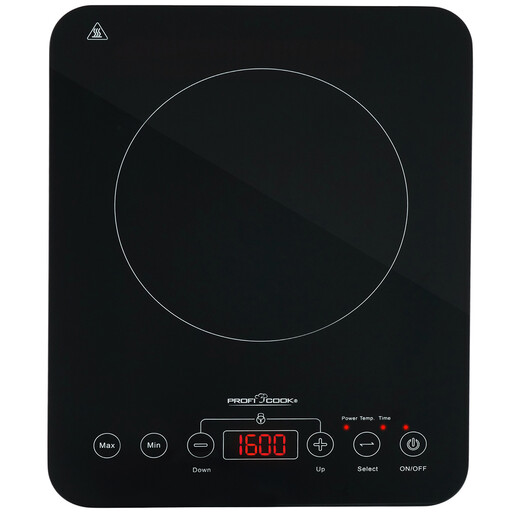
Why This Fits Their Persona: Ideal for students, campers, or as an additional hot plate in the family kitchen. Thanks to its standard plug, it's ready to use immediately wherever there's a socket.
The "ECO-Save" claim is based on the objective efficiency advantage of induction over conventional heating plates, so it's not an empty marketing phrase. The operation is transparent and focused on core functions.
Combines portability with precise control via 10 power and temperature levels, plus a timer function. The sensor-touch controls are modern and easy to clean.

Why This Fits Their Persona: A solid choice for families or anyone planning a new kitchen. With four cooking zones and standard built-in dimensions (60 cm hob), it offers ample capacity and fits into most kitchen layouts.
The product information clearly states that professional hardwiring is required (7200W power rating, no plug). This prevents misunderstandings regarding installation.
Offers useful features like a boost function for rapid heating on all four zones and a child lock. The value for money for a full-featured built-in hob is attractive.
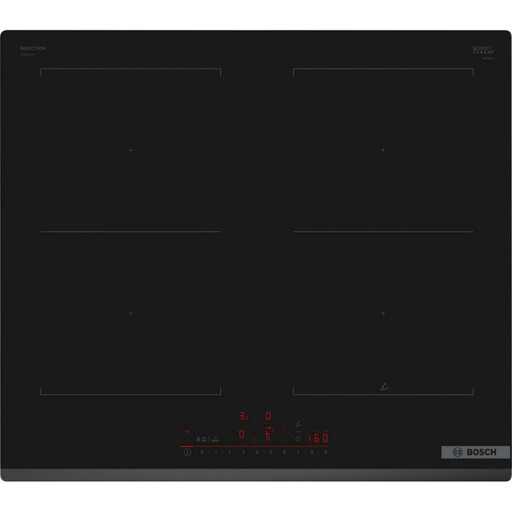
Why This Fits Their Persona: For ambitious home cooks who value flexibility, precise control, and brand quality. The CombiZone function and intuitive controls support creative cooking with various types of cookware.
The added value here isn't a high number of power levels, but the superior flexibility of the CombiZone and the precise DirectSelect controls. These features offer a demonstrable practical benefit.
The CombiZone allows the use of large roasting pans and specialty cookware by linking two zones. The DirectSelect control enables direct, intuitive selection of the power level without tedious tapping.
We've compiled a complete, up-to-date list of products that fully meet these strict selection criteria and UK safety regulations.
You need cookware with a ferromagnetic base. You can easily test if your existing cookware is suitable with a magnet: if the magnet sticks to the bottom of the pot or pan, the cookware is induction-compatible. Materials like cast iron, enamelled iron, and some special stainless steel alloys are generally suitable. Pure aluminium, copper, or glass will not work.
The installation of a standalone built-in hob with a high power rating (e.g., 7.2 kW) must be carried out by a qualified electrician. The appliance is wired directly into the kitchen's dedicated high-power circuit. This not only ensures correct function but is also a mandatory safety measure. Never attempt to connect such an appliance yourself.
An induction hob is generally more energy-efficient than a ceramic hob. Because the energy is transferred directly to the base of the pot and doesn't have to heat the glass surface first, less heat is lost to the surroundings. This results in shorter cooking times and lower overall electricity consumption. According to consumer organisations, the savings can be up to 40% compared to old cast-iron hobs and up to 20% compared to glass-ceramic hobs.