
Lieferung heute & morgen

Qualitätsgarantie

Willkommens-Angebote freischalten: KOSTENLOSE Lieferung | Bis zu 80 % RABATT | Kostenlose 30-Tage-JoyPlus-Testphase
App herunterladen
An induction hob can make everyday cooking much simpler, provided the size, cooking zones and connection suit your needs. However, it’s easy to make costly mistakes when choosing one: a compact portable model might be bought as a full replacement for a built-in hob, a high wattage can be mistaken for consistently higher performance, or important safety features can be overlooked.
This buying guide from the Joybuy Product Recommendation Officer gives you a clear, objective look at the key criteria, and shows which model might suit different households and cooking situations.
The total wattage describes the maximum electrical power a hob can draw. However, when several zones are in use at the same time, the power can be shared between them. A 60 cm induction hob with multiple zones also requires a suitable electrical connection and must be professionally installed.
For cooking with a single pan in a holiday home, a portable induction hob with 2,000 watts is often sufficient. If you regularly use several pots and pans at once, you’ll need multiple cooking zones and an appropriate power supply.
An induction hob with touch control is easy to clean because there are no protruding knobs. What really matters, though, is whether you can clearly select each individual zone and whether the power levels are easy to read. A confusing control panel can be frustrating when you’re cooking.
Look for clearly visible displays, multiple power levels and a separate timer for each zone. For families, a switchable child lock is a relevant feature to consider.
Induction only works with magnetic cookware. A simple test with a magnet on the base of the pan will give you a quick answer. Aluminium or ceramic cookware without a magnetic base usually won’t be detected. Also, the base should sit as flat as possible and match the size of the cooking zone.
Before buying a built-in appliance, you must check the external dimensions, cut-out size, installation depth, ventilation and power rating. A standard 60 cm hob isn’t automatically compatible with every existing worktop cut-out.
An induction hob with 4 zones is suitable for households where several dishes are prepared at the same time. For large roasting pans, griddle plates or oval pans, an induction hob with a flex zone can be more practical. This allows neighbouring zones to be combined into one larger heating area.
The size of the cooking zones should match the cookware you already have. A very large zone isn’t necessarily useful if you mostly use small pans. Also check whether the maximum power of each zone is available simultaneously, or whether it’s limited by a power management system.
Look out for:
Even with safety features, you should never leave oil, fat or empty pans unattended while heating. The glass surface can become very hot during use and immediately afterwards. People with implanted electronic devices should follow the manufacturer’s safety instructions and, if necessary, seek medical advice.

Why this product fits the profile: This portable single hob takes up very little space and is ideal for smaller kitchens, student flats or as an extra cooking point.
It’s clearly described as a mobile appliance with 2,000 W, ten power levels and touch control. This means it won’t be mistaken for a four-zone built-in hob.
Slim casing, ceramic glass surface, six pre-set functions, boil-over protection and child lock.
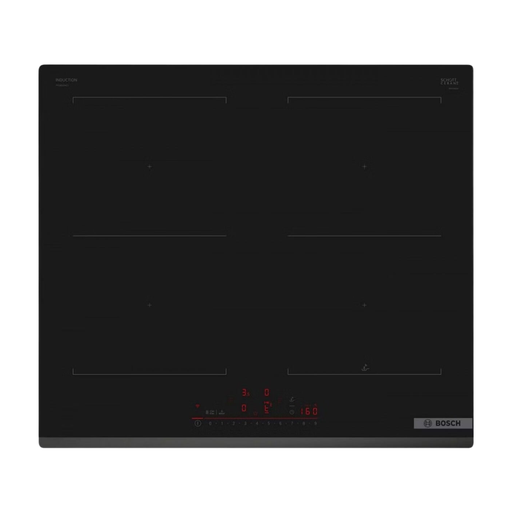
Why this product fits the profile: This freestanding built-in hob is designed for households that need four zones and flexible surface use for different pan sizes.
The product data specifies cut-out dimensions of 560 × 490 mm, four cooking zones and a combinable FlexInduction zone. You should still measure your existing worktop cut-out before buying.
7,400 W total power according to the product data, individual timers, pan detection, residual heat indicator and child lock.
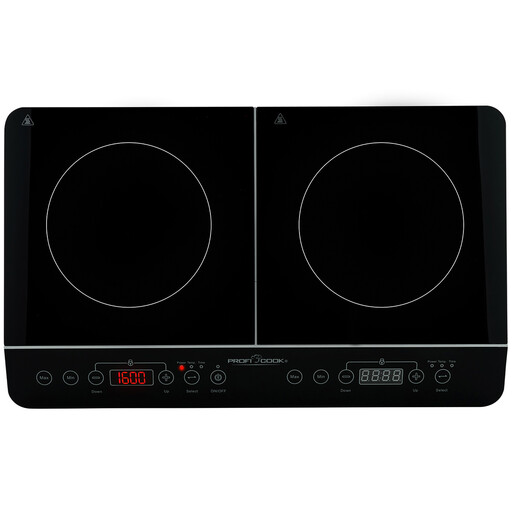
Why this product fits the profile: This double induction hob offers two mobile cooking zones and is suitable for small-scale catering, holiday homes or as an extra appliance.
Automatic pan detection, shut-off when the pan is removed, overheat protection and non-slip feet address the typical risks of portable appliances.
Two cooking zones, each with 16 function levels, a 180-minute timer and a ceramic glass surface according to the product description.
We’ve put together a full, regularly updated list of products that fully meet these strict selection criteria and the safety regulations in force in the EU.
Check the external and cut-out dimensions, installation depth, ventilation gaps and the electrical connection. Built-in appliances should be connected by a qualified electrician in accordance with the installation instructions. A multi-socket extension lead or an unsuitable extension cable is not intended for this purpose.
The lifespan depends on usage, care, installation and material quality. The glass surface should only be cleaned with a soft cloth once it has cooled down. Abrasive cleaners, hard sponges and sliding heavy pans across the surface can cause damage. If the glass cracks, the appliance must not be used.
Induction heats the magnetic pan base directly, rather than first heating a heating element and the entire surface. This can reduce cooking times. The actual electricity consumption depends on the cooking duration, power level, pan size, whether you use a lid, and how many zones are in use at the same time. An energy-efficient induction hob should therefore be chosen to match the size of your household and your cooking habits.