
Lieferung heute & morgen

Qualitätsgarantie

Willkommens-Angebote freischalten: KOSTENLOSE Lieferung | Bis zu 80 % RABATT | Kostenlose 30-Tage-JoyPlus-Testphase
App herunterladen
An induction hob can be a space-saving solution for the kitchen, office, student accommodation or campsite. Before buying, however, it is worth taking a close look at the technical specifications and installation requirements. Marketing terms such as “fast”, “compact” or “safe” mean little on their own if the power output, electrical connection or cookware does not suit your needs.
A high total power output may sound convincing at first. However, when several zones are used at the same time, the power may be distributed electronically. What matters is therefore not just the maximum figure, but also:
A compact 2-zone induction hob with 3,000 to 3,500 watts may be sufficient for smaller households. An induction hob with 4 zones and up to 7,200 watts, on the other hand, requires particular attention to the connection, fuse protection and installation.
Induction only works with magnetic cookware. A simple magnet test on the base of the pan will show whether it is fundamentally suitable. Cast iron, iron and magnetic stainless steel are often suitable. Aluminium, copper and ceramic only work if the base has a magnetic layer.
A magnetic pan should also sit flat and be the right size for the cooking zone. Very curved or extremely small bases can affect pan detection.
With a built-in induction hob, it is not just the appliance’s width and depth that matter. The key measurement is the worktop cut-out. For example, a model with external dimensions of around 29 × 52 cm may require a cut-out of approximately 26 to 27 × 49 cm. Before buying, you should therefore compare the product data sheet with the existing worktop.
An induction hob transfers heat to suitable cookware via an electromagnetic field. The glass surface is not heated in the same way as a conventional heating element, although it can become warm from the hot pan. An induction hotplate is generally quick to adjust and can be cleaned with a damp cloth once it has cooled down.
A 2-zone ceramic hob or individual electric hotplate, by contrast, operates using visible heating elements or elements beneath the surface. These variants do not require magnetic cookware. A portable electric hotplate can be useful for camping, the office or as a backup, but it generally takes longer to heat up and cool down.
A hob with touch controls should have clearly recognisable buttons or sliders. Grease and water can affect sensor fields, so the control panel should be kept clean and dry. Useful functions include:
These functions do not replace supervision. Hot surfaces, oil and pans should never be left unattended.
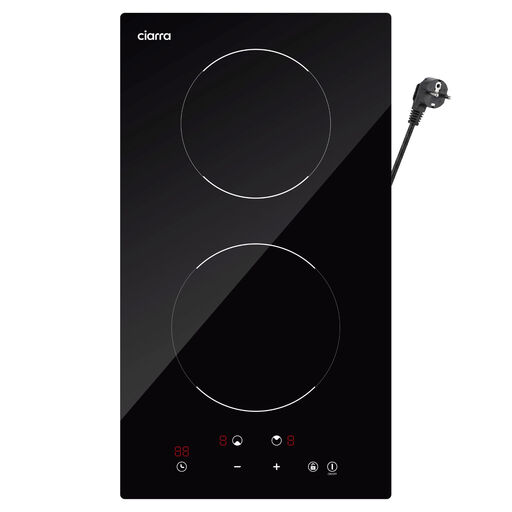
Why this product suits this profile: This compact built-in appliance has two zones, 3,000 watts and 9 power levels, making it suitable for smaller kitchens and modest cooking quantities.
The specified external and cut-out dimensions make it easier to compare the hob with an existing worktop. Pan detection and the 16 A specification should be checked before installation.
Two cooking zones, touch controls, timer of up to 99 minutes, child lock and residual heat indicator.
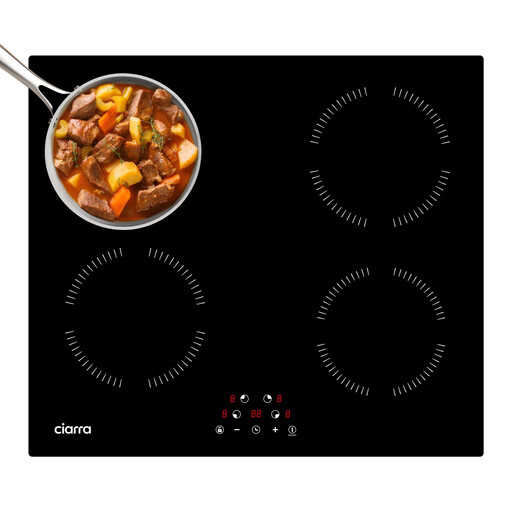
Why this product suits this profile: Four independently specified cooking zones and 6,000 watts are designed for households that regularly use several pans at once.
The precise cut-out size of 560 × 490 mm prevents you from considering only the visible width of 590 mm. The 32 A connection requirement must be checked by a qualified professional.
Four zones, 9 power levels, individual timers, automatic pan detection, overheating and overflow protection.
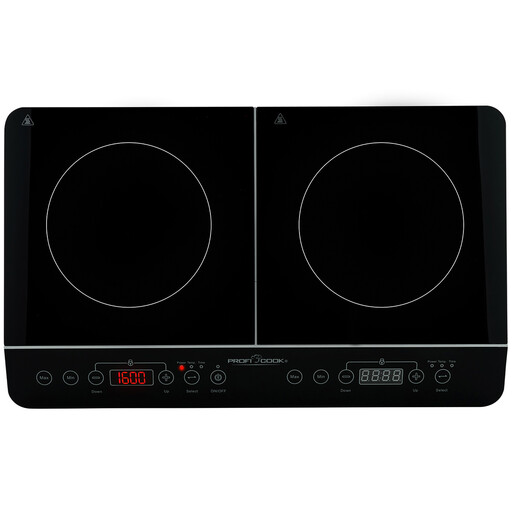
Why this product suits this profile: This portable double induction hotplate is intended for rented accommodation, offices, camping or as an additional cooking surface.
The power and temperature levels are specified separately. Automatic pan detection, switch-off when a pan is removed and overheating protection are also listed.
2 × 16 function levels, LED display, timer of up to 180 minutes, non-slip feet and maximum power of 3,500 watts.
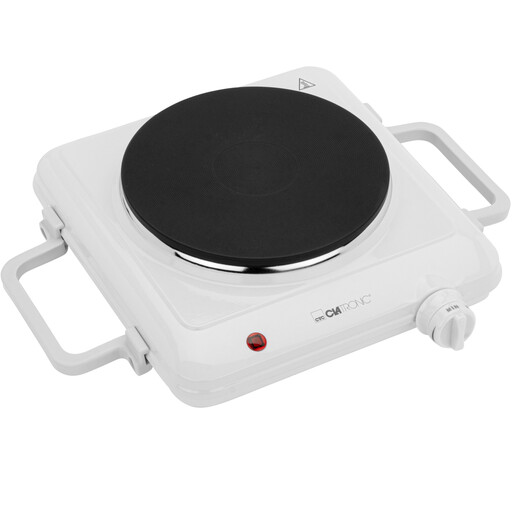
Why this product suits this profile: This portable electric hotplate has a 180 mm cooking surface, requires no induction cookware and can be used as an additional single cooking zone.
It is not limited to magnetic pans. A pilot light, continuously adjustable thermostat and overheating protection are expressly specified.
1,500 watts, compact single cooking surface, continuously adjustable temperature control and excellent stability.
We have compiled a complete, regularly updated list of products that fully meet these strict selection criteria and the safety regulations applicable in the EU.
A built-in appliance should be installed in accordance with the operating instructions. Models with a higher connection rating, particularly a 4-zone hob, must generally be connected in Germany by a suitably qualified electrician. Ventilation gaps beneath the hob must not be blocked.
The following basic rules apply to daily care:
For a portable appliance, unobstructed ventilation openings, a stable surface and a dry environment are also important. People with electronic implants should follow the safety instructions provided by the relevant manufacturer and seek medical advice if necessary.
Hold a magnet against the base of the pan. If it sticks, the cookware is fundamentally magnetically suitable. The base should also be flat and clean. Final suitability depends on the particular cooking zone and the manufacturer’s specifications.
Consumption depends on the power output, operating time, temperature and simultaneous use of several zones. The wattage indicates the possible power draw, not necessarily the actual consumption. A timer and power levels matched to your needs can help avoid unnecessary operating time.
A portable appliance can be used without installation, making it practical for rented accommodation, offices or camping. For an independent induction hob or built-in appliance, however, the worktop, cut-out dimensions, ventilation and electrical connection must be checked in advance.