Households eating at different times
If you cook together but don’t eat at the same time, an off timer and a separate plan for keeping food hot or chilling it are important. The BfR recommends keeping hot food at a minimum of 60 °C throughout.


For cooking pea soup together when people are eating at different times, a built-in hob with enough usable zones is a good choice if several pans need to stay on the hob at once. If you’re not planning a permanent installation, a portable single or double hob may be a better fit. A zone-off timer ends the heating period, but it won’t keep food hot safely or chill it: the German Federal Institute for Risk Assessment (BfR) recommends keeping food at a minimum of 60 °C throughout when holding it hot.
If you cook together but don’t eat at the same time, an off timer and a separate plan for keeping food hot or chilling it are important. The BfR recommends keeping hot food at a minimum of 60 °C throughout.
If you’re making soup and other dishes at the same time, the number of zones you can actually use matters. Check that the pan sizes and layout suit the way you cook.
If you’re looking for an extra hob that can be put away, take into account the space available, pan size and the load limit specified for the particular portable model.
A good fit if: several people regularly cook at the same time and you have a suitable space for installation.
Things to consider: the cut-out and electrical connection need to suit your kitchen; timer types vary by model.
A good fit if: one extra cooking zone is enough and you want to put it away after use.
Things to consider: the zone will be occupied while the soup is on it.
A good fit if: you want to heat two pans at once but aren’t planning a permanent installation.
Things to consider: it needs more worktop space than a portable single hob.
| Buying priority | What to look for | Who is it important to? |
|---|---|---|
| Handing over when people eat at different times | Tell a zone-off function apart from a simple countdown. The BfR recommends keeping hot food at a minimum of 60 °C throughout. | If we’re not eating at the same time, I want to know when the cooking zone switches off and how to handle the soup safely until it’s time to eat. Around 31% of consumers put this handover between cooking and eating first. |
| Simmering soup under control | Check the power levels and controls for the specific model; a setting on the appliance doesn’t measure the temperature of the soup. | When cooking, I want to be able to adjust the heat after bringing the soup to the boil. Around 25% of consumers focus most on the controls for simmering. |
| Using several pans at once | Check that the number and layout of usable zones work with the pans you have. | If the soup has to stay on one zone for a long time, I need space for other pans. Around 19% of consumers prioritise cooking several things at once. |
| Space and connection | For portable hobs, check the space available and type of connection; for built-in models, check the cut-out and connection requirements. | With limited worktop space, I want to be able to put an extra hob away after use. Around 13% of consumers pay particular attention to the space it takes up and its design. |
| Using your existing soup pan | Check that the material is suitable for induction and that the base diameter is right; for the CASO Touch 2000, also note the maximum load of 6 kg. | If I want to keep using my current pan, its material and dimensions need to suit the hob. Around 12% of consumers put compatibility with their soup pan first. |
The soup may cool down after the hob switches off. A keep-warm function doesn’t prove that the whole dish will stay hot enough.
If people are eating at different times, plan how to manage the food temperature separately from the hob timer.
Induction requires cookware made from a suitable material. Some portable appliances may also have limits on pan size and load.
Check the material and base diameter, and, for portable models, compare the filled pan’s weight with the specifications for the particular model.
A built-in hob may need a suitable cut-out and a properly installed electrical connection; a portable hob designed for this purpose is intended for a different type of use.
Before choosing, check the existing cut-out, the type of connection and how many zones you need to use at the same time.
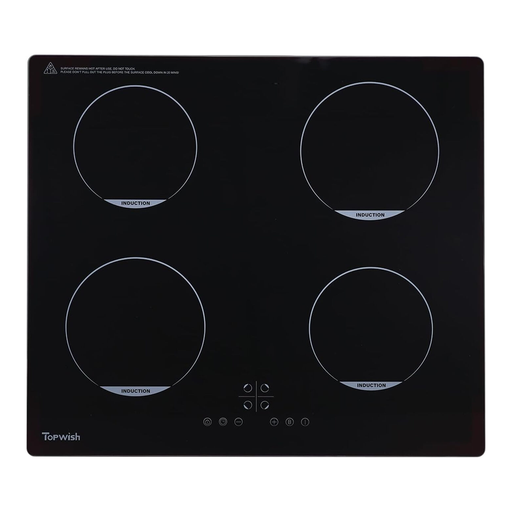
The PIE61RBB5E is a 60 cm built-in hob with four circular cooking zones.
The EX975LXC1E is a 90 cm-wide built-in hob with five cooking zones, designed for households that use several pans at once.
The portable Touch 2000 is an option for an extra single cooking zone if you don’t have space for another built-in hob.
The freestanding built-in model OIO64C00IB has four cooking zones for a permanent cooking space.
The DK 1031 is an example of a portable double hob for heating two pans without a permanent installation.
The Joybuy models below are built-in induction hobs for a permanent cooking space. In particular, check the number of zones, dimensions and connection requirements to make sure they suit your kitchen.
 No image available
For a permanent cooking space where you want to use several pans at once.
This model is listed with four cooking zones and 17 power levels.
According to Bosch, the digital timer switches off the selected cooking zone after the set time.
A cut-out width of 560 mm is specified for installation; the connection should be made by a qualified electrician.
The off timer won’t keep the soup warm for a later meal.
 No image available
For a permanent cooking space with several zones for preparing other dishes alongside the soup.
Four zones and nine power levels are listed; the specified zone diameters are 160 mm and 180 mm.
The timer is listed as running for up to 99 minutes.
The cut-out is specified as 565 × 495 mm. According to the product information, this model has no plug and is designed for a fixed connection; check the installation requirements before buying.
 No image available
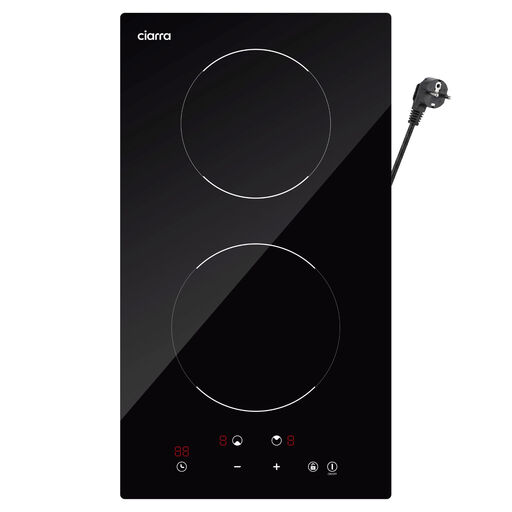
For a permanent cooking space with two zones for soup and another dish.
Two zones, nine power levels and individual timers of up to 99 minutes are listed.
The product lists pan size references of 120–260 mm for one zone and 120–200 mm for the other.
The cut-out is specified as 270 × 490 mm, and a 16 A fuse is also listed. Check these requirements against your existing installation.
 No image available
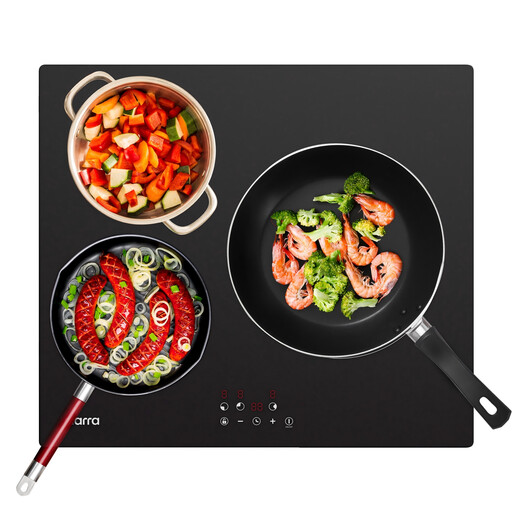
For a permanent cooking space where you want to use several pans at once.
Three cooking zones, nine power levels and a timer for each zone are listed.
The largest specified zone measures 280 mm; the other two are listed as 180 mm and 160 mm.
The cut-out is specified as 560 × 490 mm, and a 32 A fuse is also listed. Check the requirements before installation.
 No image available
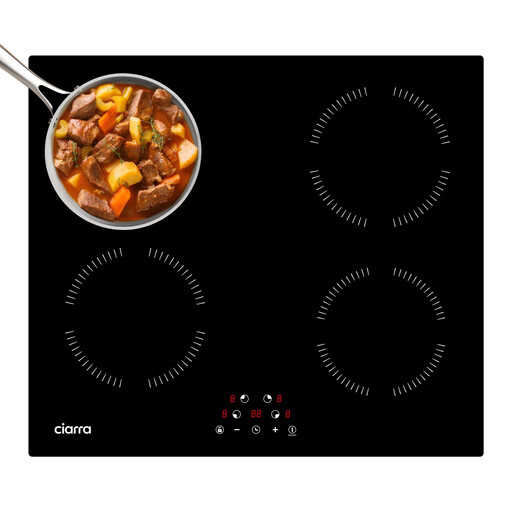
As a built-in appliance, it’s designed for a permanent cooking space; before buying, check that the configuration on offer has the right number of zones for your needs.
The product information lists nine power levels and individual timers of up to 99 minutes.
The cut-out is specified as 270 × 490 mm, along with a 16 A fuse. Check both against your kitchen installation.
No. On models with this feature, an off timer ends the heating period, but it won’t automatically keep the food safely hot. The BfR recommends keeping hot food at a minimum of 60 °C throughout. If the soup is going to be eaten later, the BfR advises cooling heated food and storing it in the fridge until it’s reheated.
Only if it’s made from a material suitable for induction and the base fits the zone you want to use. The Federal Office for Radiation Protection notes that pots and pans must be made from a suitable material. For the CASO Touch 2000, the manufacturer also specifies a pan size range of 12–24 cm and a maximum load of 6 kg.
For work on the electrical installation beyond the main service fuse, section 13 of the Low Voltage Connection Ordinance (NAV) generally requires it to be carried out by the network operator or an installation company registered in its installers’ directory; the exceptions set out there should also be noted. Siemens describes the EX975LXC1E as having no plug and requiring connection by a qualified electrician. This is not the same as plugging in a portable hob designed for that purpose.
Check the instructions and information for the specific appliance before connecting or cleaning it. As part of its market surveillance, the German Federal Network Agency lists the CE mark, manufacturer details and German-language instructions with the required warnings among the things to check. The SEVERIN instructions say to unplug the appliance and let it cool down before cleaning.
The Federal Office for Radiation Protection notes that electric and magnetic fields can affect electronic implants; sensitivity depends on the implant and its settings. It’s therefore not possible to assess whether a hob is suitable for you based on the product page alone.