Lunchbox preppers who use one pan
You make custard in batches and want to be able to turn down the heat easily, without permanently giving up another cooking space.


If you usually make custard in one pan, a portable single-zone induction hob is a sensible place to start. Look for easy-to-use low settings and a pan that’s compatible with the hob. Two zones are worth considering if you regularly cook other lunchbox dishes at the same time. A built-in hob is a bigger kitchen decision and may need to be connected by a qualified electrician. If your custard is perishable, plan to cool it quickly and keep it cool during transport, whatever hob you choose.
You make custard in batches and want to be able to turn down the heat easily, without permanently giving up another cooking space.
You want to keep using your custard pan, so you’re checking whether its base material and diameter are suitable for the induction hob.
You prepare custard and other dishes at the same time, so the number of cooking zones you can use is your main consideration.
For custard in a pan, the key things are how easily you can control low heat and whether your cookware fits. Extra cooking zones matter most if you plan to cook more than one dish at a time.
| What matters | What to check before buying | Who it matters to |
|---|---|---|
| Controlling low heat | How easy it is to use the lower power settings, and the control features listed for the specific model. | If I’m cooking delicate custard, I want to be able to adjust the heat easily rather than relying on a single appliance setting. Around 40% of consumers put low-heat control first. |
| Using a pan you already own | A suitable base material, a flat pan base and the specified pan diameter. | If you want to keep using your custard pan, check its material and base measurements in advance. Around 30% of consumers prioritise pan compatibility. |
| Space and positioning | The appliance dimensions, positioning guidance and any model-specific safety features. | If I’m short on worktop space, I need a hob that fits there and can be positioned securely. Around 20% of consumers prioritise the space needed and positioning. |
| Cooking several dishes at once | The number and size of the cooking zones, appliance dimensions and the model’s connection requirements. | If you’re making custard and another dish at the same time, you’ll need enough usable cooking zones. Around 10% of consumers put cooking several dishes at once first. |
A high wattage doesn’t tell you how well you can set a low heat for delicate custard.
Compare the controls and low settings on the specific appliance. Keep an eye on the custard and stir it as it cooks.
Induction requires compatible cookware. The material, base and size all need to suit the hob.
Check your pan’s base against the specifications for the hob you’ve chosen.
If your existing pan isn’t suitable, you may need to buy one designed for induction.
Cooking and cooling are separate steps. For perishable foods, the temperature during storage and transport matters too.
Plan to cool it quickly, store it in the fridge and keep it cool during transport, whatever hob you use.
The portable S-Line 2100 single hob is a useful point of comparison if you usually only need one pan.
The portable CT 2010/IN single hob is worth considering if you’re looking for an extra cooking zone for a suitable pan.
The KP 1071 and DK 1028 models show the difference between choosing one cooking zone and two.
The EH845BFB5E built-in hob is an example of a permanent installation with several cooking zones.
The portable SIKP 2200 B1 single hob was tested by F.A.Z. Kaufkompass.
The selection includes portable single- and double-zone hobs for cooking with one or more pans, as well as built-in hobs for a kitchen planned around several permanently installed zones.
 No image available
For a permanently installed cooking space with several pans; this model is described as a built-in hob.
It has four cooking zones, 17 power levels, a timer with automatic shut-off and a child lock. The description says it must be installed by a qualified electrician; cookware must be suitable for induction.
 No image available
For a portable cooking zone if you usually use just one pan.
Nine heat settings are listed. According to the description, the hob is designed for pans with magnetic bases measuring 12 to 26 cm in diameter.
 No image available
For making custard and another dish at the same time; the description says it has a portable design.
It has two independently controlled cooking zones and five temperature settings.
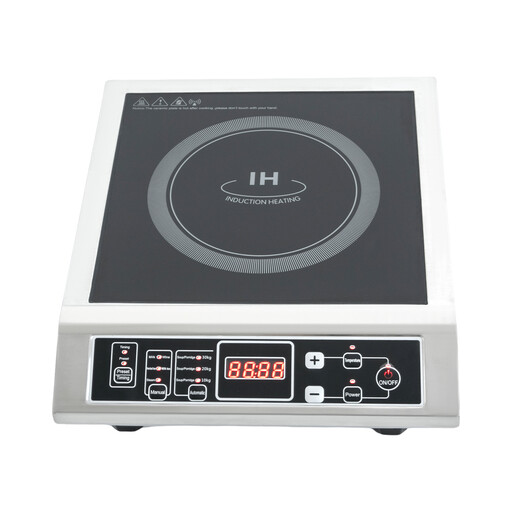 No image available
For an extra portable cooking zone if you’d like adjustable settings and a timer.
The description lists ten temperature settings, ten power levels, a timer and a reservation function.
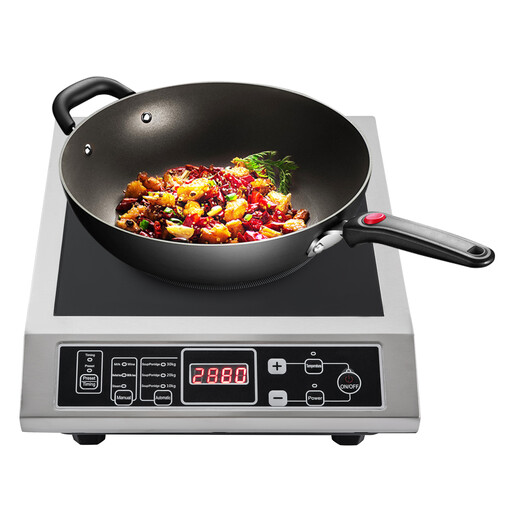 No image available
For a portable cooking zone with adjustable settings and timer control.
Eight temperature settings and eight power levels are listed. According to the description, the timer can be set for up to three hours; suitable magnetic cookware is required.
No. An appliance setting doesn’t guarantee an even temperature throughout the food. Stir and keep an eye on the custard as it cooks, and follow your recipe’s instructions too.
Check that the pan base is suitable for induction and flat, and that its diameter matches the hob’s specifications. The Federal Office for Radiation Protection lists unsuitable materials, an uneven base and an unsuitable size as potential problems.
The German Federal Institute for Risk Assessment recommends cooling hot food quickly to below 7 °C if you’re going to store it for a longer period. According to the BfR, perishable foods should be kept in the fridge at 2 °C to no more than 7 °C, and kept cool when you’re out and about too. The hob won’t keep food cool.
Not necessarily. The manufacturer says the Siemens EH845BFB5E is supplied without a plug and must be connected by a qualified electrician. Check the installation instructions for the specific model before choosing a built-in hob.