What to look for when choosing
For a batch of fruit coulis, the pan base and cooking zone need to be compatible. The Federal Office for Radiation Protection notes that induction hobs require suitable cookware.
Portable single-zone induction hob
A good fit if: you use one pan at a time and want an extra cooking zone rather than a permanently installed hob.
The trade-off: You only have one cooking zone.
Portable double induction hob
A good fit if: you want to use two suitable pans at the same time on separately controlled zones.
The trade-off: ROMMELSBACHER specifies a footprint of 60 × 36 cm and a connected load of 3,400 W at 230 V for the CT 3410/IN. Check that your chosen location and power supply are suitable for this model.
Built-in induction hob
A good fit if: you want several cooking zones to be available permanently and your kitchen is set up for a built-in hob.
The trade-off: The cut-out and electrical connection need to suit your chosen model. Bosch specifies that the PXX675DC1E must be connected by a qualified electrician, without a plug.
| Priority |
What to check before buying |
Who it matters most to |
| Control when simmering |
Check the controls and power settings for the specific model. If it has a probe, check the manual to see what it is suitable for. |
If I want to fine-tune the heat after bringing the coulis to the boil, the controls need to work well when simmering. Around 36% of consumers rate adjustability as their top buying priority. |
| Pan and batch size |
Check the magnetic pan base and its diameter against the cooking zone. For portable hobs, also check the maximum weight limit. |
When preparing a larger batch to store, I want to be sure the pan base and filled weight are suitable for the hob. Around 29% of consumers put pan and batch size first. |
| Worktop space or built-in installation |
For portable hobs, check the appliance dimensions. For built-in models, check the cut-out measurements, manual and connection type for the exact model. |
If I first need to choose between an extra hob I can put away and a permanently installed one, my kitchen layout is the deciding factor. Around 21% of consumers prioritise worktop space and installation. |
| Using two pans at once |
Check the number and arrangement of the zones, and whether they can be controlled separately, against the pans you plan to use. |
If I want to use a second pan while making coulis, I need space for both and, ideally, separately controlled zones. Around 14% of consumers put cooking two dishes at once first. |
Joybuy products for preparation
The models below include portable single- and double-zone hobs, as well as a built-in hob, for cooking with one or more pans.
 No image available
IsEasy induction hob, 2,100 W, 28 cm
A portable single-zone hob for cooking a batch in one pan. Make sure the pan base is induction-compatible and fits the cooking zone.
Nine heat settings, an 8-hour timer and touch controls are listed in the product name.
View at Joybuy
 No image available
Portable induction hob, 3,500 W
A portable single-zone hob for cooking a batch in one pan. Before buying, check that your cookware and pan base are suitable for induction.
The product name lists eight temperature settings.
View at Joybuy
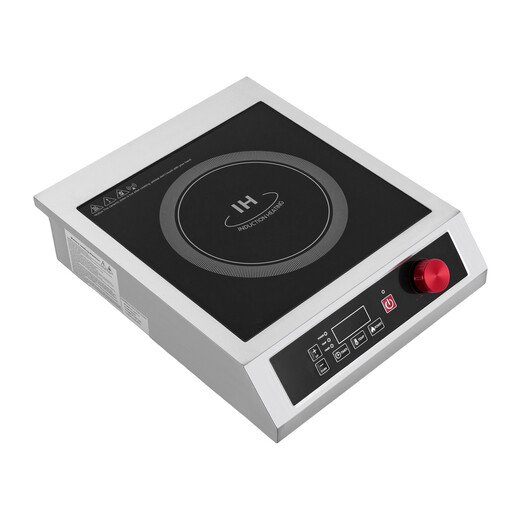 No image available
Tabletop induction hob, 3,500 W, EU plug
A portable single-zone hob for a suitable pan if you’re looking for an alternative to a built-in model.
The product name lists ten power and temperature settings, as well as an EU plug.
View at Joybuy
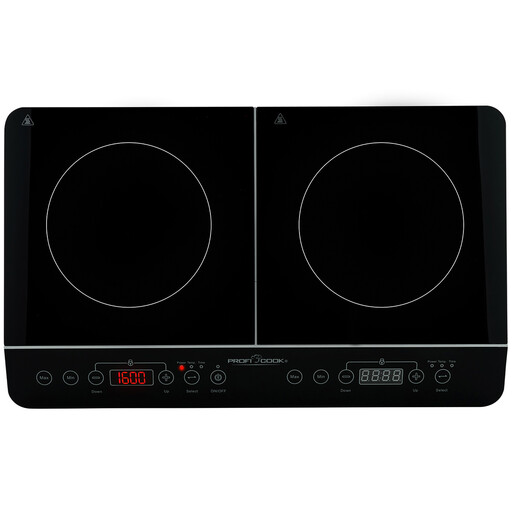 No image available
ProfiCook PC DKI 1067 double induction hob
A double hob may suit you if you want to use another pan at the same time as making coulis.
The product name lists ten temperature settings, a timer and a temperature range up to 240 °C.
View at Joybuy
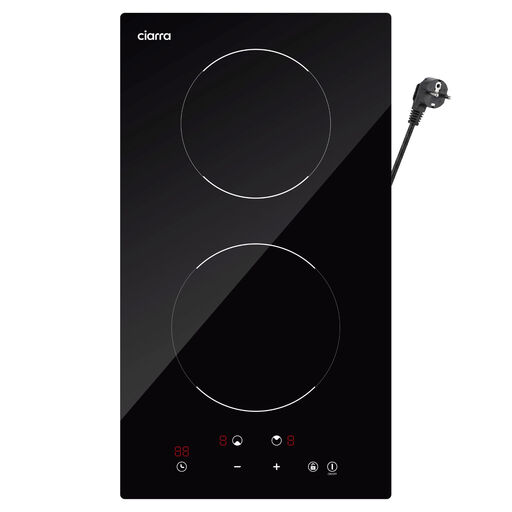 No image available
CIARRA CRGDBIH2 built-in induction hob, 3,000 W
A built-in option for a permanently installed cooking zone, if your kitchen is set up for installation.
The product name lists two cooking zones and nine power settings.
View at Joybuy
Frequently asked questions
Can I use my existing pan on an induction hob?
Only a pan with an induction-compatible base will heat as intended. Check the material and, particularly for a large stockpot, compare the base diameter with the cooking zone on the specific appliance.
Does a timer mean I don’t need to keep an eye on the coulis?
No. The manufacturer of the ROMMELSBACHER CT 2020/IN describes a timer with an automatic shut-off function. This does not tell you the temperature in the pan or guarantee that the coulis won’t stick while cooking.
What should I keep in mind when preparing a batch for freezing?
Cooling and portioning are separate steps to take after cooking. The Federal Institute for Risk Assessment recommends cooling hot food promptly to below 7 °C for longer-term storage. The Federal Centre for Nutrition recommends using suitable freezer packaging, freezing in portions and labelling each pack with its contents, quantity and date.
Can I simply plug in a built-in hob like a portable one?
Not the Bosch PXX675DC1E: Bosch specifically states that this model must be connected without a plug by a qualified electrician. Check the connection instructions for the model you’re actually choosing. Specifications for portable hobs do not apply to built-in appliances.
Does a hob sold in Germany need an EU energy label?
According to the European Commission, hobs are subject to ecodesign requirements, but not energy labelling requirements. The absence of an efficiency rating is therefore not, in itself, evidence of non-compliance.


