
Lieferung heute & morgen

Qualitätsgarantie

Willkommens-Angebote freischalten: KOSTENLOSE Lieferung | Bis zu 80 % RABATT | Kostenlose 30-Tage-JoyPlus-Testphase
App herunterladen
An induction hob can respond quickly while cooking, offer precise temperature control and be relatively easy to clean. However, not every model will automatically deliver the right results in your kitchen. Appliances are often chosen based on wattage, design or individual convenience features, while important details such as the electrical connection, worktop cut-out or cookware compatibility are overlooked.
This buying guide explains what households, kitchen renovators and keen home cooks in Germany should consider. It focuses on induction cookers, induction hotplates, portable appliances and built-in options with two, three or four cooking zones.
A specification such as 6.900 or 7.400 watts usually refers to the maximum connected load of the entire hob. It does not mean that every cooking zone continuously delivers this level of power. When several zones are used at the same time, power management may distribute the available power between them.
For an average household, a 2-ring model is often sufficient if you mainly use one or two pans. If you regularly prepare several dishes at once, choose a 4-zone induction hob with a suitable connected load and have it installed professionally by a qualified electrician.
Induction requires magnetic cookware. A simple magnet test on the base of the pan provides an initial indication: if the magnet sticks firmly, the pan is generally suitable. Aluminium, glass or ceramic cookware without a magnetic base is not recognised by many appliances.
The diameter also matters. A small pan placed on a large zone may be recognised, but the heating area will not always be used efficiently. You should therefore compare the bases of your pans with the size of the cooking zones.
Touch control eliminates mechanical switches and is easy to clean. However, controls may respond less directly when your fingers are wet or dirty. Clearly legible displays, separate controls for each zone and an easily accessible timer are useful features.
A child lock prevents accidental inputs, but it does not replace supervision. Even after the hob has been switched off, the glass ceramic surface may remain hot because of the pan. A residual heat indicator is therefore a practical safety feature.
A standard 60 cm induction hob is often approximately 592 mm wide and 522 mm deep. However, the required cut-out in the worktop is what really matters. For many models, this is approximately 560 × 490 to 500 mm. A 30 cm built-in induction hob, on the other hand, requires a considerably smaller cut-out, for example around 265 to 270 × 490 to 495 mm.
Before ordering, measure:
A permanently installed appliance should be connected by a qualified electrician in accordance with the instructions. A portable induction hob with a plug is more flexible, but it needs a stable, unobstructed surface and must not be moved while in use.
A 2-ring induction hob is suitable for small kitchens, single-person households, holiday homes or as an additional cooking surface. Three zones offer greater flexibility for medium-sized households. Four zones are practical when several pans and saucepans are used at the same time.
A special function such as FlexInduction or CombiZone can connect two adjacent areas. This is useful for long roasting dishes or large frying pans. Nevertheless, check the actual usable surface and the position of the controls.
Several power levels allow for finer adjustment between gentle warming and rapid boiling. The appliances in this selection offer, for example, nine, ten or 17 levels. PowerBoost can temporarily increase the heating power, but it is not necessary for every cooking situation.
A timer with automatic switch-off is useful when you need to monitor cooking times. Check whether the timer works for each individual zone or only for the appliance as a whole. Pan detection, overheating protection and automatic switch-off when no cookware is present further enhance the safety features.

Why this product suits the profile: This portable appliance requires no worktop cut-out, making it suitable for small kitchens, additional cooking zones or occasional use.
The 2.000 W power rating clearly refers to the individual appliance. Ten power levels and magnetic cookware compatibility make it easier to assess in practical use.
Touch control panel, six preset functions, glass panel and an activatable child lock.
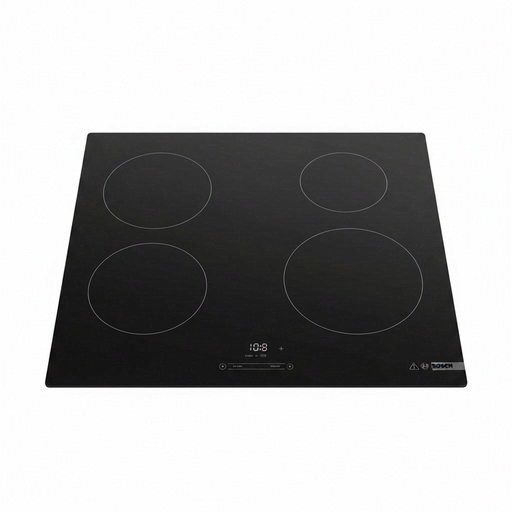
Why this product suits the profile: This 60 cm built-in appliance is aimed at households looking to combine four cooking zones, a flush-fit appearance and extensive adjustment options.
The technical installation dimensions of 592 × 522 × 51 mm and the cut-out size of 560 × 490–500 mm are specified and should be checked against your kitchen before installation.
Four zones, 17 power levels, PowerBoost, Quick Start, Restart, timer and child lock.
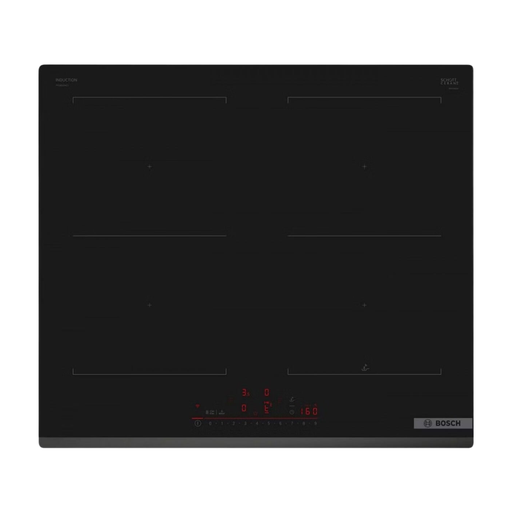
Why this product suits the profile: The combinable cooking surface is designed for large, elongated roasting dishes or fish pans and complements four zones in a 60 cm format.
CombiZone adjusts the heating area to suit compatible cookware. Pan detection, power management and automatic switch-off are also specified.
7.400 W total power, four boosters, individual timers, residual heat indicator and TouchSelect.

Why this product suits the profile: Two cooking zones and a compact cut-out make it suitable for small kitchens or households with limited worktop space.
The appliance dimensions and worktop cut-out size are clearly specified. Before buying, you still need to check them against your own kitchen.
3.500 W total power, nine levels, Boost, timer up to 99 minutes, pan detection and residual heat indicator.
We have put together a complete, regularly updated list of products that fully meet these strict selection criteria and the safety regulations applicable in the EU.
Pans and saucepans with a magnetic base are suitable, such as those made from cast iron or magnetic stainless steel. A magnet test provides an initial indication. Final suitability should be checked using the cookware's markings and instruction manual.
Consumption depends on the connected load, cooking time, temperature, pan size and usage. Induction heats the pan directly rather than first heating a coil or large glass surface. This can result in shorter heating times; however, specific costs can only be calculated using your individual electricity tariff and usage habits.
There is no single fixed lifespan that applies to every appliance. It depends, among other things, on operating time, care, ventilation, electrical installation and material quality. Ensure that the hob is installed correctly, keep the ventilation clear and do not use damaged pans or saucepans with rough bases.