
Lieferung heute & morgen

Qualitätsgarantie

Willkommens-Angebote freischalten: KOSTENLOSE Lieferung | Bis zu 80 % RABATT | Kostenlose 30-Tage-JoyPlus-Testphase
App herunterladen
An induction hob can be a practical solution for small kitchens, student accommodation, campsites or as an additional cooking surface. However, portable appliances, double induction hobs and built-in induction hobs differ considerably in terms of power, connection requirements and controls.
Anyone who focuses solely on wattage or a long list of functions can easily overlook important details. Three common buying misconceptions are particularly widespread:
A 2,000 W induction hob is typically suitable for one saucepan or frying pan and can be used as an additional appliance in many households without complications. However, the actual heating performance depends on the cookware, the selected setting and the power supply.
For cooking with several pans at the same time, a double induction hob or an induction hob with 2 plates may be a better choice. Check whether the stated total power is available simultaneously or shared between the cooking zones. A built-in hob usually has its own connection and must be installed by a qualified electrician in accordance with the manufacturer’s instructions.
Check the following before buying:
Induction only works with magnetic cookware. Suitable options include saucepans and frying pans made from magnetic stainless steel or cast iron. A simple magnet test on the base of the pan provides an initial indication: if the magnet sticks firmly, the vessel is generally suitable for induction.
Aluminium, copper, glass and ceramic cookware will generally not work without a magnetic base plate. A warped or excessively small base can also affect pan detection. The manufacturer’s specifications for the minimum diameter and suitable cookware should therefore be observed.
Touch controls with a clear display make it easier to select the power level. A timer can support automatic switch-off after a set period. For households with children, a child lock, switch-off when the pan is removed and a clear residual-heat indicator are all relevant criteria.
Depending on the model, the following functions may also be available:
These features should be regarded as technical assistance. Oil and fat must not be heated unattended. A damaged glass or glass-ceramic surface must not be used.
The following selection categorises different appliances according to specific usage situations. Technical details correspond to the relevant product information.

Why this product suits this profile: This compact single appliance is designed for small kitchens, students and occasional additional cooking space. Its ten power levels allow precise adjustment for boiling, frying or slow cooking.
The product details clearly specify a glass surface, touch controls, a child lock and boil-dry protection. This sets out the key features clearly rather than relying on wattage alone.
2,000 W, ten power levels, six preset functions and a slim housing. Suitable only for magnetic cookware.
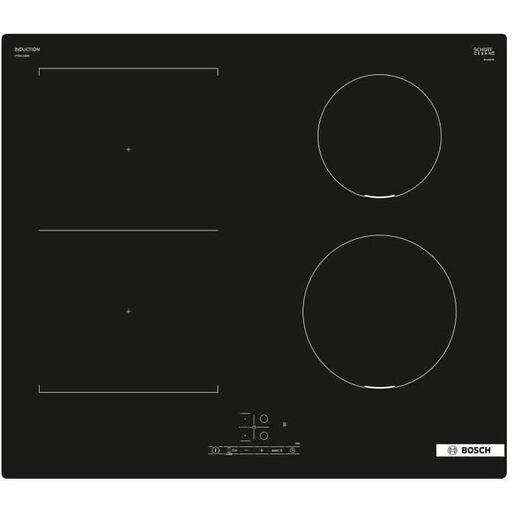
Why this product suits this profile: This 60 cm-wide built-in appliance with four cooking zones is designed for households that need a permanently integrated cooking surface for several pans.
The product data specifies the dimensions, four zones, TouchSelect controls, a timer and the required installation by a qualified electrician. This makes it easier to check whether it is suitable for the intended installation.
Four cooking zones, a timer, PowerBoost according to the product description and a glass-ceramic surface. Before buying, check the cut-out dimensions, connection and electrical installation.
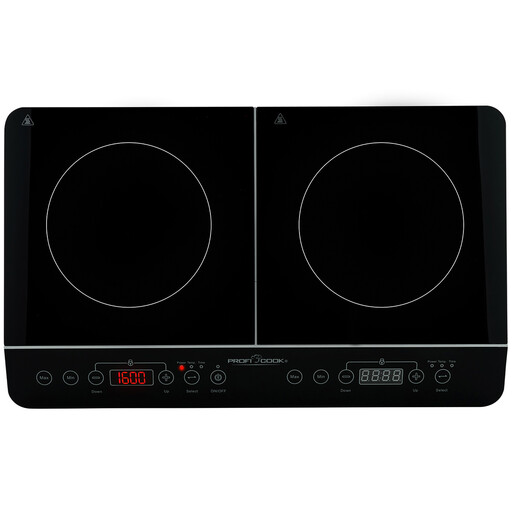
Why this product suits this profile: This portable double hob is suitable for households that need two cooking vessels but do not want to install a built-in induction hob.
The specifications include power and temperature levels, a 180-minute timer, pan detection, overheating protection and automatic switch-off functions. Before use, remember that the maximum total power is 3,500 W.
Two cooking zones, sensor touch controls, a temperature range of 60 to 240 °C according to the product details, plus non-slip feet.
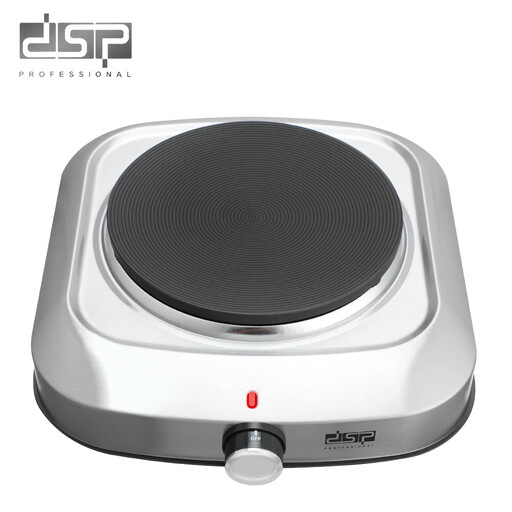
Why this product suits this profile: This portable hot plate uses a conventional heating element, making it an alternative when your existing cookware is not suitable for induction.
The product description clearly states that it has a 1,500 W heating element with a temperature control. It is not an induction hob; this distinction helps prevent a mistaken purchase when looking for induction.
Compact stainless-steel housing, continuously variable temperature control and a 185 mm heating element according to the product details. The appliance does not require induction-compatible cookware.
We have put together a complete, regularly updated list of products that fully meet these strict selection criteria and the safety regulations applicable in the EU.
A smooth glass or glass-ceramic surface can usually be cleaned with a soft, damp cloth once it has cooled down. Avoid abrasive cleaners, hard sponges and immersing the entire appliance in water. Do not allow liquid to enter the ventilation or electronic components.
Induction is often considered energy-efficient cooking because the heat is generated directly in the magnetic base of the pan. However, the actual electricity costs depend on the power, cooking time, pan size and electricity tariff. A simple guide is:
Cost = power in kW × operating time in hours × electricity price per kWh
With portable appliances, the socket must also be suitable for the stated power. Depending on their design, multiway adaptors and extension leads can be problematic and must be rated for the electrical load.
No. The frying pan needs a magnetic base. A magnet test shows whether the cookware is generally suitable. The base diameter and shape must also match the relevant cooking zone.
There is no universally applicable service life. It depends, among other things, on how often the appliance is used, cleaning, ventilation, transport and build quality. The appliance should not be operated empty or unattended for extended periods. Before each use, check the cable, control panel and cooking surface for visible damage.
That depends on how it will be used. A portable induction hob generally costs less to buy and does not require installation. A built-in induction hob, on the other hand, offers several cooking zones and a permanent kitchen solution, but requires suitable installation dimensions and professional installation. The key factors are therefore not just the purchase price, but also your existing cookware, connection requirements and intended length of use.