Households where people eat at different times
If you don’t all eat at the same time, you’ll need easy-to-adjust heat and a sensible way to handle soup that’s being kept hot or reheated later.


For a single pot of soup, a portable single hob may be all you need. If you’re cooking a side dish at the same time, consider a portable double hob or a built-in hob with several zones. The key things to look for are easy-to-adjust heat, a suitable pan size and the right type of connection. A keep-warm setting doesn’t prove that the soup stays safely hot throughout the pot: the German Federal Institute for Risk Assessment (BfR) recommends at least 60 °C at every point. Check the food’s temperature, or cool the soup quickly if you’re saving it for later, then reheat it thoroughly.
If you don’t all eat at the same time, you’ll need easy-to-adjust heat and a sensible way to handle soup that’s being kept hot or reheated later.
If you want to use a soup pot and a second pan at the same time, check the separate cooking zones, their pan sizes and the hob’s total connected load.
Consider whether you have room to set up a portable hob, or whether a built-in hob will fit the existing cut-out and connection.
Choose based on what matters most for the way you cook: keeping soup ready to serve, adjusting the heat, having a second cooking zone, fitting a built-in hob or using your existing pan.
| Priority | What to check when buying | Who is this especially important for? |
|---|---|---|
| Serving soup later | Check how the timer works and measure the temperature at several points in the pot. The BfR recommends keeping food hot at a minimum of 60 °C at every point. | If I’m keeping soup ready for later, I don’t want to rely on the appliance setting alone. Around 33% of consumers put safe hot holding first. |
| Bringing to the boil and simmering | Compare the power levels and check how easily you can adjust the setting once the soup has come to the boil. | If I want to keep cooking the soup in a controlled way after bringing it to the boil, easy heat adjustment matters more to me than high maximum power. Around 25% of consumers prioritise precise heat control. |
| Cooking soup and a side dish at the same time | Check the number and size of the cooking zones, as well as the total power of the specific model. | If I need a second pan alongside the soup pot, I want to be able to cook both dishes at once. Around 17% of consumers prioritise having two zones they can use simultaneously. |
| Positioning and connection | For built-in hobs, compare the appliance and cut-out dimensions, as well as the plug type and connected load. | If space is limited in my kitchen or the existing connection matters, the hob needs to suit the installation. Around 17% of consumers put this first. |
| Using your existing pan | Check that the base of the pan is suitable for induction and that its diameter matches the requirements for the cooking zone. | If I want to keep using my soup pot, I’ll check that it’s suitable and the right size before buying. Around 8% of consumers prioritise using their existing pan. |
An appliance setting doesn’t tell you what temperature the soup reaches throughout the pot. The BfR recommends keeping hot food at a minimum of 60 °C at every point.
Check the food’s temperature. If you won’t be eating the soup for some time, cool it quickly and reheat it thoroughly before serving.
CASO states that the Touch 3500 has a total output of up to 3500 W across two independently controlled zones. That’s the total power, not the output of each individual zone.
Compare the power ratings and simultaneous-use details in the instructions for the specific model.
The appliance width and the size of the required cut-out may differ. Siemens states that the EX975LXC1E has no mains plug and must be connected by a qualified electrician.
Measure the existing cut-out and check the type of connection before ordering.
Depending on the installation, you may also need to modify the worktop and have the electrical connection fitted by a qualified professional.
The Verbraucherzentrale (German consumer advice centre) points out that EU energy labels apply to ovens, but not to hobs.
Compare hobs using their own technical specifications and how you plan to use them.
Portable double hobs such as the Touch 3500 are worth considering if you want two independently controlled zones without a built-in installation.
The Kult X Mono and Doppel are portable single and double hobs, suitable as an extra cooking zone or for using two pans.
The built-in EX975LXC1E is designed for kitchens with room for a 90 cm hob and several pans.
The standalone KID6645AB is a built-in hob with four cooking zones and an area that can be combined.
This selection includes portable single and double hobs, as well as built-in hobs for one soup pot or several pans.
 No image available
This portable single hob is an option if you want an extra cooking zone for preparing a pot of soup.
The product title lists 8 temperature settings, an adjustable range of 800–3500 W and a timer. A setting doesn’t prove that the soup reaches a particular temperature throughout.
 No image available
This two-zone model is an option if you want to cook soup and another dish at the same time.
The product title lists five temperature settings, as well as functions for keeping food warm, boiling and simmering. These settings don’t guarantee a particular temperature throughout the pot.
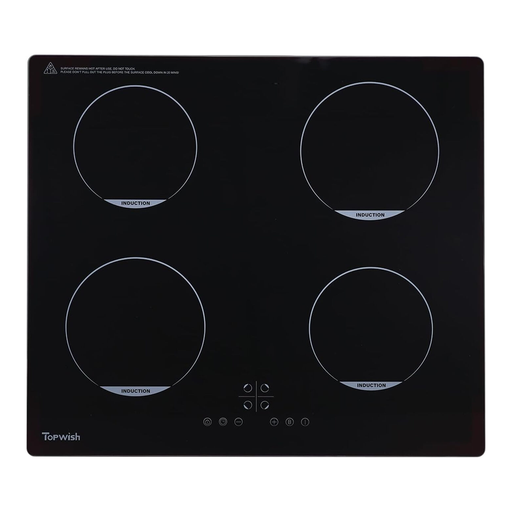 No image available
A built-in hob with four zones is an option if you regularly want to use several pans at the same time.
The product title lists a width of 60 cm and four cooking zones. Before buying, check that the cut-out and connection suit your existing kitchen; the product description states that it requires a suitable connection and has no plug.
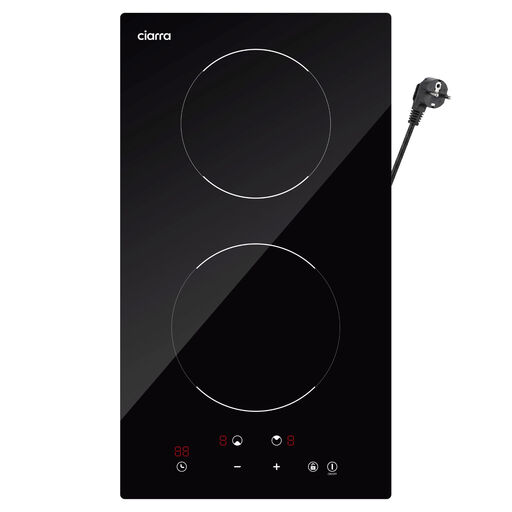 No image available
This built-in two-zone hob is an option if you want to cook soup and a side dish on a fixed cooking surface.
The product title lists 3000 W and nine power levels. Before choosing, check that the installation dimensions match your existing cut-out.
 No image available
This portable single hob is an option if you need one cooking zone for your soup pot.
The product title lists 2000 W and ten power levels. Check that your existing pan is suitable for induction.
Don’t rely on the programme name alone. The BfR recommends keeping hot food at a minimum of 60 °C throughout. For longer storage, hot food should be cooled quickly to below 7 °C. When reheating, the BfR recommends at least 70 °C for two minutes at every point.
Siemens states that a hob without a plug, such as the EX975LXC1E, must be connected by a qualified electrician. ELEKTRO+ also points out that fixed connections for electric hobs must be carried out by a qualified electrician. For a portable appliance, follow the connection requirements in its instructions.
Yes. A hot pan can transfer heat to the glass ceramic surface. AEG Support recommends following the care and safety instructions for your specific model and letting the surface cool before cleaning it.
Check that your cookware is suitable and whether a built-in hob needs a professional connection or changes to the cut-out. The Verbraucherzentrale distinguishes statutory rights against the seller from a voluntary guarantee; if there’s a fault, the seller is generally expected to put it right in the first instance.
No. The CE marking is the manufacturer’s declaration that the relevant EU requirements have been met; it isn’t an independent quality mark. For new mains-powered induction hobs sold in Germany, the applicable requirements for the specific product are what matter. Your Europe explains that the manufacturer is responsible for meeting the applicable requirements.