If you make lemon curd in small batches
Stirring is important while the mixture heats, so also consider how easy it is to adjust the settings as you go. The NEFF recipe calls for constant stirring.


For small batches of lemon curd, a portable single induction hob is a sensible place to start, provided you have a suitable socket and pan. Pay particular attention to the base of your pan and how easy the hob is to use on a low setting: several power levels or a temperature preset do not prove that the mixture will heat evenly. When planning to take it in a lunchbox, you’ll also need to consider hygienic cooking and keeping it properly chilled during transport.
Stirring is important while the mixture heats, so also consider how easy it is to adjust the settings as you go. The NEFF recipe calls for constant stirring.
Check your pan’s base and diameter against the specifications for the particular hob. ROMMELSBACHER and CASO set out cookware size requirements for their respective models.
Consider whether you regularly need a second pan alongside the curd, and whether a double hob or built-in model will fit your kitchen. SEVERIN offers portable models with one or two cooking zones, while Siemens lists five zones for the EX975LXC1E.
First, check that your existing pan is compatible with the hob. Then decide whether you need one portable cooking zone or will genuinely use two zones at the same time.
| What matters when buying | What to check | Who it matters to |
|---|---|---|
| Controllable heating | Check how easy the controls are to use on low settings and how the specific model regulates heat; a temperature preset does not measure the temperature of the mixture. | If I want to adjust the heat while stirring, controls that work well on a low setting matter to me. Around 36% of consumers put controllable heating first. |
| A suitable small pan | Check the material and diameter of the pan base against the specifications for the specific hob. | If I want to keep using my small saucepan, its base needs to be compatible with the cooking zone. Around 29% of consumers prioritise compatibility with their existing pan. |
| Space and connection | Allow for the appliance dimensions and room for the pan and stirring; check the connection requirements for built-in models. | If I’m short on worktop space or planning a built-in hob, space and connection requirements affect my choice. Around 21% of consumers put choosing the right type of hob first. |
| A second cooking zone | Check whether there’s room for two suitable pans at once, and whether a power rating applies to the whole appliance or individual zones. | If I’m making another lunch dish while preparing the curd, I need room for two pans. Around 14% of consumers prioritise cooking two dishes at once. |
A large number of settings doesn’t prove that the mixture will heat evenly. ROMMELSBACHER states that the lower power levels, 1 to 6, on the CT 2010/IN model are achieved by switching on and off at timed intervals.
Check the controls on the specific model and keep stirring the mixture as described in the NEFF recipe. A bain-marie can reduce direct heat, but it doesn’t replace a food-safety assessment.
Induction requires a suitable pan base, and the right pan size can vary between hobs.
Compare the material and diameter of the base with the specifications for the exact model. If your existing cookware isn’t compatible, you may need a suitable induction pan.
Check that your pan is compatible before buying, so you don’t assume your existing saucepan will work.
Single hobs, double hobs and built-in models differ in the number of cooking zones, the space they need and their connection requirements. A second zone is most useful if you’ll genuinely cook two dishes at once.
First, work out whether you need two pans at the same time and whether you were already planning to install a built-in hob. For a built-in model, you’ll also need to check the cut-out dimensions and connection type.
The German Federal Institute for Risk Assessment warns that inadequate temperatures during the transport and storage of perishable foods can allow harmful germs to multiply.
Plan cooking, storage and transport as separate steps. A hob or its timer won’t keep the finished mixture chilled.
The CT 2010/IN portable single induction hob is an example of a model with a specified cooking zone and several adjustable settings.
The Touch 2000 is a portable single hob for use with a suitable socket and cookware within the model’s specified limits.
The KP 1071 is a portable single hob; according to the manufacturer, the DK 1031 has two cooking zones.
The EX975LXC1E is a large built-in hob for households that need several cooking zones for everyday use.
This selection includes portable single and double hobs, as well as a built-in hob. For lemon curd alone, one cooking zone is a sensible place to start. A second zone is most useful if you’ll be making other dishes at the same time.
 No image available
A portable single hob for small batches, provided your pan is compatible with the specified cookware size range.
The product description lists a cookware size range of 12–26 cm, touch controls, a child lock and an 8-hour timer. Dimensions: 35 × 28 × 4.4 cm.
 No image available
A portable single cooking zone for a batch of curd, if you’d like to use a range of temperature settings.
The product description lists ten temperature settings and ten power levels, a 3-hour timer and a reservation function.
 No image available
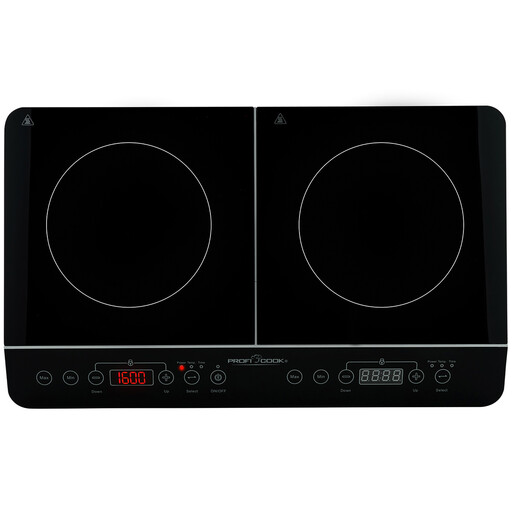
Two cooking zones are worth considering if you regularly make another dish at the same time as your curd.
The product description lists ten temperature settings per hob, from 60 °C to 240 °C, and six power levels. It also features a touch control panel, a timer with automatic shut-off, pan detection and overheating protection.
 No image available
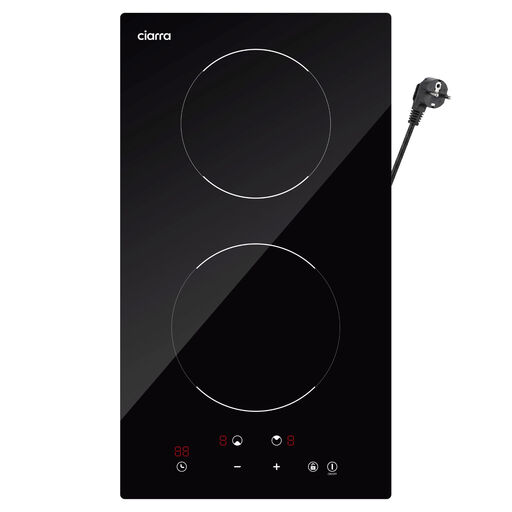
A built-in model with two zones for a planned, permanent cooking setup—not just for making a small batch of lemon curd.
The product description lists nine power levels, pan size ranges of 120–260 mm and 120–200 mm, and a cut-out size of 270 × 490 mm.
As a built-in appliance, it needs to fit the planned cut-out and connection requirements.
 No image available
A portable single hob for small batches, as long as you use magnetic cookware.
The product description lists ten heat settings, touch controls and a safety lock. Aluminium or ceramic pans without a magnetic base aren’t suitable, according to the description.
No. A hob setting doesn’t measure the temperature inside the food. When heating eggs, the German Federal Institute for Risk Assessment gives a core temperature of at least 70 °C for at least two minutes as a food-safety guideline. You can’t tell from a hob setting alone whether the food has reached this temperature.
Keep the egg-based mixture properly chilled during storage and transport until you’re ready to eat it. The German Federal Institute for Risk Assessment warns that inadequate temperatures during transport and storage can allow harmful germs to multiply. The hob won’t keep it chilled.
If electrical installation work is required, § 13 NAV generally allows it to be carried out only by the network operator or an installation company listed in its register of approved installers; the regulation makes an exception for certain maintenance work. Siemens specifies that the EX975LXC1E is supplied without a plug and must be connected by a qualified electrician. This is not the same as a portable hob that’s ready to plug in.
Compare the base and diameter of your pan with the specifications for the specific hob. For a built-in model, you’ll also need to check the cut-out, installation dimensions and connection requirements. The NAV requirements apply to electrical installation work.