Sauce for people eating later
If you need to keep the sauce ready for a later meal, precise low-heat control and checking the food’s temperature are important. The BfR recommends keeping food hot at a minimum of 60 °C throughout.


For pasta sauce when mealtimes vary, a portable single-zone hob is enough if you only need to heat the sauce. If you want to cook or keep the sauce and pasta warm at the same time, you’ll need cooking zones that can be used independently. The German Federal Institute for Risk Assessment (BfR) recommends keeping heated food at a minimum of 60 °C throughout until it is eaten. A keep-warm or temperature setting on the hob alone doesn’t prove that the whole sauce has reached this temperature.
If you need to keep the sauce ready for a later meal, precise low-heat control and checking the food’s temperature are important. The BfR recommends keeping food hot at a minimum of 60 °C throughout.
If you’re keeping the sauce pan on the hob and cooking fresh pasta for people eating later, you’ll need cooking zones you can use at the same time. CASO Design and Siemens Hausgeräte describe suitable portable double-zone and multi-zone options for the models mentioned.
If you don’t want to replace your built-in hob, a portable one could give you an extra cooking zone. Before buying, check the pan size, available space and connection type for the specific appliance.
First, think about whether you need one or several cooking zones at the same time. Then consider temperature control, suitable pans and, for built-in hobs, the exact installation and connection requirements.
| What you need | What to check before buying | Who is this especially important for? |
|---|---|---|
| Low heat and keeping food hot | Low power settings, a stated keep-warm function and the ability to measure the food’s temperature. | If I’m keeping sauce ready for people eating later, I want to avoid letting it boil vigorously and be able to check its temperature in the pan. Around 33% of consumers prioritise keeping food hot. |
| Two pans at once | The number of cooking zones that can be used independently, and whether a power rating applies to one zone or the whole appliance. | If I want to cook sauce and pasta on the hob at the same time, I need room for both pans. Around 27% of consumers prioritise using several pans at once. |
| Portable use or built-in installation | For portable appliances, check the available space and connection type; for built-in models, compare the cut-out size and connection requirements with the details for the specific model. | If you’re looking for an extra cooking zone without a kitchen refit, you won’t want to have to buy a built-in appliance. Around 20% of consumers have this as their main requirement. |
| Existing pans | Check that the pan bases are magnetic and that the pan sizes fall within the range specified by the manufacturer. | If I want to keep using my existing pans, their bases need to work with induction and suit the intended cooking zone. Around 20% of consumers prioritise pan compatibility. |
The appliance display doesn’t tell you whether the sauce has reached the required temperature throughout. The BfR recommends keeping heated food at a minimum of 60 °C throughout until it is eaten.
Check the food’s temperature rather than relying on the appliance setting alone. If you can’t keep the sauce hot enough, chilling it properly is a better option than leaving it lukewarm.
The product title alone doesn’t confirm how the appliance heats. If the details about the heating surface, heating elements and pan compatibility contradict one another, it’s not clear what type of appliance it is.
Compare the stated heating method, full technical details and model name before choosing a product listed as an induction hob.
CASO Design gives the ProSlim 3500 a combined rated power of 3,500 W. This doesn’t automatically mean each zone delivers that much power when both are in use.
If you need to use both cooking zones at once, check the power ratings for simultaneous use.
Installation dimensions and connection requirements vary by model. The appliance width alone won’t tell you whether it will fit the cut-out or work with your existing connection.
Compare your worktop, cut-out dimensions and connection with the data sheet for the specific hob. Electrical work is subject to the requirements of § 13 NAV.
The portable single- and double-zone hobs described are worth considering as an extra cooking zone or for cooking with two pans.
The built-in models EX675JYW1E and EX975LXC1E are described by the manufacturer as having cooking, simmering and keep-warm zones.
The built-in PVS63KBB5E is an option if you need four cooking zones.
Miele’s TempControl hobs are one product range to consider if you’re looking for an explicitly described simmering and keep-warm function.
The built-in T46SBE1L0 has four round cooking zones for compatible cookware.
This selection is mainly made up of hobs for cooking with several pans, including built-in models and a portable option. Check the stated design, pan compatibility and connection type for the specific model.
 No image available
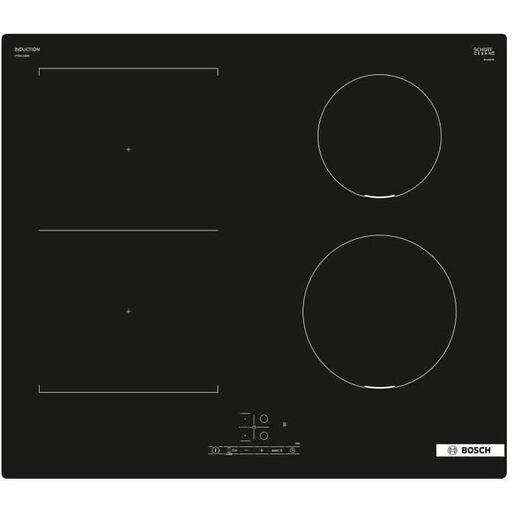
Cook sauce and pasta on separate zones; as a built-in appliance, it isn’t a portable extra hob.
The product name lists: 60 cm, 6900 W, four cooking zones and a timer. Check the installation and connection requirements for this specific model before buying.
 No image available
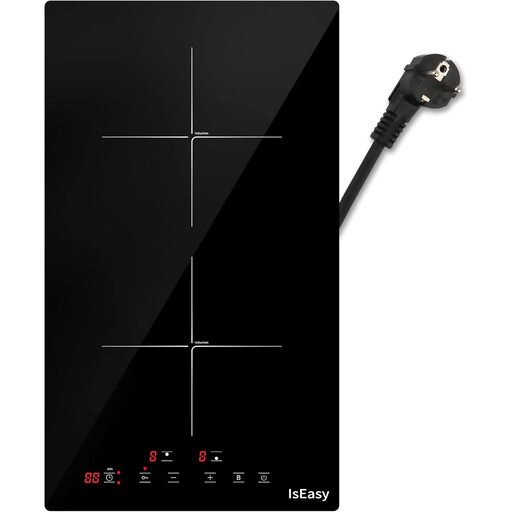
Its two stated cooking zones are designed for a pan of sauce and a pan of pasta. Check the installation type and connection requirements before buying.
The product name lists: 3400 W, 29.5 cm, timer, child lock, nine heat settings, Booster and 220–240 V. The description lists the appliance as available in built-in and plug-in versions.
 No image available
This portable appliance is an option if you need a movable cooking zone rather than a permanently installed hob.
The product name lists: 2100 W, glass surface, nine heat settings, timer of up to 8 hours and touch controls. The product description identifies it as a portable model.
 No image available
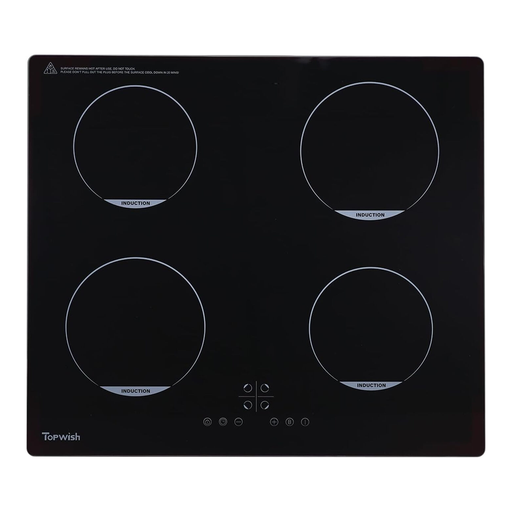
Its four cooking zones are designed for using several pans at once. This appliance is intended for built-in installation.
The product name lists: child lock, Boost, touch controls, residual heat indicator and timer. The description specifies a hard-wired connection with no plug; under § 13 NAV, electrical work must generally be carried out by a registered installation company.
 No image available
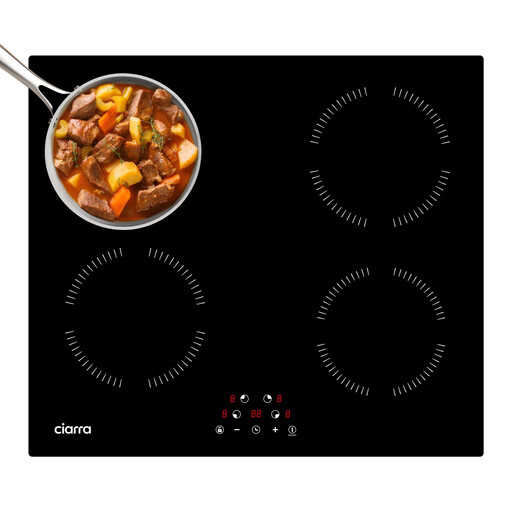
Four cooking zones provide separate spaces for several pans. Check that the installation dimensions and connection suit the specific model before choosing it.
The product name lists: nine power levels and child lock. The product description also specifies a 32-A fuse rating and installation by a qualified electrician.
No. A keep-warm setting doesn’t show the temperature throughout the pan. The BfR recommends keeping heated food at a minimum of 60 °C throughout until it is eaten, so check the food’s temperature. If you can’t keep it hot enough, chilling it properly is better than leaving it lukewarm.
Check whether a magnet sticks to the base of the pan, then compare its diameter with the specifications for the hob. For the portable CASO TC 2400, for example, CASO Design specifies a pan size range of 12 to 26 cm.
§ 13 of the Low Voltage Connection Ordinance states that, apart from the network operator, electrical installation work may only be carried out by an installation company listed in the installer register. Also check the connection details for the specific hob. A portable appliance designed to be plugged in isn’t the same as connecting a built-in appliance.
First, check that your pans are suitable for induction and fall within the stated size range. For a built-in appliance, the cut-out and connection must also suit the specific model. Electrical work is subject to the requirements of § 13 NAV.