
Lieferung heute & morgen

Qualitätsgarantie

Willkommens-Angebote freischalten: KOSTENLOSE Lieferung | Bis zu 80 % RABATT | Kostenlose 30-Tage-JoyPlus-Testphase
App herunterladen
Choosing a new induction hob is often the first step towards a more modern, faster, and safer kitchen. The technology promises energy-efficient cooking and precise heat control. However, the market is filled with models whose marketing promises don't always hold up in practice. Certain, often overlooked, weaknesses can complicate daily cooking rather than making it easier.
As your Joybuy Product Recommendation Officer, I'll help you identify these pitfalls. Instead of being swayed by exaggerated advertising claims, we will focus on the facts. This guide reveals the three most common mistakes made during a purchase and what you need to look out for to make an informed decision.
Many buyers only realise after installation that their new hob doesn't deliver the expected performance. Pay attention to these three points to avoid disappointment:
To make the right choice, you should focus on the technical fundamentals that match your actual needs.
The first decision concerns the basic form of the appliance.
Modern hobs offer more than just heating food. These features provide real added value:
energy-efficient cooking, as the high power is only used when needed and for a short time.Safety is paramount in the kitchen. A good induction hob should come standard with the following protective mechanisms:
Here are some models tailored to specific user profiles that take the aforementioned criteria into account.
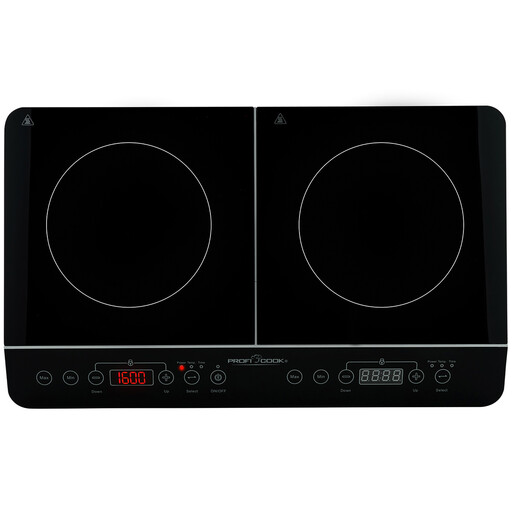
Why This Fits Their Persona: Ideal for students, small apartments, or as an additional cooking option. This portable double induction cooktop requires no permanent installation and, with two hobs, offers enough capacity to prepare full meals.
As a portable device with a clearly defined maximum power of 3500 W, it doesn't create false expectations of the performance of a full-sized built-in hob. The two zones are clearly separated and designed for standard pots, making it straightforward to use.
Separate controls for each plate with 10 temperature levels and a 180-minute timer. Its portability and simple plug-in connection offer maximum flexibility.
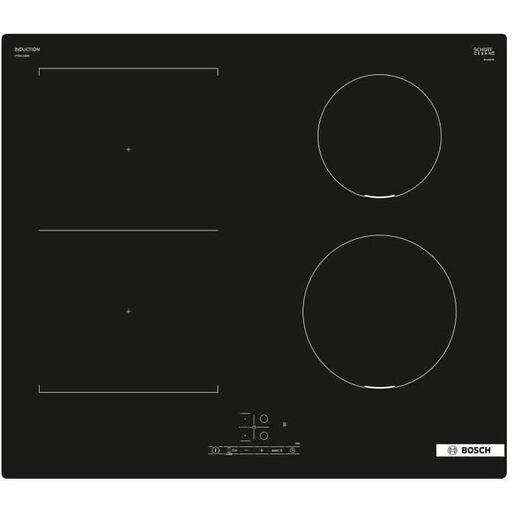
Why This Fits Their Persona: A reliable Bosch induction hob for families looking for a durable and safe built-in solution. At 60 cm wide with four zones, it fits most standard kitchens and provides the necessary features for daily cooking.
This model features a CombiZone that connects two cooking zones into one larger area. This solves the problem of rigid cooking zones and allows the use of roasters. The PowerBoost function is clearly defined and manages power intelligently.
The CombiZone offers flexibility for large cookware. The TouchSelect control is intuitive, and the ReStart function briefly saves the last setting if the hob is accidentally turned off.
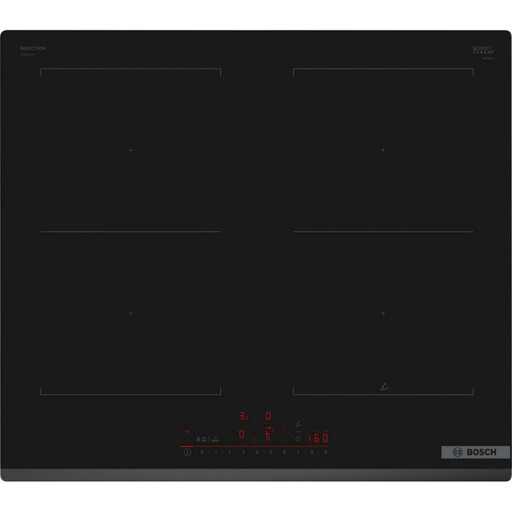
Why This Fits Their Persona: For home chefs who value precision, performance, and maximum flexibility. With its FlexInduction technology and high total power of 7400 W, this hob provides the necessary equipment for sophisticated dishes.
The FlexInduction technology completely solves the problem of rigid cooking zones. The hob automatically detects the size and shape of the cookware and heats only the required area. The intelligent power management ensures efficient and transparent power distribution.
The FlexInduction zone adapts to any pot or pan size, ensuring absolutely even heat distribution. The DirectSelect control allows for direct and precise selection of power levels for each zone.
We've compiled a complete, up-to-date list of products that fully meet these strict selection criteria and German safety regulations.
An induction hob creates a magnetic field to generate heat directly in the base of the pot. Therefore, only cookware with a magnetic base will work. This includes pots and pans made of cast iron, enamelled iron, and special magnetic stainless steel. You can easily test if your existing cookware is suitable with a magnet: if it sticks to the bottom of the pot, the cookware is induction-compatible.
Induction is one of the most energy-efficient cooking methods. Since the heat is generated directly in the pot and not on the cooking surface, very little energy is lost to the surroundings. According to manufacturers like Bosch, induction technology can reduce heating time by up to 35% compared to ceramic hobs, which significantly lowers energy consumption.
Yes, slight operating noises are normal and no cause for concern. A quiet hum or buzz is created by the electromagnetic field interacting with the cookware. The intensity of the noise can vary depending on the quality of the cookware and the selected power level. Additionally, a quiet whirring from the cooling fan can be heard, which protects the electronics from overheating. On high-quality appliances, these noises are typically minimal.